
Catalogue Search | MBRL


Are you sure you want to remove the book from the shelf?

{{itemTitle}}
253
result(s) for
"2000-present"
Sort by:
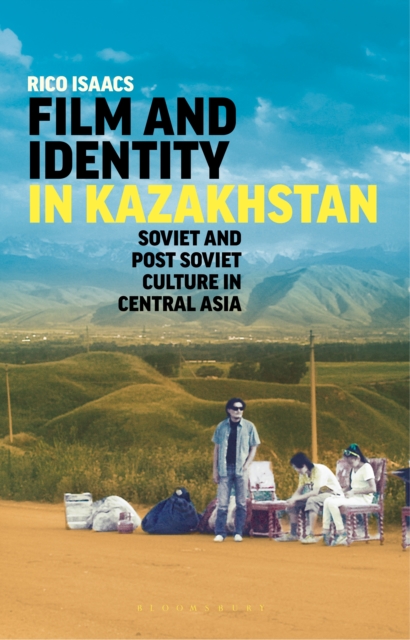
Film and Identity in Kazakhstan
Cinema and nationalism are two fundamentally modern phenomena, but how have films shaped our understanding of the creation -the 'imagining' - of Central-Asian nations? Here, Rico Isaacs uses cinema as an analytical lens to explore how the Kazakh national identity has been constructed and contested. Drawing on an analysis of Kazakh films from the last century, and featuring new interviews with directors and critics involved in the Central Asian film industry, his book traces the construction of nationalism within Kazakh cinema from the country's inception as a Soviet Republic to a modern independent nation.Isaacs identifies four narratives since the collapse of the Soviet Union: a warrior-like 'ethnic' narrative rooted in the 18th Century struggles against the Mongolian Oirat tribes; a 'civic' inspired narrative cemented in the Stalinist deportations of the 1930s and 40s; a religious narrative founded within the mystic and philosophical religion of Tengrism and the cult of the Sky God; and a socio-economic narrative which roots Kazakh nationhood and identity in contemporary social divisions, the lived day-to-day experiences of ordinary citizens and the struggles they face with authority. These last two tropes demonstrate how cinema has emerged as a site of dissent against the country's authoritarian regime under President Nazarbayev. Film and Identity in Kazakhstan advances our understanding of Kazakhstan and nationalism by demonstrating the multiple and inessential character of each, and illustrates the important role of cinema in contesting political power in the post-Soviet space.
eBook

Capturing Digital Media
Why are filmmakers such as J.J. Abrams, Christopher Nolan and Quentin Tarantino continuing to shoot their movies on celluloid in the digital age of cinema? Are these filmmakers choosing the photochemical process of celluloid images purely for aesthetics purposes? Or could their preference for celluloid have something to do with analogue’s intimate connection to the subject of lack and desire? Capturing Digital Media: Perfection and Imperfection in Contemporary Film and Television examines the relationship between the perfection of the digital form and the imperfection of the human subject in recent film and television. Using a number of a key psychoanalytic terms and new media concepts, Capturing Digital Mediashows that the necessity of imperfection is where we locate the human subject of desire within the binary logic of the digital. It argues that the perfection of digital must be wounded by forms of imperfection in order to make media texts such as film and television desirable. But even as films and television texts incorporate forms of imperfection, digital perfection remains a powerful attraction in our engagement with moving images, such as high definition screens, spectacular digital effects, and state-of-the-art sound
eBook
Making Sense of Mind-Game Films
Mind-game films and other complex narratives have been a prominent phenomenon of the cinematic landscape during the period 1990-2010, when films like The Sixth Sense, Memento, Fight Club and Source Code became critical and commercial successes, often acquiring a cult status with audiences. With their multiple story lines, unreliable narrators, ambiguous twist endings, and paradoxical worlds, these films challenge traditional ways of narrative comprehension and in many cases require and reward multiple viewings. But how can me make sense of films that don’t always make sense the way we are used to? While most scholarship has treated these complex films as narrative puzzles that audiences solve with their cognitive skills, Making Sense of Mind-Game Films offers a fresh perspective by suggesting that they appeal to the body and the senses in equal measures. Mind-game films tell stories about crises between body, mind and world, and about embodied forms of knowing and subjective ways of being-in-the-world. Through compelling in-depth case studies of popular mind-game films, the book explores how these complex narratives take their (embodied) spectators with them into such crises. The puzzling effect generated by these films stems from a conflict between what we think and what we experience, between what we know and what we feel to be true, and between what we see and what we sense.
eBook

The sound of musicals
Despite having had its obituary written many times, the movie musical remains a flourishing twenty-first century form, and as this volume demonstrates, one that exists far beyond the confines of Broadway and Hollywood.The Sound of Musicals examines the films, stars, issues and traditions of the genre from the 1930s to the present day.
eBook
Funny Frames
Taking its cues from the cinematic innovations of the controversial Austrian-born director Michael Haneke, Funny Frames explores how a political thinking manifests itself in his work. The book is divided into two parts. In the first, Oliver C. Speck explores some of Haneke’s Deleuzian traits – showing how the theoretical concepts of the virtual, of filmic space and of realism can be useful tools for unlocking the problems that Haneke formulates and solves through filmic means. In the second, Speck discusses a range of topics that appear in all of Haneke’s films but that haven’t, until now, been fully noticed or analyzed. These chapters demonstrate how Haneke plays the role of “diagnostician of culture,” how he reads – for example – madness, suicide and childhood. Like several other contemporary European directors, Haneke addresses topics considered difficult when measured by the standards of commercial cinema: the traumatic effects of violence, racism, and alienation. Funny Frames is an incisive and original contribution to the growing scholarship on one of the most intriguing auteurs of our time.
eBook

Making Sense of Cinema
There are a variety of theoretical and methodological approaches to researching how film spectators make sense of film texts, from the film text itself, the psychological traits and sociocultural group memberships of the viewer, or even the location and surroundings of the viewer. However, we can only understand the agency of film spectators in situations of film spectatorship by studying actual spectators’ interactions with specific film texts in specific contexts of engagement. Making Sense of Cinema: Empirical Studies into Film Spectators and Spectatorship uses a number of empirical approaches (ethnography, focus groups, interviews, historical, qualitative experiment and physiological experiment) to consider how the film spectator makes sense of the text itself or the ways in which the text fits into his or her everyday life. With case studies ranging from preoccupations of queer and ageing men in Spanish and French cinema and comparative eye-tracking studies based on the two completely different soundscapes of Monsters Inc. and Saving Private Ryan to cult fanbase of the Lord of the Rings Trilogy and attachment theory to its fictional characters, Making Sense of Cinema aligns this subset of film studies with the larger fields of media reception studies, allowing for dialogue with the broader audience and reception studies field.
eBook
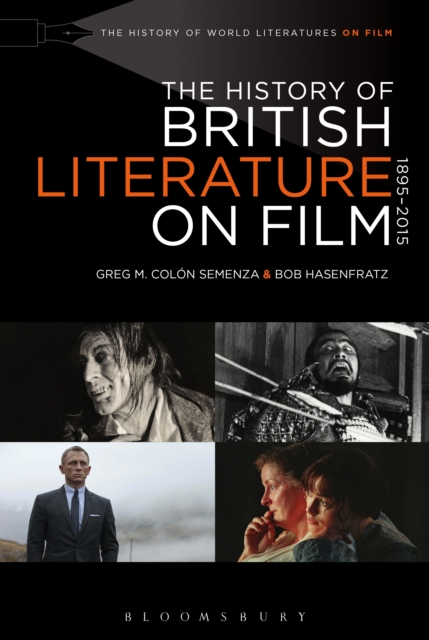
The History of British Literature on Film, 1895–2015
From The Death of Nancy Sykes (1897) to The Hobbit: The Battle of the Five Armies (2014) and beyond, cinematic adaptations of British literature participate in a complex and fascinating history. The History of BritishLiterature on Film, 1895-2015 is the only comprehensive narration of cinema's 100-year-old love affair with British literature. Unlike previous studies of literature and film, which tend to privilege particular authors such as Shakespeare and Jane Austen, or particular texts such as Frankenstein, or particular literary periods such as Medieval, this volume considers the multiple functions of filmed British literature as a cinematic subject in its own right—one reflecting the specific political and aesthetic priorities of different national and historical cinemas. In what ways has the British literary canon authorized and influenced the history and aesthetics of film, and in what ways has filmed British literature both affirmed and challenged the very idea of literary canonicity? Seeking to answer these and other key questions, this indispensable study shows how these adaptations emerged from and continue to shape the social, artistic, and commercial aspects of film history.
eBook
From Film Adaptation to Post-Celluloid Adaptation
The main corpus of film adaptation thus far has focused on films based on canonical literature. From Film Adaptation to Post-Celluloid Adaptation takes the next logical step by discussing the emerging modes of film adaptation from older media to new, mainly focusing on the computer-generated reconstructions of popular narratives and characters along with other forms of convergence such as the Internet. While ‘New Media’ is a broad concept, the book will concentrate on the ways digital technology is being used in the encoding of films and discuss the ways this shift can be debated from a theoretical perspective. Though the discussion is framed through the ‘new media’ lens, the work will not exclude a broader understanding of New Media which refers to video games, official websites and interactivity so as to examine how the visual style of contemporary films is dispersed across, and influenced by, other media. Discussing films like Minority Report, King Kong, 300 and Wanted in relation to Film Adaptation theory, the work aims to challenge and rework the definition of adaptation.
eBook
Television and Postfeminist Housekeeping
In this book, Nathanson examines how contemporary American television and associated digital media depict women's everyday lives as homemakers, career women, and mothers. Her focus on American popular culture from the 1990s through the present reveals two extremes: narratives about women who cannot keep house and narratives about women who only keep house. Nathanson looks specifically at the issue of time in this context and argues that the media constructs panics about domestic time scarcity while at the same time offering solutions for those very panics. Analyzing TV programs such as How Clean is Your House, Up All Night, and Supernanny, she finds that media's portrayals of women's time is crucial to understanding definitions of femininity, women's labor, and leisure in the postfeminist context.
eBook

Postcolonial Theory and Avatar
The Film Theory in Practice series fills a gaping hole in the world of film theory. By marrying the explanation of a film theory with the interpretation of a film, the volumes provide discrete examples of how film theory can serve as the basis for textual analysis. The second book in the series, Postcolonial Theory and Avatar offers a concise introduction to postcolonial theory in jargon-free language and shows how this theory can be deployed to interpret James Cameron’s high-grossing, immensely popular, and critically acclaimed 2009 film. Avatar is widely celebrated for its politically and culturally sensitive critique of the “West’s” neocolonial wars and exploitation of the “global south” – an allegory for (neo)colonialism – and for highlighting the plight of tribal communities throughout the world (for instance, the case of the Dongriah Kondh tribe of India). At the same time, it has been also criticized for repeating the colonialist fantasy of saving natives doomed by imperialist aggression. Intervening in this debate over how to read the film, Basu Thakur focuses on issues of representations, discourse, subalternity, and subjectivity, all of which have been central to postcolonial theory and postcolonial analyses of culture. This history will help students and scholars who are eager to learn more about this important area of theory and bring the concepts of postcolonial theory into practice through a detailed interpretation of the film.
eBook