
Catalogue Search | MBRL


Are you sure you want to remove the book from the shelf?

{{itemTitle}}
494
result(s) for
"2003 - 2011"
Sort by:
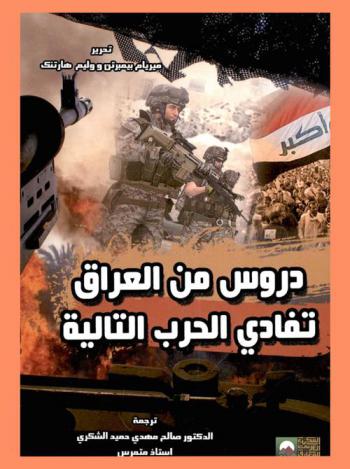
دروس من العراق تفادي الحرب التالية : الديمبراطورية : أمريكا لا تتعلم الدروس وتصاب بالجنون الرومانية من جديد
يعرض هذا الكتاب كيفية اتخاذ هذا القرار وحجم الدمار الذي خلفته الحرب على العراق ويقدم هذا الكتاب مجموعات المقالات التي ستجعلك تنضم إلى حركة منع نشوب حرب قادمة على العراق قد كان قرار الحرب على العراق من أسوأ قرارات السياسة الخارجية الأمريكية على الإطلاق وأكبر أخطائها إذا كان السبب الرئيسي لاتخاذ قرار شن الحرب على العراق هو إعادة الدفاع عن السلطة الأمريكية بعدما كشفت أحداث الحادي عشر من سبتمبر عن قابلية الدولة للسقوط، فإن النتيجة الفعلية كما تشير إليها مقالات ذلك الكتاب.
BOOK

The Legacy of Iraq
The Legacy of Iraq critically reflects on the abject failure of the 2003 intervention to turn Iraq into a liberal democracy, underpinned by free-market capitalism, its citizens free to live in peace and prosperity. It argues that mistakes made by the coalition and the Iraqi political elite set a sequence of events in motion that have had devastating consequences for Iraq, the Middle East and for the rest of the world. Today, as the nation faces perhaps its greatest challenge in the wake of the devastating advance of the Islamic State of Iraq and Syria (ISIS) and another US-led coalition undertakes renewed military action in Iraq, understanding the complex and difficult legacies of the 2003 war could not be more urgent. Ignoring the legacies of the Iraq war and denying their connection to contemporary events couldmeans that vital lessonsare ignored and the same mistakes made again.
eBook

Returning Home from Iraq and Afghanistan
Nearly 1.9 million U.S. troops have been deployed to Afghanistan and Iraq since October 2001. Many service members and veterans face serious challenges in readjusting to normal life after returning home. This initial book presents findings on the most critical challenges, and lays out the blueprint for the second phase of the study to determine how best to meet the needs of returning troops and their families.
eBook
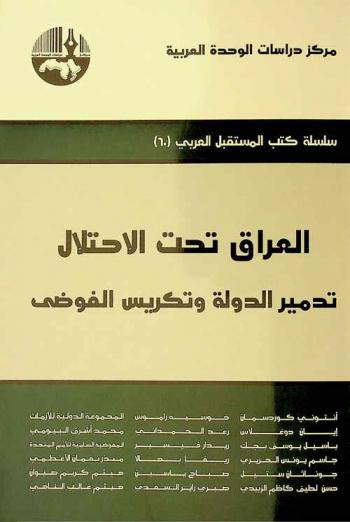
العراق تحت الاحتلال : تدمير الدولة وتكريس الفوضى
تعرض دراسات هذا الكتاب جوانب عديدة من قضية العراق في مواجهة الاحتلال وتداعياته، كتبت بأقلام أجنبية، وعربية ومنها عراقية، وهي شهادات توثق قدرة الأمة العربية على المقاومة والمجابهة، وتؤكد حتمية انتصار شعب العراق والأمة العربية إزاء كل محاولات الاحتواء والمصادرة والهيمنة تمثل هذه النصوص شهادات عن مرحلة حاسمة في نضال الأمة العربية، والعراق بشكل خاص، من أجل الحرية والكرامة.
Book

Nurses in war
This unique volume presents the experience of 37 U.S. military nurses sent to the Iraq and Afghanistan theaters of war to care for the injured and dying. The personal and professional challenges they faced, the difficulties they endured, the dangers they overcame, and the consequences they grappled with are vividly described from deployment to discharge. In mobile surgical field hospitals and fast-forward teams, detainee care centers, base and city hospitals, medevac aircraft, and aeromedical staging units, these nurses cared for their patients with compassion, acumen, and inventiveness. And when they returned home, they dealt with their experience as they could. The text is divided into thematic chapters on essential issues: how the nurses separated from their families and the uncertainties they faced in doing so; their response to horrific injuries that combatants, civilians and children suffered; working and living in Iraq and Afghanistan for extended periods; personal health issues; and what it meant to care for enemy insurgents and detainees. Also discussed is how the experience enhanced their clinical skills, why their adjustment to civilian life was so difficult, and how the war changed them as nurses, citizens, and people.
eBook

الإمبراطورية الجديدة : قصة الحرب الأمريكية على العراق
يتناول كتاب (الإمبراطورية الجديدة : قصة الحرب الأمريكية على العراق) والذي قام بترجمته (مازن الحسيني) في حوالي (144) صفحة من القطع المتوسط موضوع (الحرب الأمريكية على العراق) مستعرضا المحتويات التالية : الإمبراطورية الجديدة قصة الحرب الأمريكية على العراق، العسكرتاريا والحروب القادمة، بعد الانتصار في الحرب، خلطة الديمقراطية الإمبراطورية الفورية، ضد مغامرة الولايات المتحدة الأمريكية في العراق، شعور بوش المتضخم بالتفوق المطلق، مجرد بداية حرب إعادة تشكيل العالم.
Book

Order out of Chaos
Order out of Chaos explains why Iraqis turned to the mosque after state collapse. In 2003, the US-led invasion of Iraq destroyed the Bathist state. Despite this the citizens of Basra established predictable routines of daily life and social order as the familiar and customary structures of state-imposed order collapsed. What enabled individuals in Basra to work together to produce order amid anarchy? The answer: the Friday mosque. A week after the regime fell, Shii imams introduced Friday congregational prayers and associated sermons for the first time in most places since the 1950s. These sermons facilitated the spread of common knowledge and coordination, both locally and nationally, and contributed to the emergence of a relatively cohesive imagined community of Iraqi Shia that came to dominate Iraq's political order. Combining rational choice approaches, ethnographic understanding, and GIS analysis, David Siddhartha Patel reveals the interconnectedness of the enduring problem of how societies create social order in a stateless environment, the origins and limits of political authority and leadership, and the social and political salience of collective identity.
eBook


Fields of Combat
\"If you consider Iraq-like I do, probably twenty-nine out of
thirty days-to be the pinnacle of your life, then where do you go
from there? And I'm sure that a lot of veterans feel that way. To
them, that was it. That was everything. So now what? They have to
find something meaningful and purposeful.\"
\"When I got back from Afghanistan, there was not even so much as
a briefing that said, 'Let us know if you're having problems.'
There wasn't so much as a phone number. There was literally
nothing.\"
\"I knew it was crazy. I was thinking, the guy on the roof's
either a sniper or he's going to radio ahead. And then I thought,
this is San Antonio. There's not snipers on the roof, nobody's
going to blow me up here.\"
\"Whenever I look at people back here at home, I know what
they're going to look like dead. I know what they look like with
their brains blown out or jaws blown off or eyes pulled out. When I
look at somebody I see that, to this day.\"
-Voices of veterans interviewed in Fields of Combat
For many of the 1.6 million U.S. service members who have served
in Iraq and Afghanistan since 2001, the trip home is only the
beginning of a longer journey. Many undergo an awkward period of
readjustment to civilian life after long deployments. Some veterans
may find themselves drinking too much, unable to sleep or waking
from unspeakable dreams, lashing out at friends and loved ones.
Over time, some will struggle so profoundly that they eventually
are diagnosed with post-traumatic stress Disorder (PTSD).
Both heartbreaking and hopeful, Fields of Combat tells
the story of how American veterans and their families navigate the
return home. Following a group of veterans and their personal
stories of war, trauma, and recovery, Erin P. Finley illustrates
the devastating impact PTSD can have on veterans and their
families. Finley sensitively explores issues of substance abuse,
failed relationships, domestic violence, and even suicide and also
challenges popular ideas of PTSD as incurable and permanently
debilitating.
Drawing on rich, often searing ethnographic material, Finley
examines the cultural, political, and historical influences that
shape individual experiences of PTSD and how its sufferers are
perceived by the military, medical personnel, and society at large.
Despite widespread media coverage and public controversy over the
military's response to wounded and traumatized service members,
debate continues over how best to provide treatment and
compensation for service-related disabilities. Meanwhile, new and
highly effective treatments are revolutionizing how the Department
of Veterans Affairs (VA) provides trauma care, redefining the way
PTSD itself is understood in the process. Carefully and
compassionately untangling each of these conflicts, Fields of
Combat reveals the very real implications they have for
veterans living with PTSD and offers recommendations to improve how
we care for this vulnerable but resilient population.
For many of the 1.6 million U.S. service members who have served
in Iraq and Afghanistan since 2001, the trip home is only the
beginning of a longer journey. Many undergo an awkward period of
readjustment to civilian life after long deployments. Some veterans
may find themselves drinking too much, unable to sleep or waking
from unspeakable dreams, lashing out at friends and loved ones.
Over time, some will struggle so profoundly that they eventually
are diagnosed with post-traumatic stress Disorder (PTSD).
Both heartbreaking and hopeful, Fields of Combat tells
the story of how American veterans and their families navigate the
return home. Following a group of veterans and their their personal
stories of war, trauma, and recovery, Erin P. Finley illustrates
the devastating impact PTSD can have on veterans and their
families. Finley sensitively explores issues of substance abuse,
failed relationships, domestic violence, and even suicide and also
challenges popular ideas of PTSD as incurable and permanently
debilitating.
Drawing on rich, often searing ethnographic material, Finley
examines the cultural, political, and historical influences that
shape individual experiences of PTSD and how its sufferers are
perceived by the military, medical personnel, and society at large.
Despite widespread media coverage and public controversy over the
military's response to wounded and traumatized service members,
debate continues over how best to provide treatment and
compensation for service-related disabilities. Meanwhile, new and
highly effective treatments are revolutionizing how the Department
of Veterans Affairs (VA) provides trauma care, redefining the way
PTSD itself is understood in the process. Carefully and
compassionately untangling each of these conflicts, Fields of
Combat reveals the very real implications they have for
veterans living with PTSD and offers recommendations to improve how
we care for this vulnerable but resilient population.
eBook