
Catalogue Search | MBRL


Are you sure you want to remove the book from the shelf?

{{itemTitle}}
6,472
result(s) for
"2003-2011"
Sort by:
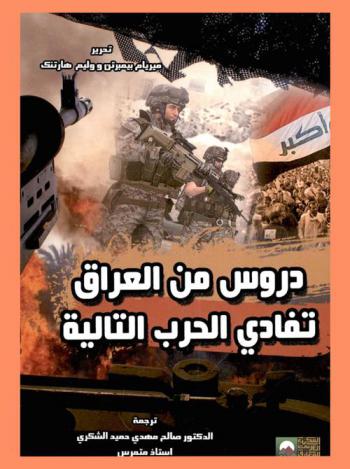
دروس من العراق تفادي الحرب التالية : الديمبراطورية : أمريكا لا تتعلم الدروس وتصاب بالجنون الرومانية من جديد
يعرض هذا الكتاب كيفية اتخاذ هذا القرار وحجم الدمار الذي خلفته الحرب على العراق ويقدم هذا الكتاب مجموعات المقالات التي ستجعلك تنضم إلى حركة منع نشوب حرب قادمة على العراق قد كان قرار الحرب على العراق من أسوأ قرارات السياسة الخارجية الأمريكية على الإطلاق وأكبر أخطائها إذا كان السبب الرئيسي لاتخاذ قرار شن الحرب على العراق هو إعادة الدفاع عن السلطة الأمريكية بعدما كشفت أحداث الحادي عشر من سبتمبر عن قابلية الدولة للسقوط، فإن النتيجة الفعلية كما تشير إليها مقالات ذلك الكتاب.
BOOK

Mass Deception
The attacks of 9/11 led to a war on Iraq, although there was neither tangible evidence that the nation's leader, Saddam Hussein, was linked to Osama bin Laden nor proof of weapons of mass destruction. Why, then, did the Iraq war garner so much acceptance in the United States during its primary stages?Mass Deceptionargues that the George W. Bush administration manufactured public support for the war on Iraq. Scott A. Bonn introduces a unique, integrated, and interdisciplinary theory called \"critical communication\" to explain how and why political elites and the news media periodically create public panics that benefit both parties. Using quantitative analysis of public opinion polls and presidential rhetoric pre- and post-9/11 in the news media, Bonn applies the moral panic concept to the Iraq war. He critiques the war and occupation of Iraq as violations of domestic and international law. Finally,Mass Deceptionconnects propaganda and distortion efforts by the Bush administration to more general theories of elite deviance and state crime.
eBook

The Legacy of Iraq
The Legacy of Iraq critically reflects on the abject failure of the 2003 intervention to turn Iraq into a liberal democracy, underpinned by free-market capitalism, its citizens free to live in peace and prosperity. It argues that mistakes made by the coalition and the Iraqi political elite set a sequence of events in motion that have had devastating consequences for Iraq, the Middle East and for the rest of the world. Today, as the nation faces perhaps its greatest challenge in the wake of the devastating advance of the Islamic State of Iraq and Syria (ISIS) and another US-led coalition undertakes renewed military action in Iraq, understanding the complex and difficult legacies of the 2003 war could not be more urgent. Ignoring the legacies of the Iraq war and denying their connection to contemporary events couldmeans that vital lessonsare ignored and the same mistakes made again.
eBook
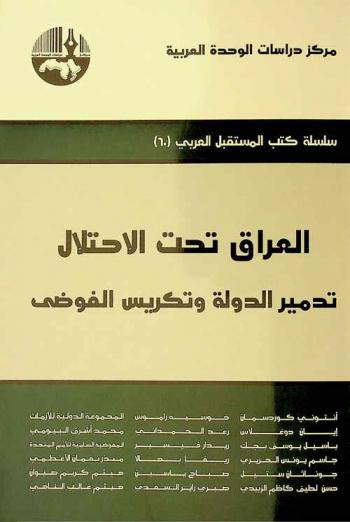
العراق تحت الاحتلال : تدمير الدولة وتكريس الفوضى
تعرض دراسات هذا الكتاب جوانب عديدة من قضية العراق في مواجهة الاحتلال وتداعياته، كتبت بأقلام أجنبية، وعربية ومنها عراقية، وهي شهادات توثق قدرة الأمة العربية على المقاومة والمجابهة، وتؤكد حتمية انتصار شعب العراق والأمة العربية إزاء كل محاولات الاحتواء والمصادرة والهيمنة تمثل هذه النصوص شهادات عن مرحلة حاسمة في نضال الأمة العربية، والعراق بشكل خاص، من أجل الحرية والكرامة.
Book

Welcome to the Suck
Our collective memories of World War II and Vietnam have been shaped as much by memoirs, novels, and films as they have been by history books. InWelcome to the Suck, Stacey Peebles examines the growing body of contemporary war stories in prose, poetry, and film that speak to the American soldier's experience in the Persian Gulf War and the Iraq War.
Stories about war always encompass ideas about initiation, masculinity, cross-cultural encounters, and trauma. Peebles shows us how these timeless themes find new expression among a generation of soldiers who have grown up in a time when it has been more acceptable than ever before to challenge cultural and societal norms, and who now have unprecedented and immediate access to the world away from the battlefield through new media and technology.
Two Gulf War memoirs by Anthony Swofford (Jarhead) and Joel Turnipseed (Baghdad Express) provide a portrait of soldiers living and fighting on the cusp of the major political and technological changes that would begin in earnest just a few years later. The Iraq War, a much longer conflict, has given rise to more and various representations. Peebles covers a blog by Colby Buzzell (\"My War\"), memoirs by Nathaniel Fick (One Bullet Away) and Kayla Williams (Love My Rifle More Than You); a collection of stories by John Crawford (The Last True Story I'll Ever Tell); poetry by Brian Turner (Here, Bullet); the documentaryAlive Day Memories; and the feature films In the Valley of Elahand the winner of the 2010 Oscar for Best Picture,The Hurt Locker, both written by the war correspondent Mark Boal.
Books and other media emerging from the conflicts in the Gulf have yet to receive the kind of serious attention that Vietnam War texts received during the 1980s and 1990s. With its thoughtful and timely analysis,Welcome to the Suckwill provoke much discussion among those who wish to understand today's war literature and films and their place in the tradition of war representation more generally.
eBook

الإمبراطورية الجديدة : قصة الحرب الأمريكية على العراق
يتناول كتاب (الإمبراطورية الجديدة : قصة الحرب الأمريكية على العراق) والذي قام بترجمته (مازن الحسيني) في حوالي (144) صفحة من القطع المتوسط موضوع (الحرب الأمريكية على العراق) مستعرضا المحتويات التالية : الإمبراطورية الجديدة قصة الحرب الأمريكية على العراق، العسكرتاريا والحروب القادمة، بعد الانتصار في الحرب، خلطة الديمقراطية الإمبراطورية الفورية، ضد مغامرة الولايات المتحدة الأمريكية في العراق، شعور بوش المتضخم بالتفوق المطلق، مجرد بداية حرب إعادة تشكيل العالم.
Book

Deceit on the Road to War
In Deceit on the Road to War , John M. Schuessler
examines how U.S. presidents have deceived the American public
about fundamental decisions of war and peace. Deception has been
deliberate, he suggests, as presidents have sought to shift blame
for war onto others in some cases and oversell its benefits in
others. Such deceit is a natural outgrowth of the democratic
process, in Schuessler's view, because elected leaders have
powerful incentives to maximize domestic support for war and retain
considerable ability to manipulate domestic audiences. They can
exploit information and propaganda advantages to frame issues in
misleading ways, cherry-pick supporting evidence, suppress damaging
revelations, and otherwise skew the public debate to their benefit.
These tactics are particularly effective before the outbreak of
war, when the information gap between leaders and the public is
greatest.
When resorting to deception, leaders take a calculated risk that
the outcome of war will be favorable, expecting the public to adopt
a forgiving attitude after victory is secured. The three cases
featured in the book-Franklin Roosevelt and World War II, Lyndon
Johnson and the Vietnam War, and George W. Bush and the Iraq
War-test these claims. Schuessler concludes that democracies are
not as constrained in their ability to go to war as we might
believe and that deception cannot be ruled out in all cases as
contrary to the national interest.
In Deceit on the Road to War , John M. Schuessler
examines how U.S. presidents have deceived the American public
about fundamental decisions of war and peace. Deception has been
deliberate, he suggests, as presidents have sought to shift blame
for war onto others in some cases and oversell its benefits in
others. Such deceit is a natural outgrowth of the democratic
process, in Schuessler's view, because elected leaders have
powerful incentives to maximize domestic support for war and retain
considerable ability to manipulate domestic audiences. They can
exploit information and propaganda advantages to frame issues in
misleading ways, cherry-pick supporting evidence, suppress damaging
revelations, and otherwise skew the public debate to their benefit.
These tactics are particularly effective before the outbreak of
war, when the information gap between leaders and the public is
greatest.When resorting to deception, leaders take a calculated
risk that the outcome of war will be favorable, expecting the
public to adopt a forgiving attitude after victory is secured. The
three cases featured in the book-Franklin Roosevelt and World War
II, Lyndon Johnson and the Vietnam War, and George W. Bush and the
Iraq War-test these claims. Schuessler concludes that democracies
are not as constrained in their ability to go to war as we might
believe and that deception cannot be ruled out in all cases as
contrary to the national interest.
eBook


Obama, the media, and framing the U.S. exit from Iraq and Afghanistan
Situating Obama's end-of-war discourse in the historical context of the 2001 terrorist attacks, Obama, the Media, and Framing the U.S. Exit from Iraq and Afghanistan begins with a detailed comparison with the Bush war-on-terror security narrative before examining elements of continuity and change in post-9/11 elite rhetoric. Erika King deftly employs two case studies of presidential and media framing - the weeks surrounding the formal announcements of Obama's December 2009 'surge-then-exit' strategy from Afghanistan and the end of combat operations in Iraq in August 2010 - to explore the role of mass media in presenting presidential narratives of war and finds evidence of an interpretive disconnect between the media and a president seeking to present a more nuanced approach to keeping America safe. Eloquently scrutinizing Obama's discourse on the U.S. exit from two post-9/11 wars and contrasting the presidential endgame frame with the U.S. mainstream media's narratives of the wars’ meaning, accomplishments, and denouement provides a unique combination of qualitative content analysis and topical case studies and makes this volume an ideal resource for scholars and researchers grappling with the complicated and ever-evolving nexus of war, the president, and the media.
eBook