
Catalogue Search | MBRL


Are you sure you want to remove the book from the shelf?

{{itemTitle}}
38
result(s) for
"54-68"
Sort by:

Annals. Book XV
\"Tacitus' account of Nero's principate is an extraordinary piece of historical writing. His graphic narrative (including Annals XV) is one of the highlights of the greatest surviving historian of the Roman Empire. It describes how the imperial system survived Nero's flamboyant and hedonistic tenure as emperor, and includes many famous passages, from the Great Fire of Rome in AD 64 to the city-wide party organised by Nero's praetorian prefect, Tigellinus, in Rome. This edition unlocks the difficulties and complexities of this challenging yet popular text for students and instructors alike. It elucidates the historical context of the work and the literary artistry of the author, as well as explaining grammatical difficulties of the Latin for students. It also includes a comprehensive introduction discussing historical, literary and stylistic issues.\"--Page 4 of cover.
Book

A companion to the Neronian age
An authoritative overview and helpful resource for students and scholars of Roman history and Latin literature during the reign of Nero.
* The first book of its kind to treat this era, which has gained in popularity in recent years
* Makes much important research available in English for the first time
* Features a balance of new research with established critical lines
* Offers an unusual breadth and range of material, including substantial treatments of politics, administration, the imperial court, art, archaeology, literature and reception studies
* Includes a mix of established scholars and groundbreaking new voices
* Includes detailed maps and illustrations
eBook

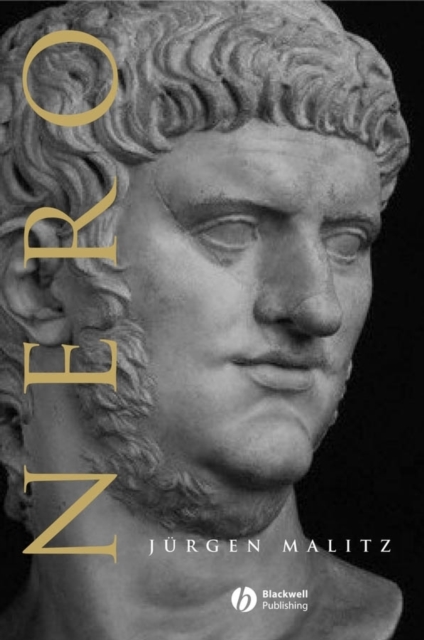
Nero
In this rigorously researched biography Jürgen Malitz invites readers to reconsider the reputation of the Roman Emperor Nero. Focuses on the growing tension between Nero's artistic tendencies and his role as emperor. Steers readers through the diverse interpretations of Nero that have arisen through the ages. Allows readers to form a balanced judgment of this divisive and controversial Emperor.
eBook


Deconstructing imperial representation : Tacitus, Cassius Dio, and Suetonius on Nero and Domitian
What literary strategies do Tacitus, Cassius Dio, and Suetonius apply in portraying Nero and Domitian? This book argues that the three authors respond to and deconstruct the positive accounts of imperial representation that were prevalent during the lifetimes of the two controversial emperors. They take up motifs from these earlier accounts, which they re-interpret to construct their own negative portraits. Although Tacitus, Cassius Dio, and Suetonius discuss the same historical figures and events of early imperial Rome, they are rarely examined together in one volume. Verena Schulz offers the first combined reading of their works from a philological viewpoint, analysing the various rhetorical techniques and narratological devices that they display, and the different literary and historical discourses in which they are embedded.
eBook

Essai sur les règnes de Claude et de Néron
Extrait: \"Les Lettres de Sénèque sont adressées à Lucilius, son ami, et son élève dans la philosophie stoïcienne: Lucilius, je vous réclame; vous êtes mon ouvrage. Ils étaient âgés tous les deux; Nous ne sommes plus jeunes. Lucilius, né dans une condition médiocre, s'était élevé par son mérite au rang de chevalier romain, et avait obtenu la place d'intendant en Sicile.\"
eBook

Kaiser und Tyrann
In der literarischen Diskussion nach ihrem Tod erscheinen Nero und Domitian als größenwahnsinnige Tyrannen, in der Panegyrik zu ihren Lebzeiten werden sie überschwänglich gepriesen. Angesichts dieser Diskrepanz hat man in den Übersteigerungen des Herrscherlobs versteckte Kritik am Kaiser vermutet. Der Band betrachtet das disparate Bild mit einem neuen, kommunikationstheoretischen Ansatz als Resultat von Prozessen der Kodierung und Umkodierung von Herrscherrepräsentation. Während das Motiv der Transgression in der Panegyrik für Nero und Domitian eine zentrale Rolle spielt, wird in der Selbstdarstellung ihrer Nachfolger darauf verzichtet. Mit dem Wechsel der Macht geht also ein Wechsel der Codes einher, mittels derer diese Macht beschrieben wird. So erfahren Aspekte, die in der panegyrischen Kodierung der Repräsentation als positiv konnotierte Grenzerweiterung gedeutet wurden, gemäß den Codes der jeweils neuen Dynastie eine Umkodierung als negativ konnotierte Grenzverletzung. Die Arbeit analysiert die sprachlichen Mechanismen, die diesen Prozessen zugrunde liegen. Damit eröffnet sie neue Perspektiven auf die literarische Repräsentation der beiden mali principes und auf Modi politischer Kommunikation im frühen Prinzipat.
eBook