
Catalogue Search | MBRL


Are you sure you want to remove the book from the shelf?

{{itemTitle}}
12
result(s) for
"5th Amendment"
Sort by:

A Principled Stand
In 1943, University of Washington student Gordon Hirabayashi defied the curfew and mass removal of Japanese Americans on the West Coast, and was subsequently convicted and imprisoned as a result. InA Principled Stand, Gordon's brother James and nephew Lane have brought together his prison diaries and voluminous wartime correspondence to tell the story ofHirabayashi v. United States, the Supreme Court case that in 1943 upheld and on appeal in 1987 vacated his conviction. For the first time, the events of the case are told in Gordon's own words. The result is a compelling and intimate story that reveals what motivated him, how he endured, and how his ideals changed and deepened as he fought discrimination and defended his beliefs.
A Principled Standadds valuable context to the body of work by legal scholars and historians on the seminal Hirabayashi case. This engaging memoir combines Gordon's accounts with family photographs and archival documents as it takes readers through the series of imprisonments and court battles Gordon endured. Details such as Gordon's profound religious faith, his roots in student movements of the day, his encounters with inmates in jail, and his daily experiences during imprisonment give texture to his storied life.
eBook
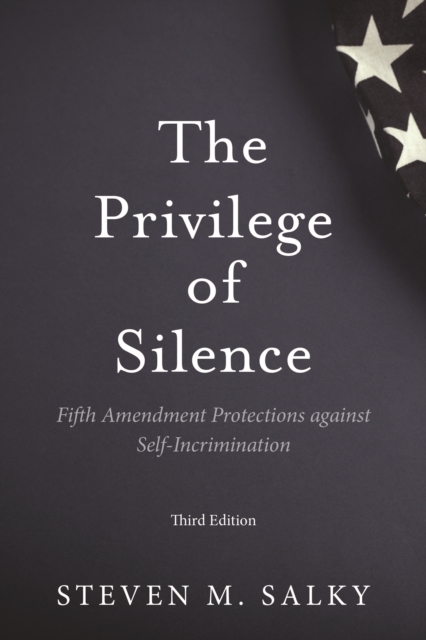
The privilege of silence: Fifth Amendment protections against self-incrimination
\"The genesis of this book was the recognition that the practicing lawyer's library lacked a comprehensive guide to the application of the Fifth Amendment privilege against self-incrimination. This work is designed to fill that void and to become a basic research tool to aid lawyers in thinking about and applying the Fifth Amendment privilege in various contexts and proceedings\"--.
eBook
How the police generate false confessions
Despite the rising number of confirmed false confession cases, most people have a hard time grasping why someone would confess to a crime they did not commit, or even why a guilty person would admit to something that could put them in jail for life. How the Police Generate False Confessions takes you inside the interrogation room, exposing the tactics that law enforcement uses to make confessions happen. James L. Trainum reveals how innocent people can become suspects and then confessed criminals even when they have not committed a crime. Using real stories, he looks at the inherent coerciveness of the interrogation process and why so many false confessions contain so many of the details that only the true perpetrator would know. More disturbingly, the book examines how these same processes corrupt witness and victim statements, create lying informants and cooperators, and induce innocent people to plead guilty. Trainum also offers recommendations for change in the U.S. by looking at how other countries are changing the process to prevent such miscarriages of justice. The reasons that people falsely confess can be complex and varied throughout How the Police Generate False Confessions Trainum encourages readers to critically evaluate confessions on their own by gaining a better understanding of the interrogation process.--Publisher description.
eBook
The Privilege of Silence
This guide is designed as a basic research tool to aid practicing lawyers in thinking about and applying the Fifth Amendment privilege in various contexts and proceedings.This third edition not only updates the second edition with more recent court decisions but also expands the prior discussion on certain topics in order to elucidate, or in some.
eBook

Compelled Production of Cloud Computing Data: Fifth Amendment Concerns
The 5
th
Amendment ensures that a defendant shall not be compelled in any criminal case to be a witness against himself. The demand for production of potentially incriminating electronically stored communications has forced many defendants to invoke their 5
th
Amendment rights, and this has caused excessive burden in discovery. Case law has demonstrated that there have been issues with concepts such as the foregone conclusion doctrine, overly broad subpoenas, and the concept of what exactly constitutes a testimonial act. Finding a balance between allowing government authorities to conduct an effective investigation by utilizing all key pieces of evidence and safeguarding against potential violation of defendants' 5
th
Amendment rights remains a daunting task for courts.
Book Chapter

Invasion of the Drones
\"They can record video images and produce heat maps. They can track fleeing criminals, stranded hikers--or, just as easily, political protesters. And for cash-strapped police departments, they're a lot more affordable than helicopters. Law enforcement officials across the country see great potential in drones. These unmanned aircraft that most people associate with killing terrorists in countries like Pakistan and Yemen are on the brink of evolving into a big domestic industry. It's no longer a question of whether drones will appear in the skies above the United States, but how soon and under what conditions.\" (New York Times Upfront) Read more about the use of drones in law enforcement. The concerns over drones and the right to privacy are examined.
Magazine Article

Constitutional Rights to Counsel During Interrogation
\"This article examines both the Fifth and Sixth Amendment rights to counsel and the underlying principles that support these rights. This article also reviews the Supreme Court's interpretation of these rights and the effects they have on a law enforcement officer's ability to engage in interrogation during various stages of a criminal investigation. Finally, suggestions are offered regarding policy considerations that incorporate the protections of the rights to counsel and optimize the potential of obtaining statements that are admissible in court.\" (FBI Law Enforcement Bulletin)
Magazine Article
Intentional violations of Miranda: a strategy for liability
\"[I]n Miranda v. Arizona, the United States Supreme Court held that custodial interrogations create a psychologically compelling atmosphere that countermands the Fifth Amendment protection against compelled self-incrimination...[T]he Court developed the...Miranda warnings as a means of reducing the compulsion attendant in custodial interrogations. In the years that followed, the Court handed down numerous rulings purported to clarify and refine the Miranda decision...[T]here now exists a complex legal maze that investigators must negotiate when attempting to interrogate custodial subjects. Occasionally, investigators fail...to negotiate the maze properly...This article reviews the cases that, by limiting the legal consequences of Miranda violations, may have encouraged some law enforcement officers to develop interrogation strategies that incorporate intentional violations of the Miranda rule. The article also examines the potential civil liability for following such strategies.\" (FBI LAW ENFORCEMENT BULLETIN)
Magazine Article