
Catalogue Search | MBRL


Are you sure you want to remove the book from the shelf?

{{itemTitle}}
51
result(s) for
"711–1516"
Sort by:

The Gibraltar Crusade
The epic battle for control of the Strait of Gibraltar waged by Castile, Morocco, and Granada in the late thirteenth and early fourteenth centuries is a major, but often overlooked, chapter in the history of the Christian reconquest of Spain. After the Castilian conquest of Seville in 1248 and the submission of the Muslim kingdom of Granada as a vassal state, the Moors no longer loomed as a threat and the reconquest seemed to be over. Still, in the following century, the Castilian kings, prompted by ideology and strategy, attempted to dominate the Strait. As self-proclaimed heirs of the Visigoths, they aspired not only to reconstitute the Visigothic kingdom by expelling the Muslims from Spain but also to conquer Morocco as part of the Visigothic legacy. As successive bands of Muslims over the centuries had crossed the Strait from Morocco into Spain, the kings of Castile recognized the strategic importance of securing Algeciras, Gibraltar, and Tarifa, the ports long used by the invaders.At a time when European enthusiasm for the crusade to the Holy Land was on the wane, the Christian struggle for the Strait received the character of a crusade as papal bulls conferred the crusading indulgence as well as ancillary benefits. The Gibraltar Crusade had mixed results. Although the Castilians seized Gibraltar in 1309 and Algeciras in 1344, the Moors eventually repossessed them. Only Tarifa, captured in 1292, remained in Castilian hands. Nevertheless, the power of the Marinid dynasty of Morocco was broken at the battle of Salado in 1340, and for the remainder of the Middle Ages Spain was relieved of the threat of Moroccan invasion. While the reconquest remained dormant during the late fourteenth and early fifteenth centuries, Ferdinand and Isabella conquered Granada, the last Muslim outpost in Spain, in 1492. In subsequent years Castile fulfilled its earlier aspirations by establishing a foothold in Morocco.
eBook

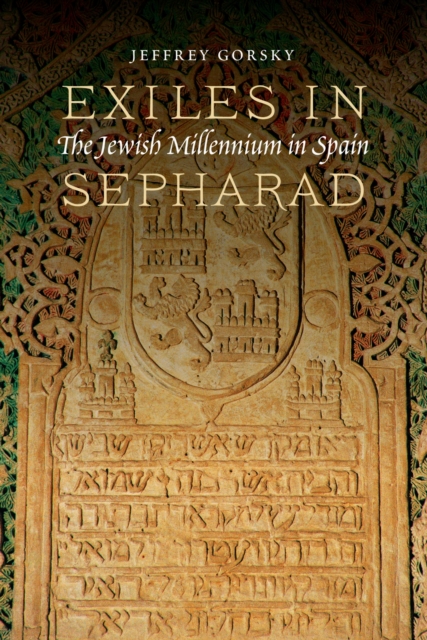
Exiles in Sepharad
The dramatic one-thousand-year history of Jews in Spain comes to life inExiles in Sepharad. Jeffrey Gorsky vividly relates this colorful period of Jewish history, from the era when Jewish culture was at its height in Muslim Spain to the horrors of the Inquisition and the Expulsion.
Twenty percent of Jews today are descended from Sephardic Jews, who created significant works in religion, literature, science, and philosophy. They flourished under both Muslim and Christian rule, enjoying prosperity and power unsurpassed in Europe. Their cultural contributions include important poets; the great Jewish philosopher Moses Maimonides; and Moses de Leon, author of theZohar, the core text of the Kabbalah.
But these Jews also endured considerable hardship. Fundamentalist Islamic tribes drove them from Muslim to Christian Spain. In 1391 thousands were killed and more than a third were forced to convert by anti-Jewish rioters. A century later the Spanish Inquisition began, accusing thousands of these converts of heresy. By the end of the fifteenth century Jews had been expelled from Spain and forcibly converted in Portugal and Navarre. After almost a millennium of harmonious existence, what had been the most populous and prosperous Jewish community in Europe ceased to exist on the Iberian Peninsula.
eBook


Reconquest and Crusade in Medieval Spain
Drawing from both Christian and Islamic sources,Reconquest and Crusade in Medieval Spaindemonstrates that the clash of arms between Christians and Muslims in the Iberian peninsula that began in the early eighth century was transformed into a crusade by the papacy during the twelfth and thirteenth centuries. Successive popes accorded to Christian warriors willing to participate in the peninsular wars against Islam the same crusading benefits offered to those going to the Holy Land. Joseph F. O'Callaghan clearly demonstrates that any study of the history of the crusades must take a broader view of the Mediterranean to include medieval Spain. Following a chronological overview of crusading in the Iberian peninsula from the late eleventh to the middle of the thirteenth century, O'Callaghan proceeds to the study of warfare, military finance, and the liturgy of reconquest and crusading. He concludes his book with a consideration of the later stages of reconquest and crusade up to and including the fall of Granada in 1492, while noting that the spiritual benefits of crusading bulls were still offered to the Spanish until the Second Vatican Council of 1963. Although the conflict described in this book occurred more than eight hundred years ago, recent events remind the world that the intensity of belief, rhetoric, and action that gave birth to crusade, holy war, and jihad remains a powerful force in the twenty-first century.
eBook
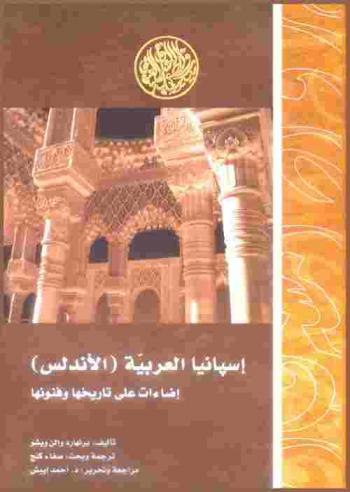
إسبانيا العربية : (الأندلس) : إضاءات على تاريخها وفنونها
يتناول كتاب (إسبانيا العربية) والذي قام بتأليفه (برنهارد ويشو) في حوالي (486) صفحة من القطع المتوسط موضوع (الفن الإسلامي) مستعرضا المحتويات التالية : الفصل الأول بعنوان المسيحية في ظل الإسلام، الفصل الثاني بعنوان أبناء غيطشة، الفصل الثالث بعنوان السلالة المولدين الملكية، الفصل الرابع بعنوان الأندلس في القرن التاسع عشر، الفصل السادس بعنوان عمر ملك طليطلة.
Book

Conversos, Inquisition, and the Expulsion of the Jews from Spain
The Jewish community of medieval Spain was the largest and most important in the West for more than a thousand years, participating fully in cultural and political affairs with Muslim and Christian neighbors. This stable situation began to change in the 1390s, and through the next century hundreds of thousands of Jews converted to Christianity. Norman Roth argues here with detailed documentation that, contrary to popular myth, the conversos were sincere converts who hated (and were hated by) the remaining Jewish community. Roth examines in depth the reasons for the Inquisition against the conversos, and the eventual expulsion of all Jews from Spain. “With scrupulous scholarship based on a profound knowledge of the Hebrew, Latin, and Spanish sources, Roth sets out to shatter all existing preconceptions about late medieval society in Spain.”—Henry Kamen,
Journal of Ecclesiastical History “Scholarly, detailed, researched, and innovative. . . . As the result of Roth’s writing, we shall need to rethink our knowledge and understanding of this period.”—Murray Levine,
Jewish Spectator “The fruit of many years of study, investigation, and reflection, guaranteed by the solid intellectual trajectory of its author, an expert in Jewish studies. . . . A contribution that will be particularly valuable for the study of Spanish medievalism.”—Miguel Angel Motis Dolader, Annuario de Estudios Medievales
eBook
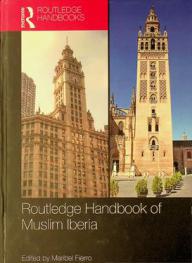
The Routledge handbook of Muslim Iberia
\"This handbook offers an overview of the main issues regarding the political, economic, social, religious, intellectual and artistic history of the Iberian Peninsula during the period of Muslim rule (8th-15th centuries). A comprehensive list of primary and secondary sources attests the vitality of the academic study of al-Andalus (= Muslim Iberia) and its place in present-day discussions about the past and the present. The contributors are all specialists with diverse backgrounds providing different perspectives and approaches. The volume includes chapters dealing with the destiny of the Muslim population after the Christian conquest and with the posterity of al-Andalus in art, literature and different historiographical traditions. The chapters are organised in the following sections: Political history, concentrating on rulers and armies -- Social, religious and economic groups -- Intellectual and cultural developments -- Legacy and memory of al-Andalus. Offering a synthetic and updated academic treatment of the history and society of Muslim Iberia, this comprehensive and up-to-date collection provides an authoritative and interdisciplinary guide. It is a valuable resource for both specialists and the general public interested in the history of the Iberian Peninsula, Islamic and Medieval studies\"-- Provided by publisher.
Book

Exotic Nation
In the Western imagination, Spain often evokes the colorful culture of al-Andalus, the Iberian region once ruled by Muslims. Tourist brochures inviting visitors to sunny and romantic Andalusia, home of the ingenious gardens and intricate arabesques of Granada's Alhambra Palace, are not the first texts to trade on Spain's relationship to its Moorish past. Despite the fall of Granada to the Catholic Monarchs in 1492 and the subsequent repression of Islam in Spain, Moorish civilization continued to influence both the reality and the perception of the Christian nation that emerged in place of al-Andalus. InExotic Nation, Barbara Fuchs explores the paradoxes in the cultural construction of Spain in relation to its Moorish heritage through an analysis of Spanish literature, costume, language, architecture, and chivalric practices. Between 1492 and the expulsion of the Moriscos (Muslims forcibly converted to Christianity) in 1609, Spain attempted to come to terms with its own Moorishness by simultaneously repressing Muslim subjects and appropriating their rich cultural heritage. Fuchs examines the explicit romanticization of the Moors in Spanish literature-often referred to as \"literary maurophilia\"-and the complex, often silent presence of Moorish forms in Spanish material culture. The extensive hybridization of Iberian culture suggests that the sympathetic depiction of Moors in the literature of the period does not trade in exoticism but instead reminded Spaniards of the place of Moors and their descendants within Spain. Meanwhile, observers from outside Spain recognized its cultural debt to al-Andalus, often deliberately casting Spain as the exotic racial other of Europe.
eBook