
Catalogue Search | MBRL


Are you sure you want to remove the book from the shelf?

{{itemTitle}}
2,409
result(s) for
"7th century"
Sort by:

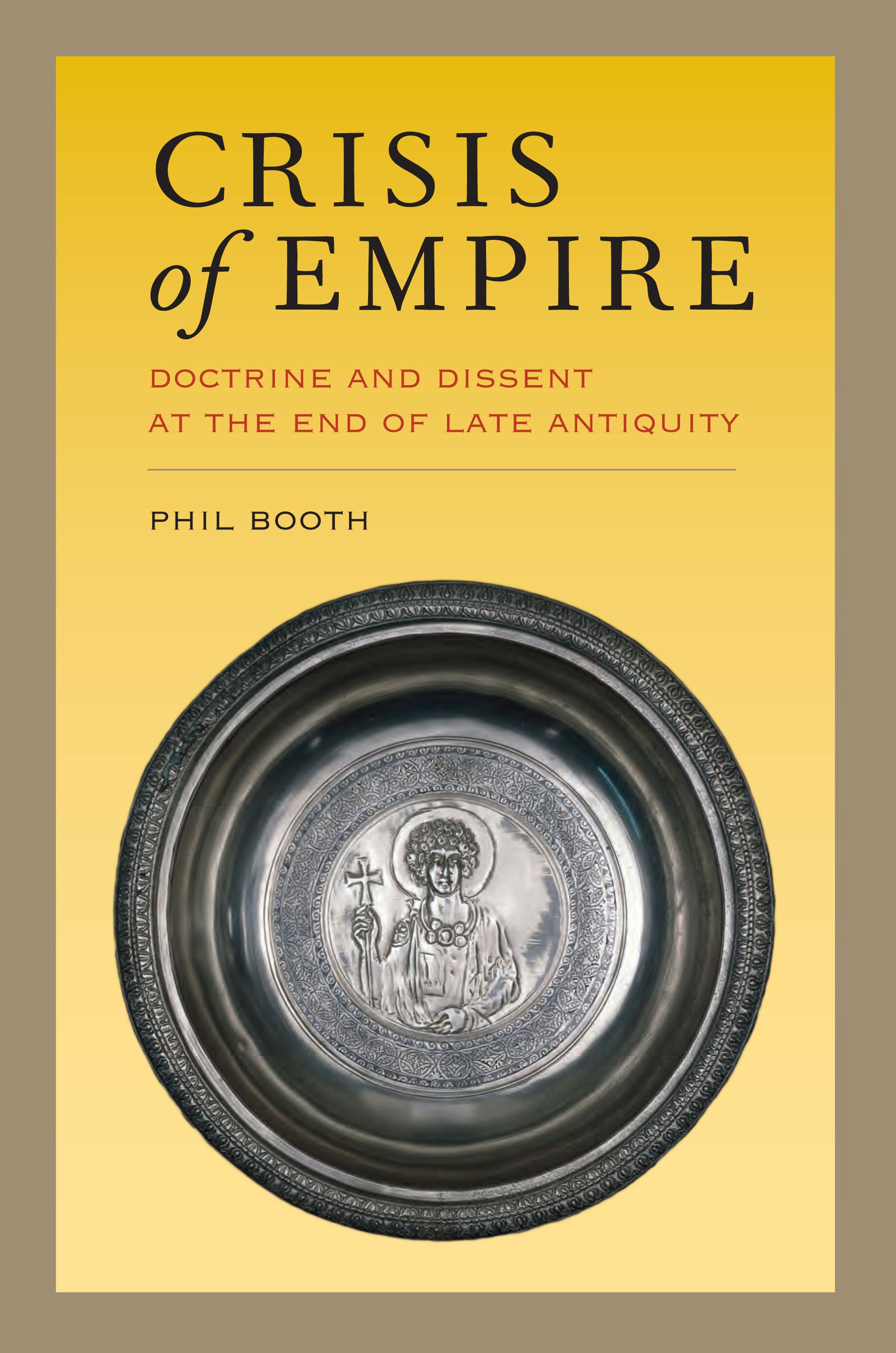
Crisis of empire
This book focuses on the attempts of three ascetics—John Moschus, Sophronius of Jerusalem, and Maximus Confessor—to determine the Church’s power and place during a period of profound crisis, as the eastern Roman empire suffered serious reversals in the face of Persian and then Islamic expansion. By asserting visions which reconciled long-standing intellectual tensions between asceticism and Church, these authors established the framework for their subsequent emergence as Constantinople's most vociferous religious critics, their alliance with the Roman popes, and their radical rejection of imperial interference in matters of the faith. Situated within the broader religious currents of the fourth to seventh centuries, this book throws new light on the nature not only of the holy man in late antiquity, but also of the Byzantine Orthodoxy that would emerge in the Middle Ages, and which is still central to the churches of Greece and Eastern Europe.
eBook
The rise of a capital : Al-Fusṭāṭ and its hinterland, 18/639-132/750
\"In The Rise of a Capital: Al-Fusṭāṭ and Its Hinterland, 18/639-132/750, Jelle Bruning maps al-Fusṭāṭ's development from a garrison town founded by Muslim conquerors near modern Cairo (Egypt) in c. 640 C.E. into a bustling provincial capital a century later. Synthesising contemporary papyri, archaeology and narrative sources, this book argues that al-Fusṭāṭ's position in Egypt changed with the different policies of the Rightly-Guided and Umayyad caliphs and their provincial representatives. Because these policies affected the town's centrality in the administration as well as in commercial and legal networks throughout Egypt, from Alexandria in the north to Aswan in the south, The Rise of a Capital offers valuable new insights into Egypt's society during the first century of Muslim rule.\"--Provided by publisher.
Book

A STUDY ON THE NARRATIVE CHARACTERISTICS AND RECEPTION PSYCHOLOGY OF ANCIENT JUDGMENT TEXTS OF EARLY SEVENTH CENTURY
Abstract
Objectives
As one of the crucial literary genres in the imperial examination system of early seventh-century, judgment texts left profound imprints on the development of prose. This study aims to investigate the stylistic evolution of ancient texts and the aesthetic psychology of literati from an interdisciplinary perspective combining narratology and psychology.
Methods
Through systematically reviewing ancient judgment texts and employing psychological research methodologies integrated with classical prose theory, this study conducts an interdisciplinary investigation into the narrative characteristics, stylistic evolution, and literati aesthetic psychology reflected in these texts.
Results
The research demonstrates narrative characteristics in of early 7th century judgment texts: The textual language evolved from florid ornamentation to a harmonious balance between literary refinement and substantive content; the adjudicated scenarios transitioned from strictly factual accounts to consciously fictionalized narratives. “From psychological and aesthetic perspectives, as a unique hybrid genre of judicial document and literary creation, the early seventh-century judgment texts reflected the contemporary literati’s reception psychology.”
Conclusions
From the perspective of reception psychology in classical prose, literati demonstrated a distinct propensity for hybridizing diverse literary genres to formulate new paradigms. Though originating from judicial practice, judgment texts underwent a remarkable stylistic evolution from factual documentation toward literary fictionalization during their integration into the examination system. This generic transformation, propelled by the creative adaptation and receptive psychology of literati, offers seminal insights into the development of ancient prose aesthetics. Such genre innovation not only reflected public psychological acceptance but also resolved intrinsic anxieties about stylistic development on a spiritual level.
Acknowledgments
This research was supported by the following grants: 2023 Humanities and Social Sciences Youth Fund Project of the Ministry of Education of China “The Transformation of Tang Dynasty Parallel Prose and Intellectual Trends in Prose Reform”, (Grant No. 23YJC751031).
Journal Article
PSYCHOLOGY OF TRADITIONAL CULTURE AND THE EVOLUTION OF THE LITERARY STYLE IN THE LATE 7TH AND EARLY 8TH CENTURIES
Abstract
Objectives
“Classical Studies” was a significant literary philosophy during the transition from the Early Seventh Century in China, leaving a profound mark on the history of Chinese prose. This study aims to explore the prose theories of Classic Chinese writers, as well as their reform of parallel-style official documents, from the perspective of traditional literature and psychological anxiety.
Methods
Through systematic analysis of the literary works of Classic Chinese writers, this study explores the psychological anxiety manifested in their writings. Integrating psychological theories with the perspective of psychological, supplemented by classical Chinese prose theory, this paper delves into the literary ideals of the “Literary Style” and its transformative role in the evolution of parallel prose from a psychoanalytic perspective.
Results
The evolution of the “Literary Style” parallel prose official documents in the seventh century primarily manifests in: balance form and substance, emphasizing psychological depth while pursuing formal beauty; not only preserved the exquisite craftsmanship of parallel prose but also infused it with broad and uplifting psychological confidence; the blending of parallel and free prose structures with diminished allusions, breaking the rigidity of strict parallelism through flexible insertion of free prose elements, thereby alleviating the resultant psychological anxiety.
Conclusions
From a cultural-psychological perspective, the “Literary Style” established psychological confidence in seventh-century Chinese parallel prose composition. These innovations significantly alleviated cultural and psychological anxiety in the evolution of parallel prose while cultivating a psychological aesthetic that prized sublime magnificence, and exerted profound influence on the development of subsequent literary forms.
Acknowledgments
This research was supported by the following grants: 2023 Humanities and Social Sciences Youth Fund Project of the Ministry of Education of China “The Transformation of Tang Dynasty Parallel Prose and Intellectual Trends in Prose Reform”, (Grant No. 23YJC751031).
Journal Article

Storm of steel
\"AD 643. Anglo-Saxon Britain. Heading south to lands he once considered his home, Beobrand is plunged into a dark world of piracy and slavery when an old friend enlists his help to recover a kidnapped girl. Embarking onto the wind-tossed seas, Beobrand pursues his quarry with single-minded tenacity. But the Whale Road is never calm and his journey is beset with storms, betrayal and violence. As the winds of his wyrd blow him ever further from what he knows, will Beobrand find victory on his quest or has his luck finally abandoned him?\"--Provided by publisher.
Book
Bede, Bishops and Bisi of East Anglia: Questions of Chronology and Episcopal Consecration in the Historia Ecclesiastica gentis Anglorum
This article examines a contradiction in Bede’s Historia Ecclesiastica between Bede’s own claims and the implications of the list of bishops in the conciliar document produced at the Synod of Hertford, concerning the date of Bisi’s consecration. Modern reconstructions of East Anglian episcopal chronology rely on Bede’s account. The article opens by considering Bede’s concern to identify episcopal consecrators, which led to the contradiction. The implications of the Synod of Hertford are then explored for dating East Anglia’s bishops and the consequent impact this has upon interpreting East Anglia’s royal chronology and the evangelization of the kingdom. This further exposes Bede’s motives for writing his history and how he constructed his narrative.
Journal Article
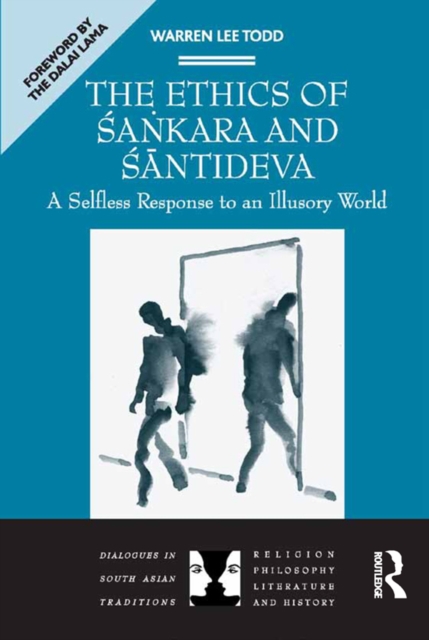
The Ethics of Śaṅkara and Śāntideva
Exploring the philosophical concerns of the nature of self, this book draws from two of the most influential Indian masters, Sa¿kara and Santideva. Todd demonstrates that an ethics of altruism is still possible within a metaphysics which assumes there to be no independent self. A new ethical model based on the notions of 'flickering consciousness' and 'constructive altruism' is proposed. By comparing the metaphysics and ethics of Sa¿kara and Santideva, Todd shows that the methodologies and aims of these Buddhist and Hindu masters trace remarkably similar cross-cutting paths. Treating Buddhism and Hinduism with equal respect, this book compares and reinterprets the Indian material so as to engage with contemporary Western debates on self and to show that Indian philosophy is indeed a philosophy of dialogue.
eBook

The Inscriptions of Nabopolassar, Amel-Marduk and Neriglissar
Studies in Ancient Near Eastern Records (SANER) is a peer-reviewed series devoted to the publication of monographs pertaining to all aspects of the history, culture, literature, religion, art, and archaeology of the Ancient Near East, from the earliest historical periods to Late Antiquity. The aim of this series is to present in-depth studies of the written and material records left by the civilizations and cultures that populated the various areas of the Ancient Near East: Anatolia, Arabia, Egypt, Iran, the Levant, Mesopotamia, and Syria. Thus, SANER is open to all sorts of works that have something new to contribute and which are relevant to scholars and students within the continuum of regions, disciplines, and periods that constitute the field of Ancient Near Eastern studies, as well as to those in neighboring disciplines, including Biblical Studies, Classics, and Ancient History in general.
eBook