
Catalogue Search | MBRL


Are you sure you want to remove the book from the shelf?

{{itemTitle}}
3,036
result(s) for
"8th century"
Sort by:


Buraq Hajib and His Role in the Establishment of the Karakhatin State (619-703 AH/1222-1303AD)
The events of the establishment of the Qarakhtai state in Kerman are in the period following the defeat of the Khwarizmi by the Mongols, which led to the disintegration of their possessions, each of the emirs of the Khwarizmians began to seek to expand his power and exploit the chaos that arose after the death of Sultan Muhammad Khwarazmshah (617 AH / 1220 AD), especially after the division of the property of the Khwarizmi state among his sons, under this situation, Jalal al-Din Mankabarti ensured the resistance of the Mongols in an attempt to restore the glories of the Khwarizmi state, after he made it His father was the crown prince, while Ghiyath al-Din Birshah, took advantage of the preoccupation of his brother Jalal al-Din Mankabarti to fight the Mongols and seized the area allocated to him in southern Iran, around him gathered the men of the Khwarizmi courtiers, including Buraq Hajib, who assumed the position of hijab and the Board of Grievances of Sultan Ghiyath al-DinBut Buraq Hajib disagreed with the minister of Ghiyath al-Din, he chose to leave the service of the Sultan and decided to go to Kerman, which was under the rule of Shuja al-Din Abu al-Qasim Zawzani, despite the divergence of accounts about the reasons for his decision, but the end was his control of Kerman, Juwayni believes that Buraq Hajib sought to join Jalaluddin Mankabarti in India, while Nasir al-Din Munahid explained that Buraq Hajib chose to leave the service of Ghiyath al-Din due to political turmoil and the possibility of the fall of The algorithmic state, so he decided to join the Sultan of Delhi Shamsuddin Al-Tamish, upon his arrival in Kerman, Buraq Hajib asked Shuja Al-Zawzani to help him with travel preparations to India, but Shuja Al-Din refused and coveted his possessions of women and money, when Buraq Hajib left for India, the Kurmanites who coveted his slaves attacked and accordingly a battle took place near Rodyan, which ended with the defeat of Shuja al-Din al-Zawzani, after he was joined by some elements of the Turkmen army, This resulted in the death of Shuja al-Din and his sons, proclaiming the establishment of the Karakhatiya state in Kerman (619-703 AH / 1222-1303 AD).
Journal Article
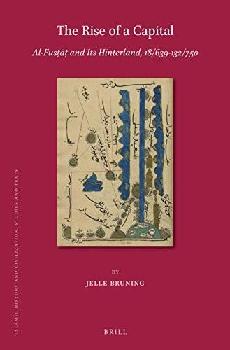
The rise of a capital : Al-Fusṭāṭ and its hinterland, 18/639-132/750
\"In The Rise of a Capital: Al-Fusṭāṭ and Its Hinterland, 18/639-132/750, Jelle Bruning maps al-Fusṭāṭ's development from a garrison town founded by Muslim conquerors near modern Cairo (Egypt) in c. 640 C.E. into a bustling provincial capital a century later. Synthesising contemporary papyri, archaeology and narrative sources, this book argues that al-Fusṭāṭ's position in Egypt changed with the different policies of the Rightly-Guided and Umayyad caliphs and their provincial representatives. Because these policies affected the town's centrality in the administration as well as in commercial and legal networks throughout Egypt, from Alexandria in the north to Aswan in the south, The Rise of a Capital offers valuable new insights into Egypt's society during the first century of Muslim rule.\"--Provided by publisher.
Book


The Foundations of Arabic Linguistics II
This second volume on The Foundations of Arabic Linguistics contains contributions from the second conference on Arabic linguistics, hosted by the University of Cambridge in 2012.All contributions deal with the grammatical theories formulated by the first grammarian to write a complete survey of the Arabic language, Sibawayhi (died at the end of the 8th century C.E.). They treat such topics as the use of hadith in grammar, the treatment of Persian loanwords, the expression of modality, conditional clauses, verbal valency, and the syntax of numerals. Contributors are: Georgine Ayoub, Michael G. Carter, Hanadi Dayyeh, Jean N. Druel, Manuela E.B. Giolfo, Almog Kasher, Giuliano Lancioni, Amal Marogy, Arik Sadan, Beata Sheyhatovitch, Cristina Solimando, and Kees Versteegh.
eBook

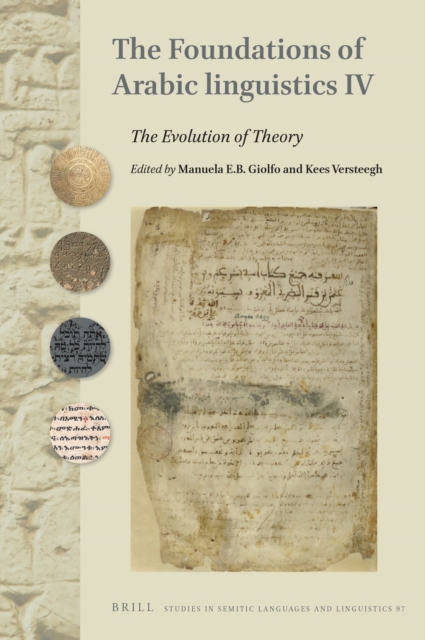
The Foundations of Arabic Linguistics IV
The Foundations of Arabic Linguistics, IV, contains sixteen studies on grammatical theories from the earliest period of Arabic grammar (end 8th century C.E.) and the evolution of theory by later grammarians.
eBook

Medieval English Church Dedications to St Gregory: Connecting Centre and Periphery
This article examines the distribution of medieval English churches and chapels dedicated to St Gregory, arguing that this distribution reflects Gregory’s symbolic significance in the pre-Conquest church as a figure who could connect centres and margins. Early dedications in ecclesiastical and royal centres recall the Gregorian mission and the connection it forged between Britain, on the margins of Christian Europe, and Rome at the centre. Concentrations of later dedications in East Anglia and the South-West asserted the connection of these more peripheral regions with the newly formed English nation, through veneration of its patron saint. The decline in numbers of Gregory dedications after the Conquest reflects the transfer of Gregory’s status as founder of the English church and patron of the English nation to other saints.
Journal Article