
Catalogue Search | MBRL


Are you sure you want to remove the book from the shelf?

{{itemTitle}}
1,139
result(s) for
"ADAPTATION DEFICIT"
Sort by:

Adaptive Perception and Adaptation Responses to Weather Shocks: An Adaptation Deficit
This study examines the influence of adaptive perception on farmers’ adaptive responses to climate change induced natural shocks in the Mekong River Delta (Viet Nam) from a data set of 329 farmers in 2017. Seemingly Unrelated Regression model is used and results show that, controlling for household and household head’s characteristics, farm characteristics, institutional factor, infrastructure, climate conditions, and past climate experiences, adaptive perceptions are the most important factor of adaptive responses. With respect to policy implication, sources and quality of information can be of important consideration due to the potential infl uences on farmers’ adaptive perception and their adaptation assessments. In addition, awareness on climate change and adaptation methods should be highlighted. Other policy options could also be suggested, such as: strengthening education level of farmers, and facilitating cheap technologies for farmers.
Journal Article
Adaptive Perception and Adaptation Responses to Weather Shocks: An Adaptation Deficit
This study examines the influence of adaptive perception on farmers' adaptive responses to climate change induced natural shocks in the Mekong River Delta (Viet Nam) from a data set of 329 farmers in 2017. Seemingly Unrelated Regression model is used and results show that, controlling for household and household head's characteristics, farm characteristics, institutional factor, infrastructure, climate conditions, and past climate experiences, adaptive perceptions are the most important factor of adaptive responses. With respect to policy implication, sources and quality of information can be of important consideration due to the potential influences on farmers' adaptive perception and their adaptation assessments. In addition, awareness on climate change and adaptation methods should be highlighted. Other policy options could also be suggested, such as: strengthening education level of farmers, and facilitating cheap technologies for farmers.
Journal Article

Adapting to climate change in Eastern Europe and Central Asia
The climate is changing, and the Eastern Europe and Central Asia (ECA) region is vulnerable to the consequences. Many of the region's countries are facing warmer temperatures, a changing hydrology, and more extremes, droughts, floods, heat waves, windstorms, and forest fires. This book presents an overview of what adaptation to climate change might mean for Eastern Europe and Central Asia. It starts with a discussion of emerging best-practice adaptation planning around the world and a review of the latest climate projections. It then discusses possible actions to improve resilience organized around impacts on health, natural resources (water, biodiversity, and the coastal environment), the 'unbuilt' environment (agriculture and forestry), and the built environment (infrastructure and housing). The last chapter concludes with a discussion of two areas in great need of strengthening given the changing climate: disaster preparedness and hydro-meteorological services. This book has four key messages: a) contrary to popular perception, Eastern Europe and Central Asia face significant threats from climate change, with a number of the most serious risks already in evidence; b) vulnerability over the next 10 to 20 years is likely to be dominated by socioeconomic factors and legacy issues; c) even countries and sectors that stand to benefit from climate change are poorly positioned to do so; and d) the next decade offers a window of opportunity for ECA countries to make their development more resilient to climate change while reaping numerous co-benefits.
eBook

Fit-for-Purpose Infrastructure Asset Management Framework for Water Utilities Facing High Uncertainties
Traditional infrastructure asset management is about maintaining the status quo of service levels in a resource-restricted, sometimes risk-increasing environment. Infrastructure asset management (IAM) is effective in addressing resource-deprived situations and in maximizing the benefits of the utility in these contexts. This makes IAM a very appropriate and useful approach for developing countries. Hence, this paper focuses on developing a fit-for-purpose integrated asset management (IAM) framework that is suitable for situations where there are risks to assets, significant uncertainties, and resource deficits, and where improvements to the current service levels are needed. To be comprehensive in the application in these contexts, there is a need to supplement IAM with a new perspective—critical necessities, next to the risks to the status quo (current levels of service). This gap was evident during application of IAM principles to the drinking water system of Al-Mafraq, Jordan. It was overcome by framing questions on adaptation deficits and future needs that are to be answered together with risk matrix-based prioritization of asset management actions. The fit-for-purpose IAM framework comprising asset management, adaptation deficit, and future needs can ensure the continuity of service levels in emerging cities when supported through expert inputs and stakeholder consultations.
Journal Article

Évaluation de l’aide et mobilisation financière internationale autour de l’adaptation au changement climatique
Promises of North-South financial transfers play a significant role in international climate negotiations. In particular, financial assistance to help developing countries adapt to the detrimental effects of climate change is gaining ground on the international agenda. This article aims at examining the specific approach to aid evaluation associated with this financial mobilization. It also shows how some recurring debates around international adaptation finance can be understood in the light of opposed positions regarding aid evaluation.
Journal Article
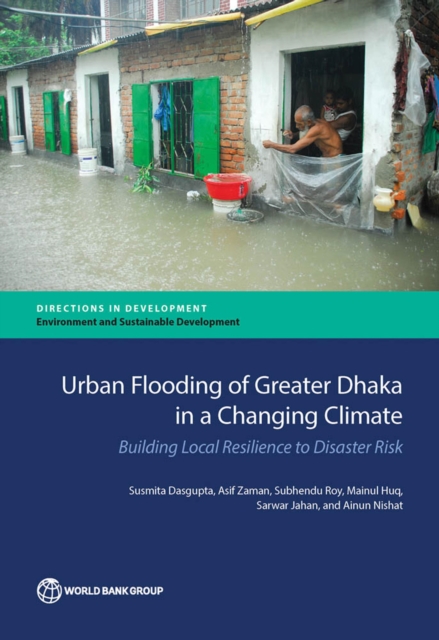
Urban flooding of greater Dhaka in a changing climate
Dhaka, the capital of Bangladesh and one of the world's rapidly growing megacities, is an urban hotspot for climate risks. Located in central Bangladesh on the lower reaches of the Ganges-Brahmaputra Delta, the city faces the recurring phenomena of urban flooding and waterlogging following intense rainfall nearly every year. As a low-elevation city with a tropical monsoon climate, Dhaka has a long history of river flooding as a natural hazard. Recent major floods have been worse in terms of depth and extent of inundation and duration, especially in fringe areas, where many of the city's poor reside. Rapid, unplanned urbanization and the gradual filling up of low-lying flood plains, rivers, canals, and other water bodies traditionally used to drain or retain water during rainfall have exacerbated the problem. A growing concern is that, in a changing climate, characterized by heavier and more erratic rainfall in the Ganges-Brahmaputra-Meghna (GBM) Basin during the monsoon season, the situation may worsen. The analysis in this book will help Bangladesh's policy makers take targeted steps to mitigate urban flooding in Dhaka and improve the city's resilience in the face of climate change and variability. Equipped with a host of investment options designed to address current flooding and further climate-proof urban infrastructure, local decision makers will be able to develop realistic, yet effective, strategies that prioritize interventions and sequence activities.
eBook

Adaptive Behavior in Young Autistic Children: Associations with Irritability and ADHD Symptoms
Attention-deficit/hyperactivity disorder (ADHD) symptoms affect 40–60% of autistic children and have been linked to differences in adaptive behavior. It is unclear whether adaptive behavior in autistic youth is directly impacted by co-occurring ADHD symptoms or by another associated feature of both autism and ADHD, such as increased irritability. The current study examined relationships between irritability, ADHD symptoms, and adaptive behavior in 3- to 7-year-old autistic children. Results suggest that, after adjusting for co-occurring ADHD symptoms, higher levels of irritability are associated with differences in social adaptive behavior specifically. Understanding relationships between irritability, ADHD, and adaptive behavior in autistic children is critical because measures of adaptive behavior, such as the Vineland Scales of Adaptive Functioning, are often used as a proxy for global functioning, as well as for developing intervention plans and measuring outcomes as primary endpoints in clinical trials.
Journal Article

Predictive metabolomics of multiple Atacama plant species unveils a core set of generic metabolites for extreme climate resilience
Current crop yield of the best ideotypes is stagnating and threatened by climate change. In this scenario, understanding wild plant adaptations in extreme ecosystems offers an opportunity to learn about new mechanisms for resilience. Previous studies have shown species specificity for metabolites involved in plant adaptation to harsh environments. ●Here, we combined multi-species ecological metabolomics and machine learning-based generalised linear model predictions to link the metabolome to the plant environment in a set of 24 species and belonging to 14 families growing along an altitudinal gradient in the Atacama Desert. ●Thirty-nine common compounds predicted the plant environment with 79% accuracy, thus establishing the plant metabolome as an excellent integrative predictor of environmental fluctuations. These metabolites were independent of the species and validated both statistically and biologically using an independent dataset from a different sampling year. Thereafter, using multiblock predictive regressions, metabolites were linked to climatic and edaphic stressors like freezing temperature, water deficit and high solar irradiance. ●These findings indicate that plants from different evolutionary trajectories use a generic metabolic toolkit to face extreme environments. These core metabolites, also present in agronomic species, provide a unique metabolic goldmine for improving crop performances under abiotic pressure.
Journal Article

Root-specific NF-Y family transcription factor, PdNF-YB21, positively regulates root growth and drought resistance by abscisic acid-mediated indoylacetic acid transport in Populus
• Root growth control plays an important role in plant adaptation to drought stress, but the underlying molecular mechanisms of this control remain largely elusive.
• Here, a root-specific nuclear factor Y (NF-Y) transcription factor PdNF-YB21 was isolated from Populus. The functional mechanism of PdNF-YB21 was characterised by various morphological, physiological, molecular, biochemical and spectroscopy techniques.
• Overexpression of PdNF-YB21 in poplar promoted root growth with highly lignified and enlarged xylem vessels, resulting in increased drought resistance. By contrast, CRISPR/Cas9-mediated poplar mutant nf-yb21 exhibited reduced root growth and drought resistance. PdNF-YB21 interacted with PdFUSCA3 (PdFUS3), a B3 domain transcription factor. PdFUS3 directly activated the promoter of the abscisic acid (ABA) synthesis key gene PdNCED3, resulting in a significant increase in root ABA content in poplars subjected to water deficit. Coexpression of poplar NF-YB21 and FUS3 significantly enhanced the expression of PdNCED3. Furthermore, ABA promoted indoylacetic acid transport in root tips, which ultimately increased root growth and drought resistance.
• Taken together, our data indicate that NF-YB21−FUS3-NCED3 functions as an important avenue in auxin-regulated poplar root growth in response to drought.
Journal Article
Évaluation de l’aide et mobilisation financière internationale autour de l’adaptation au changement climatique
Les promesses de transferts financiers Nord-Sud jouent un rôle important dans les négociations internationales établies autour du climat. En particulier, la question de l’adaptation au changement climatique des pays en développement fait l’objet d’une mobilisation financière internationale tout à fait remarquable. Cet article vise à mettre en évidence la posture particulière par rapport à l’évaluation de l’aide qui accompagne cette mobilisation financière. Nous montrons aussi comment certains débats récurrents autour du financement international de l’adaptation peuvent se lire au travers d’attitudes opposées face à la question de l’évaluation de l’aide. AbstractPromises of North-South financial transfers play a significant role in international climate negotiations. In particular, financial assistance to help developing countries adapt to the detrimental effects of climate change is gaining ground on the international agenda. This article aims at examining the specific approach to aid evaluation associated with this financial mobilization. It also shows how some recurring debates around international adaptation finance can be understood in the light of opposed positions regarding aid evaluation.
Journal Article