
Catalogue Search | MBRL


Are you sure you want to remove the book from the shelf?

{{itemTitle}}
76,830
result(s) for
"AGE OF RETIREMENT"
Sort by:
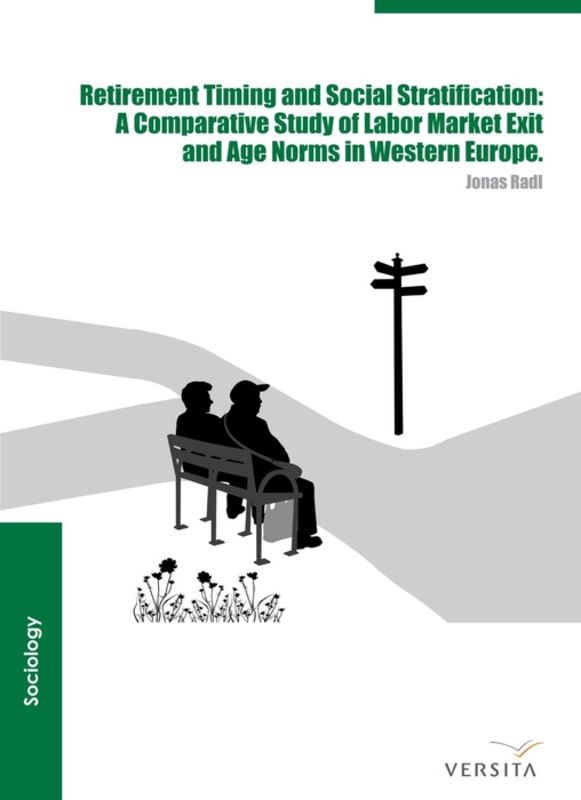
Retirement Timing and Social Stratification
The monograph disseminates the very topical issue of retirement and its timing as the key to one of the greatest challenges facing ageing societies. Postponing retirement is now almost universally regarded as indispensable in order to relieve European welfare states from the demography-related financial pressures. This seminal study, derived from a statistical analysis of a large-scale survey data, provides a thorough understanding of the micro- and macro-level determinants of retirement timing in contemporary Western Europe. The book is the first monograph to combine the analysis of the retirement attitudes with the analysis of the retirement behaviour within one research. It tackles the question as to whether early retirement can be explained by “early exit culture”, triangulating life course theory with a social stratification approach. The author used a novel and innovative approach to obtain the results. The methodology includes: tobit models of proscriptive age norms; simulations of the impact of class structure on a country’s average retirement age; competing risks models of different work-exit modalities; duration selection models of retirement timing.
eBook
Korea's Retirement Predicament
The distinguishing feature for many workers in South Korea is contractual - and often involuntary - retirement at a young age (mid-50s for most workers) followed by precarious and low-paying self-employment or contract work. In the past this practice, which is also found in other East Asian nations, provided firms with a youthful and highly productive workforce. However, with a rapidly aging population and shifts in the labour market, the existing arrangement is becoming less and less functional.
This book examines how this retirement arrangement arose, and the policy reforms that have been both undertaken and proposed to allow workers to remain employed longer. The analysis focuses on the institutional constraints to reforms, as well as the impact forced retirement has on individuals. Using a multi-disciplinary and comparative approach, the authors study contractual mandatory retirement trends and policies in South Korea, and in doing so illuminate the political, social, legal, economic and labour market implications of this widespread practice.
As nations across Asia face aging populations, this book will be welcomed by students and scholars interested in Korean studies, social policy, social welfare and gerontology. It will also be of great value to policy makers.
eBook

Tax, Welfare, and Pension Reforms in Slovenia: Implications for Work Incentives and Labor Participation
The labor participation rate in Slovenia has been lower than in the EU-15 (the members states prior to May 2004), particularly for the low-income and older individuals. Using simulations of tax and social benefits and public pensions, the paper shows how the current tax, welfare, and pension systems create disincentives to work among these groups. The paper finds that incentives to retire early are strong for men, especially low-wage earners. The marginal effective tax rates also make it costly for low-income individuals to work and negatively affect the probability of participating. The paper proposes reform measures to enhance work incentives and labor participation, which will be crucial for dealing with population aging and for achieving higher potential growth in Slovenia.
eBook

Is Asia Prepared for an Aging Population?
Many Asian countries (such as China, Singapore, Korea, Thailand, Malaysia, Indonesia, India, and the Philippines) will experience a significant aging of their populations during the next several decades. This paper explores how these aging Asian countries are addressing and anticipating the challenges of an aging society. It suggests that Asia's preparedness for an aging population is decidedly mixed. While growth policies have been successful, much work is still needed in many countries to establish an adequate and farsighted policy framework in the areas of pensions, health insurance, and labor market policies.
eBook
Why more seniors are delaying retirement to work longer
The number of 65 and older workers has doubled over the past couple of decades and many are doing it for financial reasons.
Streaming Video

Social Security Reforms in Colombia: Striking Demographic and Fiscal Balances
This paper analyzes the economic rationale for adopting parametric pension reforms and reforms broadening the coverage of public health care in Colombia during 1993-2008. Parametric pension reforms have focused on increasing the retirement age and moderating replacement rates. The health system reforms aimed at reaching universal coverage by 2012, while providing a more homogenous level of services. Our results indicate that the Net Present Value of the debt of the social security system in Colombia is roughly 160 percent of GDP for pensions and about 97 percent of GDP for the health system.
eBook

The Statistical Analysis of End of Working Life
The paper focuses on the Average Effective Age of Retirement (AEAR) indicator allowing policy makers and scientists to evaluate potential gaps between the age of the end of the working life and the pension age in European countries. Used at the European level after the Barcelona European Council of March 2002, this indicator provided by the Organisation for Economic Co-operation and Development raises a number of problems that are reviewed in this article. First, we show that employment rates of older workers dropped continuously in all European countries since 1970. From the mid-1990s and much more in the last 10 years, following European targets designed to increase older workers employment rates, the AEAR increases. Second, we analyse the formula of the AEAR as such. We show that the “employment rate” is the main component of its calculation. Using data from the European Social Surveys a new indicator based on individual data is provided. Last, using Labour Force Surveys, we develop at a macro-level a dynamic reading of labour market taking into account transitions into and outside employment. In addition, we focus particularly—at a micro-level—on individual factors via a multinomial logistic regression performed for Belgium, France and the Netherlands, particularly characterised by high rates of early retirement since the 1970s. We show that uses of exit arrangement vary depending on to gender, the level of education, and the professional and marital status.
Journal Article


Consumer Confusion: The Choice of AFORE in Mexico
This paper was prepared for the World Bank 4th Annual Contractual Savings Conference (Washington DC, April 2008) co-organized by Gregorio Impavido (gimpavido@imf.org). The article shows that account transfers among pension administrators in Mexico barely respond to price or return considerations and in general has not improved the consumer's pension balance. Instead of strengthening competition through lower fees and higher returns for the consumer, AFORE switching has so far undermined the system and resulted in the destruction of value. Moreover, \"noisy\" evaluations of the product by the consumer tend to undermine the power of competition. Thus, an increased number of pension fund managers has not provided a more competitive environment. The theoretical framework allows for the estimation of \"noise\" and mark-ups in the AFORE industry. As the number of AFOREs increases, the mark-up diminishes at a very slow rate. This implies that more participants in the industry will hardly affect prices.
eBook

Pension Reforms In France: Impact On Growth And Inter-Generational Redistributive Effects
This paper assesses the impact on growth and the inter-generational redistributive effects of some possible pension reforms in France using a dynamic general equilibrium model with overlapping generations. Results suggest that a reform increasing the effective average retirement age by 1.25 years per decade and diminishing the average replacement rate by around 6 percentage points up to 2020 could stabilise social contributions for the youngest, but would gradually foster the poverty rate among pensioners. On the other hand, a reform incorporating a rise in the age of retirement by 1.25 years per decade, unchanged replacement rates and a discretionary increase of all pensions of 2.5 per cent in 2008 would limit the poverty rate among pensioners, but it would weigh down on the growth rate and the welfare of future generations.
Journal Article