
Catalogue Search | MBRL


Are you sure you want to remove the book from the shelf?

{{itemTitle}}
42,088
result(s) for
"AI art."
Sort by:
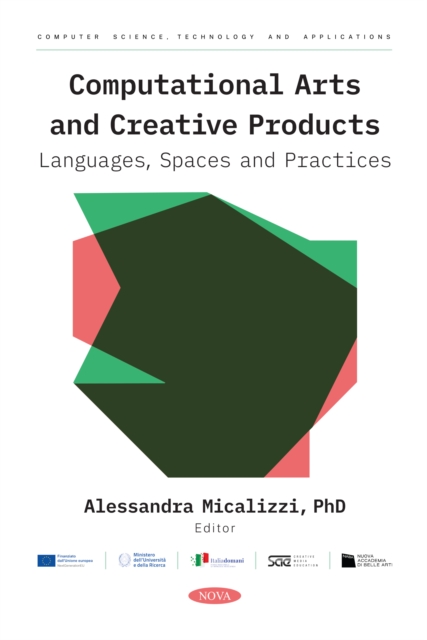
Computational arts and creative products: languages, spaces and practices
The relationship between art, techniques and technologies has always been deeply intertwined. History illustrates this, and the cultural products recognized as works of art over time serve as evidence. Each technology that human creativity and technology have encountered has marked a phase of transition, crisis, and eventual appropriation. The increasingly pervasive role of AI in creative productions has posed significant challenges, both for the world of creators and for users. The debate remains open, oscillating-almost at a stalemate-between enthusiasts and detractors. This ongoing evolution, however, encompasses significant experimentation, trial and error, the advancement of research and the curiosity of discerning users eager to navigate this new landscape. This book positions itself at the intersection of perspectives, theoretical and methodological reflections and empirical evidence, capturing the richness of this debate. It provides a snapshot of how the national and international scene, of academic and artistic communities -often disparate worlds-grapple with AI and its applications in the applied arts, particularly in music and the visual arts. The goal of this book is to bring together diverse perspectives, focusing above all on concrete cases that become the subjects of (artistic) action and research. The result is a collaborative work, enriched by the contribution of Francesco D'Isa (Laba), the experiences of Giusy Caruso (Royal Conservatoire Antwerp), the insights of renowned Italian artists like Fabrizio Festa (Conservatoire of Matera), and many other scholars at various stages of their professional journeys.
eBook


Eyes can tell: Assessment of implicit attitudes toward AI art
Advances in artificial intelligence (AI) have significantly improved the abilities of machines. Human-unique abilities, such as art creation, are now being challenged by AI. Recent studies have investigated and compared people's attitudes toward human-made and AI-generated artworks. These results suggest that a negative bias may exist toward the latter. However, none of these previous studies has examined the extent of this bias. In this study, we investigate whether a bias against AI art can be found at an implicit level. Viewers’ attitudes toward AI art were assessed using eye-tracking measures and subjective aesthetic evaluations. Visual attention and aesthetic judgments were compared between artworks categorized as human-made and AI-made. The results showed that although it was difficult for individuals to identify AI-generated artwork, they exhibited an implicit prejudice against AI art. Participants looked longer at paintings that they thought were made by humans. No significant effect of categorization of paintings was found in subjective evaluations. These findings suggest that although human and AI art may be perceived as having similar aesthetic values, an implicit negative bias toward AI art exists. Although AI can now perform creative tasks, artistic creativity is still considered a human prerogative.
Journal Article

Art must be artificial : perspectives of AI in the visual arts
'Art Must Be Artificial' presents the historical and current art practices of leading international and Saudi artists using computer technology, spanning from the 1960s until today. This exhibition questions the nature and aspects of the most accomplished computational and robotic artworks through the historic perspective of the pioneers of computer art. With a majority of artworks from the Guy & Myriam Ullens Foundation's comprehensive computing art collection, the exhibition includes more than thirty artists from fifteen countries, representing four generations of this innovative, creative practice.
BOOK

Deep Else: A Critical Framework for AI Art
From a small community of pioneering artists who experimented with artificial intelligence (AI) in the 1970s, AI art has expanded, gained visibility, and attained socio-cultural relevance since the second half of the 2010s. Its topics, methodologies, presentational formats, and implications are closely related to a range of disciplines engaged in the research and application of AI. In this paper, I present a comprehensive framework for the critical exploration of AI art. It comprises the context of AI art, its prominent poetic features, major issues, and possible directions. I address the poetic, expressive, and ethical layers of AI art practices within the context of contemporary art, AI research, and related disciplines. I focus on the works that exemplify poetic complexity and manifest the epistemic or political ambiguities indicative of a broader milieu of contemporary culture, AI science/technology, economy, and society. By comparing, acknowledging, and contextualizing both their accomplishments and shortcomings, I outline the prospective strategies to advance the field. The aim of this framework is to expand the existing critical discourse of AI art with new perspectives which can be used to examine the creative attributes of emerging practices and to assess their cultural significance and socio-political impact. It contributes to rethinking and redefining the art/science/technology critique in the age when the arts, together with science and technology, are becoming increasingly responsible for changing ecologies, shaping cultural values, and political normalization.
Journal Article

Humanity
Writings on human life and the refugee crisis by the most important political artist of our time. Ai Weiwei (b.1957) is widely known as an artist across media: sculpture, installation, photography, performance, and architecture. He is also one of the world's most important artist-activists and a powerful documentary filmmaker. His work and art call attention to attacks on democracy and free speech, abuses of human rights, and human displacement--often on an epic, international scale.This collection of quotations demonstrates the range of Ai Weiwei's thinking on humanity and mass migration, issues that have occupied him for decades. Selected from articles, interviews, and conversations, Ai Weiwei's words speak to the profound urgency of the global refugee crisis, the resilience and vulnerability of the human condition, and the role of art in providing a voice for the voiceless.Select quotations from the book:\"This problem has such a long history, a human history. We are all refugees somehow, somewhere, and at some moment.\" \"Allowing borders to determine your thinking is incompatible with the modern era.\" \"Art is about aesthetics, about morals, about our beliefs in humanity. Without that there is simply no art.\" \"I don't care what all people think. My work belongs to the people who have no voice.\"
Book

AI: An Active and Innovative Tool for Artistic Creation
This article aims to critically examine AI as both an active and innovative tool in artistic creation, investigating its evolving role in shaping artistic practices, expanding creative possibilities, and redefining the boundaries of human–machine collaboration. It traces the historical, conceptual, and technological integration of generative AI in art, particularly in relation to Modernism’s challenge to traditional norms. It also examines the ethical, social, and philosophical implications of AI art, focusing on issues such as authorship, legitimacy, and AI’s role in the cultural landscape. Through the analysis of two representative works—Refik Anadol’s Unsupervised and Anna Ridler’s Mosaic Virus—one mainstream and the other critically engaging with AI art’s social impact, the study examines the balance between technical innovation and conceptual depth, emphasizing transparency, originality, and human-centered approaches. Employing an extended literature review across chapters, the discussion synthesizes diverse sources to critically engage with ongoing debates. Ultimately, the article advocates for human–AI collaboration, emphasizing responsible integration to enhance creativity without losing the human essence of art. It offers highly valuable insights into the current debates surrounding AI in art and effectively guides the integration of AI into future creative practices.
Journal Article

On the tip of a wave : how Ai Weiwei's art changed the tide
\"From the New York Times bestselling author of Eyes that Kiss in the Corners and Eyes that Speak to the Stars, comes a moving text about the life and work of social activist and artist, Ai Weiwei. Told in Joanna Ho's lyrical writing, this is the story behind Ai Weiwei's Lifejackets exhibit at Konzerthaus Berlin. As conditions for refugees got worse, Ai Weiwei was inspired by the discarded lifejackets on the shores of Lesbos to create a bold installation that would grab the attention of the world. With Catia Chien's dynamic and stunning illustrations, we see how Ai Weiwei became the activist and artist he is today while proving the power of art within humanity\"-- Provided by publisher.
Book

Towards a decolonial I in AI: mapping the pervasive effects of artificial intelligence on the art ecosystem
This paper delves into the intricate relationship between Artificial Intelligence (AI) and the art ecosystem, emphasizing the need for a decolonizing approach in the face of AI's growing influence. It argues that the development of AI is not just a technological leap but also a significant cultural and societal moment, akin to the advent of moving images that Walter Benjamin famously analyzed. The paper examines how AI, particularly in its current oligarchical and corporate-driven form, perpetuates and magnifies the existing social inequalities, thereby necessitating a critical and radical rethinking of its role in society and the arts. At the heart of the discussion is the concept of AI as a broad term encompassing various forms of machine intelligence, from natural language processing to computer vision. The paper criticizes the dominant anthropocentric view of intelligence and creativity, proposing a more inclusive approach that considers the diverse forms of intelligence present in other species and potentially in AI itself. It underscores the role of AI in shaping the art ecosystem, not just in the creative process but also in gatekeeping and decision-making. The paper proposes a framework for decolonizing AI in the art ecosystem, focusing on four key tasks: recognizing access as a form of power, understanding and addressing biases inherent in AI, assessing the impact of AI on marginalized communities, and challenging dominant narratives and epistemologies to create space for alternative voices and perspectives. It emphasizes the need for artists and the art community to engage actively with AI, shaping its development towards more equitable and just outcomes. In conclusion, the paper calls for a radical reimagination of AI's role in society and the arts, advocating for a future where AI is not just about technological advancement but also about fostering a more inclusive, equitable, and creatively diverse world. It invites artists, thinkers, and innovators to join in this journey of reimagining and reshaping the future of AI and the art ecosystem.
Journal Article