
Catalogue Search | MBRL


Are you sure you want to remove the book from the shelf?

{{itemTitle}}
3,076
result(s) for
"ANCIENT ARCHITECTURE"
Sort by:

The architecture of Alexandria and Egypt : c. 300 BC to AD 700
Lavishly illustrated with new plans of the city in the Ptolemaic, Roman, and Byzantine periods, reconstruction drawings and photographs, this book brings to life the ancient city and uncovers the true extent of its architectural legacy in the Mediterranean world.
Book

Early architecture in Tonga: implications for the development of Polynesian chiefdoms
Durable architecture is a hallmark of Polynesian chiefdoms, associated with centralised control of residential and agricultural land. Previous work in West Polynesia has indicated a relatively late date for the onset of such construction activity--after AD 1000--suggesting that political development was influenced by events such as post-colonisation migration. The authors report new dating evidence from the excavation of a large earth mound on the island of Tongatapu. Its construction 1500 years ago indicates that, in contrast to previous findings, well-developed chiefdoms and field monuments probably dominated the landscapes of West Polynesia substantially prior to the colonisation of more easterly island nations.
Journal Article

Egyptian places : an illustrated travelogue
Egyptian Places: An Illustrated Travelogue', presents an architect's account of visits to 12 of Ancient Egypt's most spectacular sites, a journey that transports the reader from the urban metropolis of Cairo and the Great Pyramid of Giza to the remote desert setting of the rock-cut temple at Abu Simbel; with visits to other monumental temples and towering pyramids which line the Nile River.0The book recreates that journey, describing important architectural features of these sacred monuments, their mystic foundations, and religious significance. Over 200 colour hand drawings and graphic studies capture and interpret the character of each site from the architect's unique perspective.
BOOK
A total viewshed approach to local visibility in the Chaco World
The Chacoan great houses and great kivas of the U.S. Southwest are monumental, both in their scale and in conveying meaning. Visibility is key to understanding how and by whom that meaning was experienced. Although often discussed in Chaco studies, visibility has been infrequently tested. Here, the authors consider 430 great house and great kiva locations, and evaluate their visibility within their local landscapes. Using a total viewshed approach, they provide new evidence to suggest that great houses, but not great kivas, were often placed to be highly visible to individuals in the surrounding landscape. These patterns may speak to the social and physical properties of the structures.
Journal Article
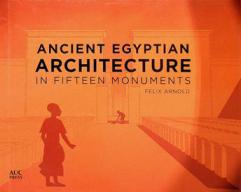
Understanding ancient Egyptian architecture in 15 monuments
\"The monuments of ancient Egypt have held scholars and tourists in their thrall for centuries. The sheer mass of the pyramids of Giza, the interaction of the temples at Deir al-Bahari with the natural environment, and the use of light in the hypostyle hall of Karnak all make these buildings world-class masterpieces of architecture, rivaling those of Greece and Rome. Ancient Egyptian Architecture in Fifteen Monuments presents an authoritative overview of Egyptian architecture from the point of view of an archaeologist and architectural historian with decades of fieldwork experience in Egypt and elsewhere. It focuses on fifteen selected masterpieces, from well-known structures such as the Bent Pyramid in Dahshur and the temple of Horus at Edfu to lesser-known monuments in Hierakonpolis, Abydos, Hawara, and Bubastis, each building representing an important stage in the development of Egyptian architecture and a different vision of what architecture should aspire to achieve. Using sixty reconstruction drawings and black-and-white photographs, Felix Arnold presents new insights into form, meaning, and the organization of space, providing a fresh perspective on ancient Egyptian culture and society.\"-- Provided by publisher.
Book
Cultural coherence of architecture in Greater Khorasan from Bactria to South Khorasan in Iran during the Late Iron Age/Achaemenid period
Tappe Takhchar-Abad, near Birjand in south Khorasan, is a recently discovered and excavated almost circular adobe building with six towers, dating to the Achaemenid period. This article suggests that the architectural tradition of circular buildings and sites in the late Iron Age/Achaemenid period, in Greater Khorasan, apparently originated from Bactria in which most such sites have been reported.
Journal Article

Ancient Egyptian art and architecture : a very short introduction
Explores the variety of arts produced in Egypt over a span of 3,500 years. Examining the stories behind these objects and buildings, Riggs looks not only at what they can tell us about ancient Egyptian life, but also how their legacy continues to shape the contemporary world.
BOOK

Research on the construction of the semantic model for Chinese ancient architectures based on architectural narratives
Purpose
This paper aims to reorganize the relevant information of Chinese ancient architectures with the use of Semantic Web technologies and thus facilitate its deep discovery and usage.
Design/methodology/approach
This paper proposes an ontology model for Chinese ancient architectures based on architectural narratives theory. To verify the availability of the ancient architecture ontology, we designed and implemented three experiments, including semantic retrieval based on SPARQL query, semantic reasoning with the use of Jena reasoner and visual analysis based on the Chinese Online Digital Humanities Resources Platform.
Findings
The proposed ontology provided a solution for the semantic annotation of the unstructured information of Chinese ancient architectures. On this basis, deep knowledge services such as semantic retrieval, semantic reasoning and visual analysis can be provided.
Practical implications
The proposed semantic model of ancient architectures can effectively improve the organization and access quality of the semantic content of Chinese ancient architectures.
Originality/value
This paper focuses on the semantic modelling for the unstructured information of Chinese ancient architectures to semantically describe the related entities (e.g. persons, events, places and times) and uncover their relationships, and thus it made contribution to the deep semantic annotations on ancient architectures.
Journal Article

The complex history of Pueblo Bonito and its interpretation
Pueblo Bonito in Chaco Canyon is one of the most iconic pre-Hispanic archaeological sites in the U.S. Southwest. Archaeologists refer to it as a great house in recognition of its massive scale, and often describe it as the centre of the Chaco world. Yet questions remain about Pueblo Bonito’s origins, sequence of construction, duration of occupation and abandonment. Here, the authors present new research that helps to clarify the early phases of occupation, and illuminates some of the problems inherent in reconstructing a building that was a perennial work in progress.
Journal Article