
Catalogue Search | MBRL


Are you sure you want to remove the book from the shelf?

{{itemTitle}}
1,865
result(s) for
"ARAB BIOGRAPHIES"
Sort by:

Rotten evidence : reading and writing in an Egyptian prison
\"In February 2016, Ahmed Naji was sentenced to two years in prison for \"violating public modesty,\" after an excerpt of his novel Using Life reportedly caused a reader to experience heart palpitations. Naji ultimately served ten months of that sentence, in a group cell block in Cairo's Tora Prison. Rotten Evidence is a chronicle of those months. Through Naji's writing, the world of Egyptian prison comes into vivid focus, with its cigarette-based economy, home-made chess sets, and well-groomed fixers. Naji's storytelling is lively and uncompromising, filled with rare insights into both the mundane and grand questions he confronts. How does one secure a steady supply of fresh vegetables without refrigeration? How does one write and revise a novel in a single notebook? Fight boredom? Build a clothes hanger? Negotiate with the chief of intelligence? And, most crucially, how does one make sense of a senseless oppression: finding oneself in prison for the act of writing fiction. Genuine and defiant, this book stands as a testament to the power of the creative mind, in the face of authoritarian censorship.\"--Front flap of cover.
BOOK

Literary autobiography and Arab national struggles
In memoirs, Arab writers have invoked solitude in moments of deep public involvement. Focusing on Taha Hussein, Sonallah Ibrahim, Assia Djebar, Latifa al-Zayyat, Mahmoud Darwish, Mourid Barghouti, Edward Said, Haifa Zangana, and Radwa Ashour, this book reads a range of autobiographical forms, sources, and affinities with other literatures. Taking a comparative approach, Nasser shows the local sources of contemporary Arab autobiography, adaptations of a global genre, and cultural exchange. She also examines different aspects of the contemporary autobiography as it has evolved in the Arab world during the past half-century, focusing on the particularity of the genre written in different languages but pertaining to one overarching Arab culture. Drawing on memoirs, testimonies, autobiographical novels, poetic autobiography, journals, and diaries, she examines solitude and national struggles in contemporary Arab autobiography.
eBook

Muddy people : a Muslim coming of age
\"A quick, clever, warm-hearted debut about growing up in an Egyptian-Muslim family. Sara is growing up in a family with a lot of rules. Her mother tells her she's not allowed to wear a bikini, her father tells her she's not allowed to drink alcohol, and her grandmother tells her to never trust a man with her money. After leaving Egypt when Sara was only six years old, her family slowly learns how to navigate the social dynamics of their new home. Sara feels out of place in her new school. Her father refuses to buy his coworkers a ginger beer, thinking it contains alcohol. Her mother refuses to wear a hijab, even if it would help them connect with other local Muslims. And Sara learns what it feels like to have a crush on a boy, that some classmates are better friends than others, and that her parents are loving, but flawed people who don't always know what's best for her, despite being her strongest defenders. For readers of Patricia Lockwood's Priestdaddy and Michelle Zauner's Crying in H Mart, this heartwarming book about family and identity introduces a compelling new voice, with a coming-of-age story that will speak to everyone who's ever struggled to figure out where they belong.\"-- Provided by publisher.
Book
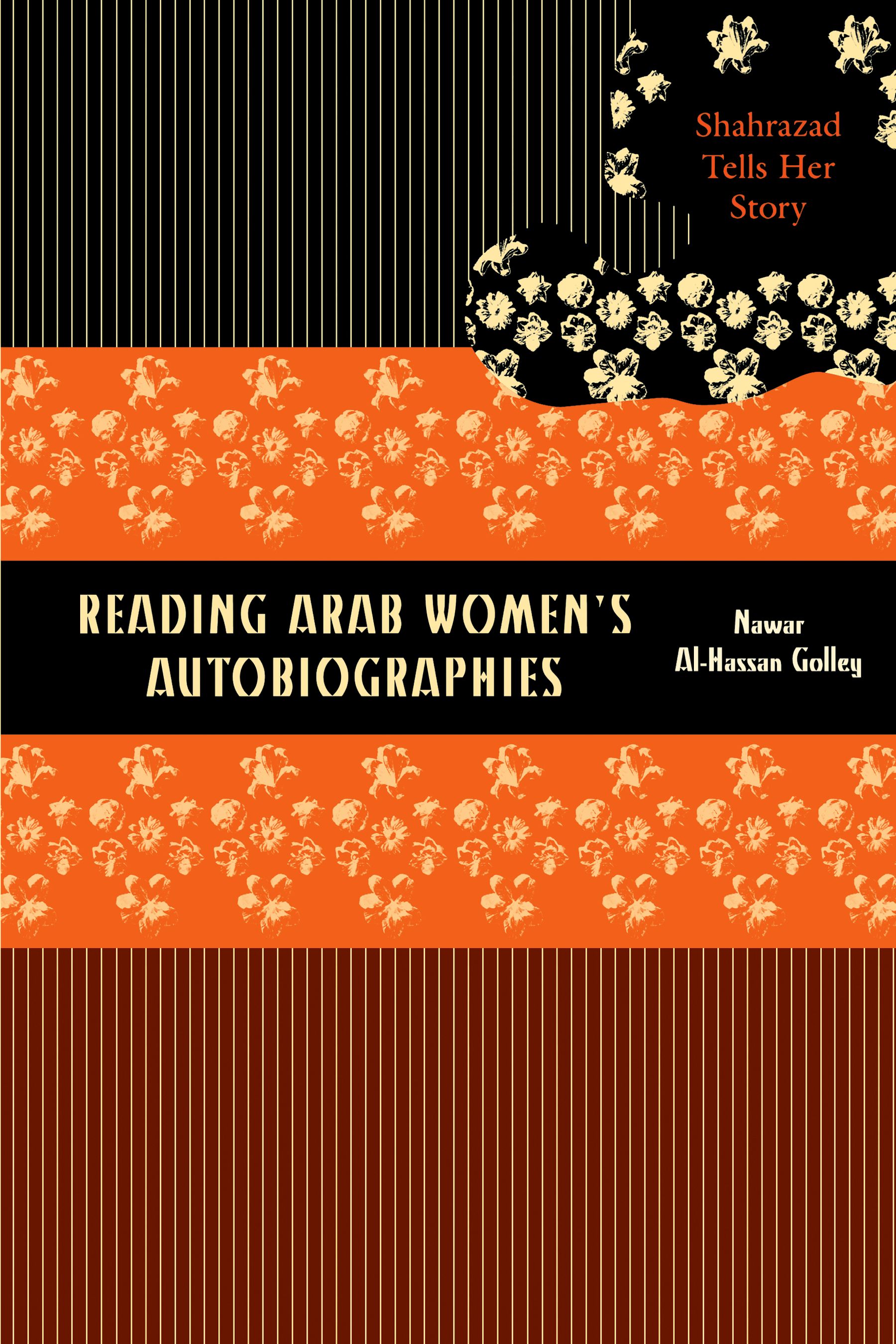
Reading Arab Women's Autobiographies
Authors of autobiographies are always engaged in creating a \"self\" to present to their readers. This process of self-creation raises a number of intriguing questions: why and how does anyone choose to present herself or himself in an autobiography? Do women and men represent themselves in different ways and, if so, why? How do differences in culture affect the writing of autobiography in various parts of the world? This book tackles these questions through a close examination of Arab women's autobiographical writings. Nawar Al-Hassan Golley applies a variety of western critical theories, including Marxism, colonial discourse, feminism, and narrative theory, to the autobiographies of Huda Shaarawi, Fadwa Tuqan, Nawal el-Saadawi, and others to demonstrate what these critical methodologies can reveal about Arab women's writing. At the same time, she also interrogates these theories against the chosen texts to see how adequate or appropriate these models are for analyzing texts from other cultures. This two-fold investigation sheds important new light on how the writers or editors of Arab women's autobiographies have written, documented, presented, and organized their texts.
eBook

Medieval Arab music and musicians : three translated texts
\"Medieval Arab Music and Musicians offers complete, annotated English translations of three of the most important medieval Arabic texts on music and musicians: the biography of the musician Ibrāhīm al-Mawṣilī from al-Iṣbahānī's Kitāb al-Aghānī (10th c), the biography of the musician Ziryāb from Ibn Ḥayyān's Kitāb al-Muqtabis (11th c), and the earliest treatise on the muwashshaḥ Andalusi song genre, Dār al-Ṭirāz, by the Egyptian scholar Ibn Sanā' al-Mulk (13th c). Al-Mawṣilī, the most famous musician of his era, was also the teacher of the legendary Ziryāb, who traveled from Baghdad to al-Andalus and is often said to have laid the foundations of Andalusi music. The third text is crucial to any understanding of the medieval muwashshaḥ and its possible relations to the Troubadours, the Cantigas de Santa María, and the Andalusi musical traditions of the modern Middle East\"-- Provided by publisher.
Book

Recovering Palestinian Lives: Qudsiyya Khurshid from Mandate Palestine to Postwar Pennsylvania
This article works to recover the life story of Qudsiyya Khurshid, a once well-known Mandate Palestinian intellectual and educator, who wrote essays for publication and for broadcasting on the Palestine Broadcasting Service, while working as a principal at girls’ schools in al-Bireh and Jerusalem. One of a number of educated women active in the Mandate public sphere, she disappeared from public consciousness after the Nakba. But in Luzerne County, Pennsylvania, where she had moved with her husband, a naturalized U.S. citizen, she became a prominent figure in civic work and as a community speaker on Palestinian and Middle Eastern life and culture. Recovering her full life story makes it possible to better appreciate the opportunities available for Palestinian women during the Mandate period and to similarly appreciate the efforts and impact of early Palestine activism among displaced Palestinians in the United States.
Journal Article

Arabic Disclosures
Arabic Disclosures presents readers with a
comparative analysis of Arabic postcolonial autobiographical
writing.
In Arabic Disclosures Muhsin J. al-Musawi investigates
the genre of autobiography within the modern tradition of Arabic
literary writing from the early 1920s to the present. Al-Musawi
notes in the introduction that the purpose of this work is not to
survey the entirety of autobiographical writing in modern Arabic
but rather to apply a rigorously identified set of characteristics
and approaches culled from a variety of theoretical studies of the
genre to a particular set of autobiographical works in Arabic,
selected for their different methodologies, varying historical
contexts within which they were conceived and written, and the
equally varied lives experienced by the authors involved.
The book begins in the larger context of autobiographical space,
where the theories of Bourdieu, Bachelard, Bakhtin, and Lefebvre
are laid out, and then considers the multiple ways in which a
postcolonial awareness of space has impacted the writings of many
of the authors whose works are examined. Organized chronologically,
al-Musawi begins with the earliest modern example of
autobiographical work in Ṭāhā Ḥusayn's book, translated into
English as The Stream of Days . Al-Musawi studies some of
the major pioneers in the development of modern Arabic thought and
literary expression: Jurjī Zaydān, Mīkḫāˀīl Nuˁaymah, Aḥmad Amīn,
Salāmah Mūsā, Sayyid Quṭb, and untranslated works by the prominent
critic and scholar Ḥammādī Ṣammūd, the novelist ʿĀliah Mamdūḥ, and
others. He also examines the autobiographies of a number of women,
including Nawāl al-Saʿdāwī and Fadwā Ṭūqān, and fiction writers.
The book draws a map of Arab thought and culture in its multiple
engagements with other cultures and will be useful for scholars and
students of comparative literature, Arabic studies, and Middle
Eastern studies, intellectual thought, and history.
eBook

Companion Encyclopedia of Middle Eastern and North African Film
The Companion Encyclopedia of Middle Eastern and North African Film is a unique, one volume work which illuminates a fascinating variety of cinema which is little known outside its own area. The Encyclopedia is divided into nine chapters, each written by a leading scholar in the field. Each chapter covers the history and major issues of film within that area, as well as providing bibliographies of the leading films, directors and actors. The areas covered are: Central Asia, Egypt, Iran, Lebanon, Syria, Iraq, Kuwait, Libya, The Magreb, Palestine, Turkey. This Encyclopedia will be an invaluable reference tool for students and scholars of Film and Media Studies. It contains more than 60 black and white photographs of featured films, includes references and suggestions for further reading at the end of each chapter, and the volume concludes with comprehensive name, film and general indexes.
'Impressively comprehensive...and well researched.' - Film Comment
'A great part of the literature on cinema in this part of the worldexists only in Arabic or French, this title has no English-language rivals, and hence will be essential for any library wanting up-to-date, thoughtful coberage of cinema in the Middle East and North Africa.' - Choice
Countries covered include: Central Asia, Eygpt, Iran, Israel, Lebanon, Syria, Iraq, Kuwait, Libya, The Maghreb, Palestine, Turkey
eBook
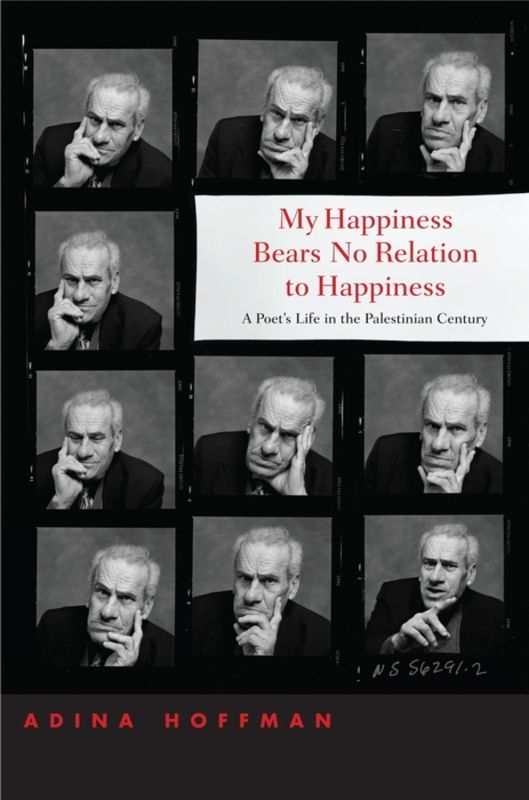
My Happiness Bears No Relation to Happiness
Beautifully written, and composed with a novelist's eye for detail, this book tells the story of an exceptional man and the culture from which he emerged.
Taha Muhammad Ali was born in 1931 in the Galilee village of Saffuriyya and was forced to flee during the war in 1948. He traveled on foot to Lebanon and returned a year later to find his village destroyed. An autodidact, he has since run a souvenir shop in Nazareth, at the same time evolving into what National Book Critics Circle Award-winner Eliot Weinberger has dubbed \"perhaps the most accessible and delightful poet alive today.\"
As it places Muhammad Ali's life in the context of the lives of his predecessors and peers,My Happinessoffers a sweeping depiction of a charged and fateful epoch. It is a work that Arabic scholar Michael Sells describes as \"among the five 'must read' books on the Israel-Palestine tragedy.\" In an era when talk of the \"Clash of Civilizations\" dominates, this biography offers something else entirely: a view of the people and culture of the Middle East that is rich, nuanced, and, above all else, deeply human.
eBook