
Catalogue Search | MBRL


Are you sure you want to remove the book from the shelf?

{{itemTitle}}
4,767
result(s) for
"ARABIC POETRY"
Sort by:


Arabic literary salons in the Islamic Middle Ages : poetry, public performance, and the presentation of the past
Arabic literary salons emerged in ninth-century Iraq and, by the tenth, were flourishing in Baghdad and other urban centers. In an age before broadcast media and classroom education, salons were the primary source of entertainment and escape for middle- and upper-rank members of society, serving also as a space and means for educating the young. Although salons relied on a culture of oral performance from memory, scholars of Arabic literature have focused almost exclusively on the written dimensions of the tradition. That emphasis, argues Samer Ali, has neglected the interplay of oral and written, as well as of religious and secular knowledge in salon society, and the surprising ways in which these seemingly discrete categories blurred in the lived experience of participants. Looking at the period from 500 to 1250, and using methods from European medieval studies, folklore, and cultural anthropology, Ali interprets Arabic manuscripts in order to answer fundamental questions about literary salons as a social institution. He identifies salons not only as sites for socializing and educating, but as loci for performing literature and oral history; for creating and transmitting cultural identity; and for continually reinterpreting the past. A fascinating recovery of a key element of humanistic culture, Ali’s work will encourage a recasting of our understanding of verbal art, cultural memory, and daily life in medieval Arab culture.
eBook

Nūbat Ramal al-Māya in cultural context : the pen, the voice, the text
In Nūbat Ramal al-Māya in Cultural Context, Carl Davila offers an edition and translation of the texts of this suite in the Moroccan Andalusian music, supported by critical apparatus and substantial commentary on its historical, literary and linguistic features.
eBook

Bread and Tea
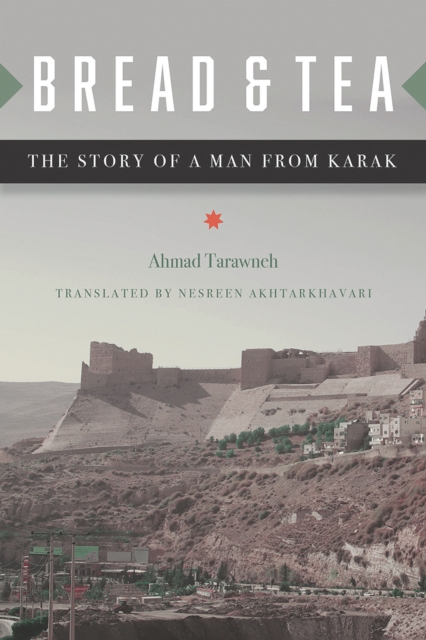
In this post-Arab Spring novel, Ahmad Tarawneh tells the story of conflicting loyalties between two Jordanian brothers, one who serves in the Jordanian national security division, and another who belongs to an extremist militant Islamic group. With boldness, clarity, and an insider's eye, Tarawneh addresses the root causes and circumstances that lead a desperate young Jordanian to be recruited into a terrorist organization, tempted by the lure of glory purported by a skillful, self-serving sheikh. The novel depicts the positive and negative forces that influence the two brothers in their soul-searching quests for self-actualization that lead to more questions than answers-questions many Arab youth still ask today, while engulfed in their own raging struggles over tradition, religion, modernity, and secularism. Readers find themselves on an intimate journey into the minds and hearts of the protagonists to witness the tragedy and absurdity of this conflict and the magnitude of the human destruction it leaves behind.
eBook

Automatic Era Identification in Classical Arabic Poetry
The authenticity of classical Arabic poetry has long been challenged by claims that some part of the pre-Islamic poetic heritage should not be attributed to this era. According to these assertions, some of this legacy was produced after the advent of Islam and ascribed, for different reasons, to pre-Islamic poets. As pre-Islamic poets were illiterate, medieval Arabic literature devotees relied on Bedouin oral transmission when writing down and collecting the poems about two centuries later. This process left the identity of the real poets who composed these poems and the period in which they worked unresolved. In this work, we seek to answer the questions of how and to what extent we can identify the period in which classical Arabic poetry was composed, where we exploit modern-day automatic text processing techniques for this aim. We consider a dataset of Arabic poetry collected from the diwans (‘collections of poems’) of thirteen Arabic poets that corresponds to two main eras: the pre-ʿAbbāsid era (covering the period between the 6th and the 8th centuries CE) and the ʿAbbāsid era (starting in the year 750 CE). Some poems in each diwan are considered ‘original’; i.e., poems that are attributed to a certain poet with high confidence. The diwans also include, however, an additional section of poems that are attributed to a poet with reservations, meaning that these poems might have been composed by another poet and/or in another period. We trained a set of machine learning algorithms (classifiers) in order to explore the potential of machine learning techniques to automatically identify the period in which a poem had been written. In the training phase, we represent each poem using various types of features (characteristics) designed to capture lexical, topical, and stylistic aspects of this poetry. By training and assessing automatic models of period prediction using the ‘original’ poetry, we obtained highly encouraging results, measuring between 0.73–0.90 in terms of F1 for the various periods. Moreover, we observe that the stylistic features, which pertain to elements that characterize Arabic poetry, as well as the other feature types, are all indicative of the period in which the poem had been written. We applied the resulting prediction models to poems for which the authorship period is under dispute (‘attributed’) and got interesting results, suggesting that some of the poems may belong to different eras—an issue to be further examined by Arabic poetry researchers. The resulting prediction models may be applied to poems for which the authorship period is under dispute. We demonstrate this research direction, presenting some interesting anecdotal results.
Journal Article


Abundance from the Desert
Abundance from the Desertprovides a comprehensive introduction to classical Arabic poetry, one of the richest of poetic traditions. Covering the period roughly of 500â€\"1250 c.e., it features original translations and illuminating discussions of a number of major classical Arabic poems from a variety of genres. The poems are presented chronologically, each situated within a specific historical and literary context. Together, the selected poems suggest the range and depth of classical Arabic poetic expression; read in sequence, they suggest the gradual evolution of a tradition. Moving beyond a mere chronicle, Farrin outlines a new approach to appreciating classical Arabic poetry based on an awareness of concentric symmetry, in which the poem's unity is viewed not as a linear progression but as an elaborate symmetrical plot. In doing so, the author presents these works in a broader, comparative light, revealing connections with other literatures. The reader is invited to examine these classical Arabic works not as isolated phenomena-notwithstanding their uniqueness and their association with a discrete tradition-but rather as part of a great multicultural heritage.This pioneering book marks an important step forward in the study of Arabic poetry. At the same time, it opens the door to this rich tradition for the general reader.
eBook