
Catalogue Search | MBRL


Are you sure you want to remove the book from the shelf?

{{itemTitle}}
4,808
result(s) for
"ARCHITECTURE / Buildings / General."
Sort by:
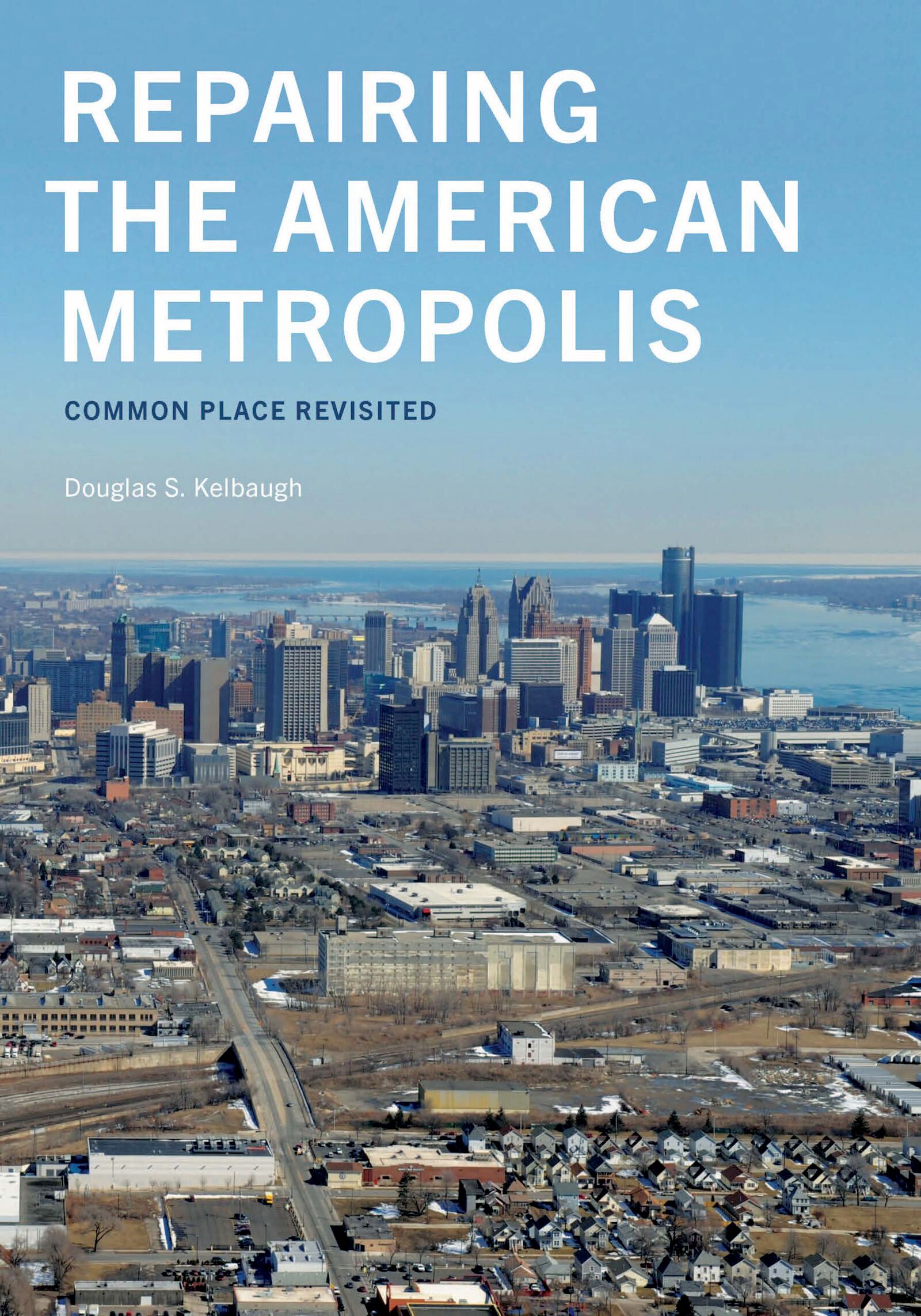
Repairing the American Metropolis
Repairing the American Metropolis is based on Douglas Kelbaugh's Common Place: Toward Neighborhood and Regional Design, first published in 1997. It is more timely and significant than ever, with new text, charts, and images on architecture, sprawl, and New Urbanism, a movement that he helped pioneer. Theory and policies have been revised, refined, updated, and developed as compelling ways to plan and design the built environment.This is an indispensable book for architects, urban designers and planners, landscape architects, architecture and urban planning students and scholars, government officials, developers, environmentalists, and citizens interested in understanding and shaping the American metropolis.
eBook

Sublime Visionen
Im 18.Jahrhundert wurden die Alpen zum Topos einer neuartigen Naturbetrachtung, die sich im Begriff des Sublimen und Erhabenen kristallisierte.Zwischen Schrecken und Faszination changierend, löste dieser Gefühlszustand eine erregende Grenzerfahrung aus: Reisende suchten sehnsuchtsvoll die Welt der Berge auf und projizierten ganz unterschiedliche.
eBook

Air-Conditioning in Modern American Architecture, 1890–1970
Air-Conditioning in Modern American Architecture, 1890–1970, documents how architects made environmental technologies into resources that helped shape their spatial and formal aesthetic. In doing so, it sheds important new light on the ways in which mechanical engineering has been assimilated into the culture of architecture as one facet of its broader modernist project. Tracing the development and architectural integration of air-conditioning from its origins in the late nineteenth century to the advent of the environmental movement in the early 1970s, Joseph M. Siry shows how the incorporation of mechanical systems into modernism's discourse of functionality profoundly shaped the work of some of the movement's leading architects, such as Dankmar Adler, Louis Sullivan, Frank Lloyd Wright, Ludwig Mies van der Rohe, Gordon Bunshaft, and Louis Kahn. For them, the modernist ideal of functionality was incompletely realized if it did not wholly assimilate heating, cooling, ventilating, and artificial lighting. Bridging the history of technology and the history of architecture, Siry discusses air-conditioning's technical and social history and provides case studies of buildings by the master architects who brought this technology into the conceptual and formal project of modernism. A monumental work by a renowned expert in American modernist architecture, this book asks us to see canonical modernist buildings through a mechanical engineering–oriented lens. It will be especially valuable to scholars and students of architecture, modernism, the history of technology, and American history.
eBook

Prompt
Fueled by an increasingly interconnected world, the desire for engaging experiences plays a more important role in interiors than ever before.There is a tendency in the design of products, furniture, and environments toward enhanced interaction that employs psychosocial principles.
eBook
Buildings and Almost Buildings
Is architecture inherently complete? Or is it a state of incompletion and seeming inadequacy that incites us to imagine architecture as an armature for an ever-changing daily life? Buildings and Almost Buildings, made possible in part through a grant from the Graham Foundation, explores the work of nARCHITECTS as a single project – an anti-monograph with a subtle manifesto about the open-ended, incomplete, and ambiguous in architecture. Structured around a variety of modes of representation specially prepared for the book, Buildings and Almost Buildings reveals the ways in which the celebrated New York office led by Eric Bunge and Mimi Hoang addresses contemporary issues of a world in flux. Across a range of buildings, public spaces, and ephemeral installations, nARCHITECTS argues for the formal and social potential of an architecture that remains somehow incomplete and ambiguously perceived—or in the authors' words, Almost Buildings.nARCHITECTS is a Brooklyn based architecture office led by Principals Eric Bunge and Mimi Hoang. In recent projects such as Carmel Place (New York City's first micro unit building), the design center A/D/O, and the renovation of Chicago Navy Pier, nARCHITECTS is tackling the most pressing issues that our cities face – how we live, work and activate public spaces in response to our nation's changing demographics, housing shortage, evolving workplace technologies and need for equality in the public realm. The firm's awards and honors include a 2017 national AIA Institute Honor Award in Architecture, the 2017 NYS AIA Firm of the Year, a 2016 Academy of Arts and Letters Award in architecture, the AIANY Andrew J Thomas Award for Pioneers in Housing, the 2006 Architectural League's Emerging Voices and the Canadian Professional Rome Prize in 2005. The firm has been ranked within the top 10 in the US in the design category for the past five years by Architect Magazine.
eBook

International Heritage and Historic Building Conservation
The majority of books in English on historic building conservation and heritage preservation training are often restricted to Western architecture and its origins. Consequently, the history of building conservation, the study of contemporary paradigms and case studies in most universities and within wider interest circles, predominantly in the UK, Europe, and USA focus mainly on Europe and sometimes the USA, although the latter is often excluded from European publications. With an increasingly multicultural student body in Euro-American universities and with a rising global interest in heritage preservation, there is an urgent need for publications to cover a larger geographical and social area including not only Asia, Australia, Africa and South America but also previously neglected countries in Europe like the new members of the European Community and the northern neighbour of the USA, Canada. The inclusion of the 'other' in built environment education in general and in building conservation in particular is a pre-requisite of cultural interaction and widening participation.
International Heritage and Historic Building Conservation assesses successful contemporary conservation paradigms from around the world. The book evaluates conservation case studies from previously excluded areas of the world to create an integrated account of Historic Building Conservation that crosses the boundaries of language and culture and sets an example for further inclusive research. Analyzing the influence of financial constraints, regional conflicts, and cultural differences on the heritage of disadvantaged countries, this leading-edge volume is essential for researchers and students of heritage studies interested in understanding their topics in a wider framework.
eBook

Air-Conditioning in Modern American Architecture, 1890–1970
Air-Conditioning in Modern American Architecture,
1890-1970, documents how architects made environmental
technologies into resources that helped shape their spatial and
formal aesthetic. In doing so, it sheds important new light on the
ways in which mechanical engineering has been assimilated into the
culture of architecture as one facet of its broader modernist
project.
Tracing the development and architectural integration of
air-conditioning from its origins in the late nineteenth century to
the advent of the environmental movement in the early 1970s, Joseph
M. Siry shows how the incorporation of mechanical systems into
modernism's discourse of functionality profoundly shaped the work
of some of the movement's leading architects, such as Dankmar
Adler, Louis Sullivan, Frank Lloyd Wright, Ludwig Mies van der
Rohe, Gordon Bunshaft, and Louis Kahn. For them, the modernist
ideal of functionality was incompletely realized if it did not
wholly assimilate heating, cooling, ventilating, and artificial
lighting. Bridging the history of technology and the history of
architecture, Siry discusses air-conditioning's technical and
social history and provides case studies of buildings by the master
architects who brought this technology into the conceptual and
formal project of modernism.
A monumental work by a renowned expert in American modernist
architecture, this book asks us to see canonical modernist
buildings through a mechanical engineering-oriented lens. It will
be especially valuable to scholars and students of architecture,
modernism, the history of technology, and American history.
eBook

Re: Futures
Hani Rashid, Mitbegründer des visionären New Yorker Architekturbüros Asymptote, leitet seit 2011 das Studio Hani Rashid in Wien. Das Programm zielt auf die Entwicklung konzeptueller und praktischer Fähigkeiten zur Schaffung zukunftsgerichteter Architektur: auf die experimentelle Untersuchung ihrer atmosphärischen, phänomenalen und optischen Effekte und Wirkungen, die intelligente Antworten auf gegenwärtige Fragen des Lebensraumes geben, sich zugleich aber einem \"Machbarkeitsnachweis\" unterziehen. „Re: Futures\" dokumentiert anhand von Texten, digitalen Visualisierungen und deskriptiven Architekturskizzen die in den letzten Jahren entstandenen Arbeiten und entfaltet so ein Spektrum von zeitgenössischen Entwurfsmethoden und zukunftsgerichteten Themen in der Architektur.
Hani Rashid, co-founder of Asymptote, the visionary New York architectural practice, has been heading up Studio Hani Rashid in Vienna since 2011. The curriculum focuses on the development of conceptual and practical skills for creating future-oriented architecture – on experimental investigation of atmospheric, phenomenal, and visual effects, which provides intelligent solutions for contemporary forms of dwelling and being but which should also satisfy \"feasibility criteria\". \"Re: Futures\" uses texts, digital visualizations and descriptive architectural sketches to document the work created over recent years, and thereby reveals a spectrum of contemporary design methods and future-oriented architectural themes.
eBook

Mathematical Excursions to the World's Great Buildings
From the pyramids and the Parthenon to the Sydney Opera House and the Bilbao Guggenheim, this book takes readers on an eye-opening tour of the mathematics behind some of the world's most spectacular buildings. Beautifully illustrated, the book explores the milestones in elementary mathematics that enliven the understanding of these buildings and combines this with an in-depth look at their aesthetics, history, and structure. Whether using trigonometry and vectors to explain why Gothic arches are structurally superior to Roman arches, or showing how simple ruler and compass constructions can produce sophisticated architectural details, Alexander Hahn describes the points at which elementary mathematics and architecture intersect.
Beginning in prehistoric times, Hahn proceeds to guide readers through the Greek, Roman, Islamic, Romanesque, Gothic, Renaissance, and modern styles. He explores the unique features of the Pantheon, the Hagia Sophia, the Great Mosque of Cordoba, the Duomo in Florence, Palladio's villas, and Saint Peter's Basilica, as well as the U.S. Capitol Building. Hahn celebrates the forms and structures of architecture made possible by mathematical achievements from Greek geometry, the Hindu-Arabic number system, two- and three-dimensional coordinate geometry, and calculus. Along the way, Hahn introduces groundbreaking architects, including Brunelleschi, Alberti, da Vinci, Bramante, Michelangelo, della Porta, Wren, Gaudí, Saarinen, Utzon, and Gehry.
Rich in detail, this book takes readers on an expedition around the globe, providing a deeper understanding of the mathematical forces at play in the world's most elegant buildings.
eBook

Basics Wasserkreislauf im Gebäude
Die Integration der haustechnischen Anlagen ist ein wichtiger Aspekt bei der Planung des Architekten.Die Konzeptionierung von Versorgungssträngen und Kreisläufen im Gebäude erfordert ein Verständnis für die Zusammenhänge der Ver- und Entsorgung mit dem Element Wasser.
eBook