
Catalogue Search | MBRL


Are you sure you want to remove the book from the shelf?

{{itemTitle}}
29,373
result(s) for
"ARCHITECTURE / General"
Sort by:

Building Modern Turkey
Building Modern Turkeyoffers a critical account of how the built environment mediated Turkey's transition from a pluralistic (multiethnic and multireligious) empire into a modern, homogenized nation-state following the collapse of the Ottoman Empire at the end of World War I. Zeynep Kezer argues that the deliberate dismantling of ethnic and religious enclaves and the spatial practices that ensued were as integral to conjuring up a sense of national unity and facilitating the operations of a modern nation-state as were the creation of a new capital, Ankara, and other sites and services that embodied a new modern way of life. The book breaks new ground by examining both the creative and destructive forces at play in the making of modern Turkey and by addressing the overwhelming frictions during this profound transformation and their long-term consequences. By considering spatial transformations at different scales-from the experience of the individual self in space to that of international geopolitical disputes-Kezer also illuminates the concrete and performative dimensions of fortifying a political ideology, one that instills in the population a sense of membership in and allegiance to the nation above all competing loyalties and ensures its longevity.
eBook

Architecture, Politics, and Identity in Divided Berlin
On August 13, 1961, under the cover of darkness, East German authorities sealed the border between East and West Berlin using a hastily constructed barbed wire fence. Over the next twenty-eight years of the Cold War, the Berlin Wall grew to become an ever-present physical and psychological divider in this capital city and a powerful symbol of Cold War tensions. Similarly, stark polarities arose in nearly every aspect of public and private life, including the built environment.InArchitecture, Politics, and Identity in Divided BerlinEmily Pugh provides an original comparative analysis of selected works of architecture and urban planning in both halves of Berlin during the Wall era, revealing the importance of these structures to the formation of political, cultural, and social identities. Pugh uncovers the roles played by organizations such as the Foundation for Prussian Cultural Heritage and the Building Academy in conveying the political narrative of their respective states through constructed spaces. She also provides an overview of earlier notable architectural works, to show the precursors for design aesthetics in Berlin at large, and considers projects in the post-Wall period, to demonstrate the ongoing effects of the Cold War.Overall, Pugh offers a compelling case study of a divided city poised between powerful contending political and ideological forces, and she highlights the effort expended by each side to influence public opinion in Europe and around the World through the manipulation of the built environment.
eBook
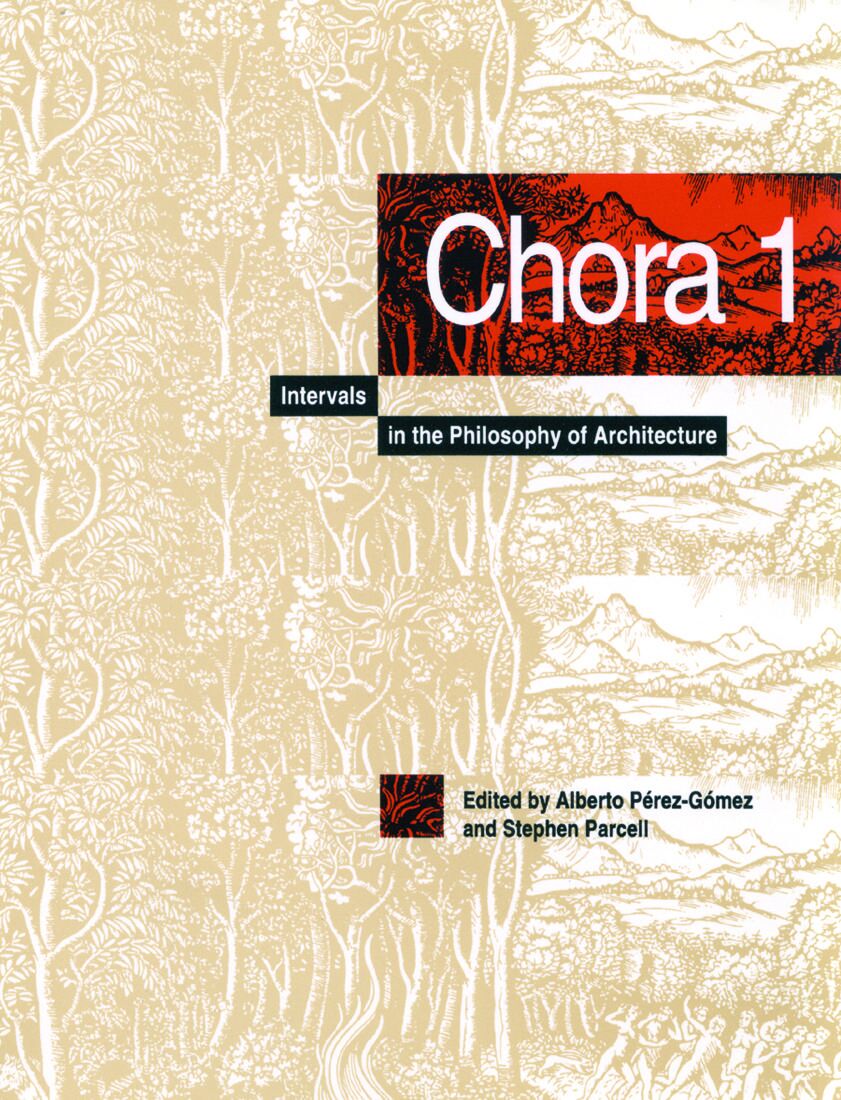
Chora 1
Contents Chora: The Space of Architectural Representation - Alberto Pérez-Gómez - The Measure of Expression: Physiognomy and Character in the Nouvelle Méthode of Jean-Jacques Lequeu - Jean-François Bédard - Michelangelo: The Image of the Human Body, Artifice, and Architecture - Helmut Klassen - Architecture as Site of Reception - Part I: Cuisine, Frontality, and the Infra-thin - Donald Kunze - Fictional Cities - Graham Livesey - Instrumentality and the Organic Assistance of Looms - Indra Kagis McEwen - Space and Image in Andrey Tarkovsky's \"Nostalgia\": Notes on a Phenomenology of Architecture in Cinema - Juhani Pallasmaa - The Momentary Modern Magic of the Panorama - Stephen Parcell - The Building of a Horizon - Louise Pelletier - Anaesthetic Induction: An Excursion into the World of Visual Indifference - Natalija Subotincic. The essays in this collection explore architectural form and content in the hope of finding new and better alternatives to traditionally accepted practices.
eBook

Modelscapes of Nationalism
Modelscapes are clusters of miniature architectural models that represent entire environments. They're frequently found in museums as representations of heritage, architecture, and collective identity. This book offers a critical analysis of modelscapes, using case studies from Israel, to show how miniature representations of contested physical space participate in the construction of a sense of national identity and appropriation of the land and its history. What, Yael Padan asks, is the meaning of such models, and what role do they play within the context of an ongoing violent conflict over territory and history?
eBook

Cities in Time
From street-markets and pop-up shops to art installations and Olympic parks, the temporary use of urban space is a growing international trend in architecture and urban design. Partly a response to economic and ecological crisis, it also claims to offer a critique of the status quo and an innovative way forward for the urban future. Cities in Time aims to explore and understand the phenomenon, offering a first critical and theoretical evaluation of temporary urbanism and its implications for the present and future of our cities. The book argues that temporary urbanism needs to be understood within the broader context of how different concepts of time are embedded in the city. In any urban place, multiple, discordant and diverse timeframes are at play – and the chapters here explore these different conceptions of temporality, their causes and their effects. Themes explored include how institutionalised time regulates everyday urban life, how technological and economic changes have accelerated the city’s rhythms, our existential and personal senses of time, concepts of memory and identity, virtual spaces, ephemerality and permanence.
eBook
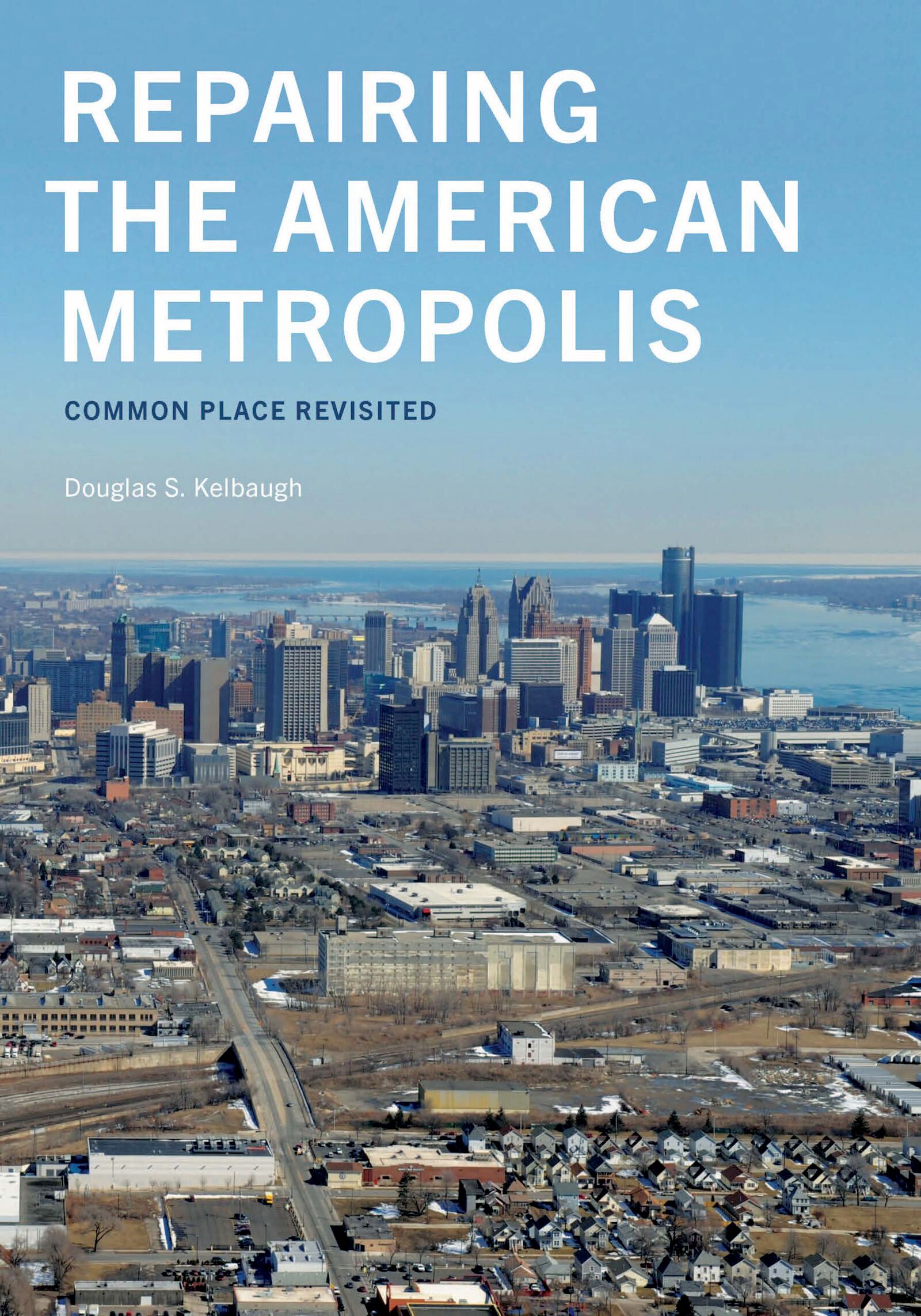
Repairing the American Metropolis
Repairing the American Metropolis is based on Douglas Kelbaugh's Common Place: Toward Neighborhood and Regional Design, first published in 1997. It is more timely and significant than ever, with new text, charts, and images on architecture, sprawl, and New Urbanism, a movement that he helped pioneer. Theory and policies have been revised, refined, updated, and developed as compelling ways to plan and design the built environment.This is an indispensable book for architects, urban designers and planners, landscape architects, architecture and urban planning students and scholars, government officials, developers, environmentalists, and citizens interested in understanding and shaping the American metropolis.
eBook
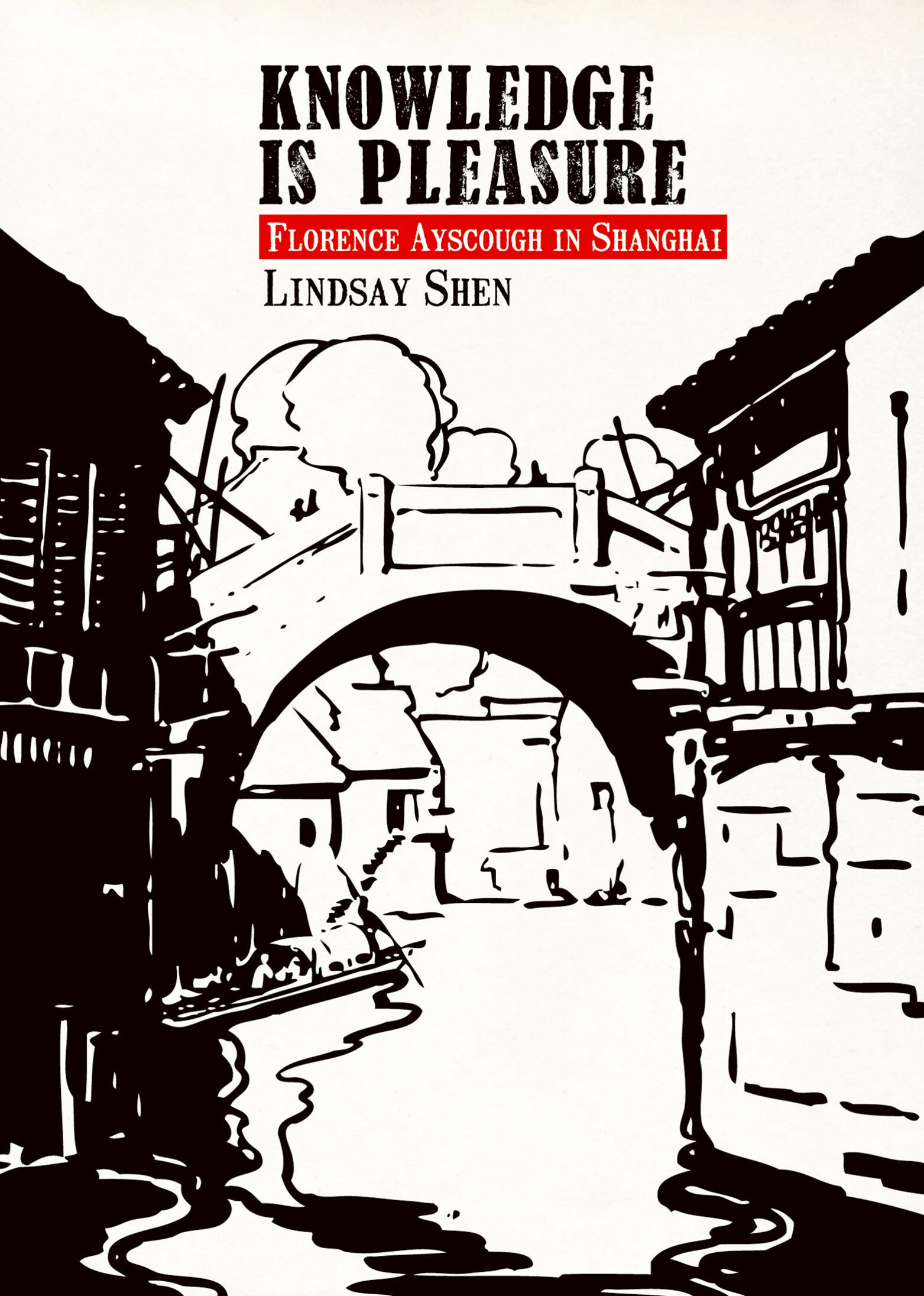
Knowledge Is Pleasure
‘The Sensuous Realist’ Florence Ayscough—poet, translator, Sinologist, Shanghailander, avid collector, pioneering photographer and early feminist champion of women’s rights in China. Ayscough’s modernist translations of the classical poets still command respect, her ethnographic studies of the lives of Chinese women still engender feminist critiques over three quarters of a century later and her collections of Chinese ceramics and objets now form an important part of several American museum’s Asian art collections. Raised in Shanghai in an archetypal Shanghailander family in the late nineteenth century, Ayscough was to become anything but a typical foreigner in China. Encouraged by the New England poet Amy Lowell, she was to become a much sought after translator in the early years of the new century, not least for her radical interpretations of the Tang-dynasty poet Tu Fu. She later moved on to record China and particularly Chinese women using the new technology of photography, turn the Royal Asiatic Society's Shanghai library into the best on the China Coast and build several impressive collections featuring textiles, Ming and Qing ceramics. By the time of her death Florence Ayscough has left a legacy of collection and scholarship unrivalled by any other foreign woman in China before or since. In this biography, Lindsay Shen recovers Ayscough for posterity and returns her to us as a woman of amazing intellectual vibrancy and strength.
eBook
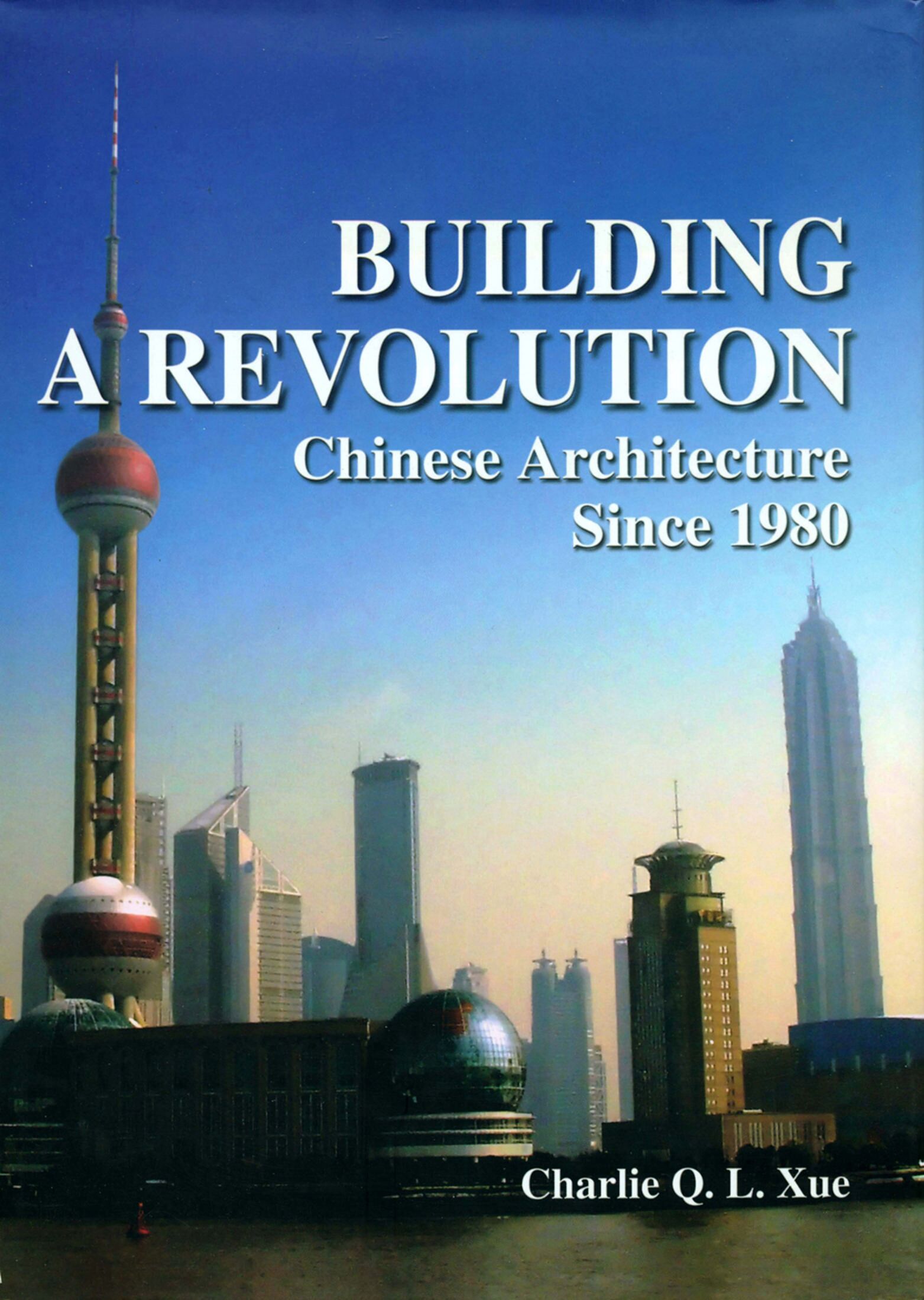
Building a Revolution
Since China’s modernization began in 1980, the country has witnessed exponential growth in construction activities. In a deliberate attempt to break away from the past, China has shown remarkable drive and determination to refashion itself in terms of architectural and town planning practices. While there are many books about traditional Chinese architecture and gardens, this is perhaps the first book in English to introduce the dramatic new look of China. Building a Revolution: Chinese Architecture Since 1980 presents a picture of Chinese architecture in transition, as the entire economy shifted from being planned and state-controlled to being market-led. The book also examines the “national form” and Chinese identity, the impact of international architecture, housing reform, and the emergence of architects in private practice. Both celebrated and young Chinese architects are portrayed, and the notable buildings in the prosperous coastal cities are highlighted. Through this book on modern Chinese architecture, the reader will appreciate the influence of globalization and modernization on the most populous country in the world.
eBook

Manufacturing a Socialist Modernity
Eastern European prefabricated housing blocks are often vilified as the visible manifestations of everything that was wrong with state socialism. For many inside and outside the region, the uniformity of these buildings became symbols of the dullness and drudgery of everyday life.Manufacturing a Socialist Modernitycomplicates this common perception. Analyzing the cultural, intellectual, and professional debates surrounding the construction of mass housing in early postwar Czechoslovakia, Zarecor shows that these housing blocks served an essential function in the planned economy and reflected an interwar aesthetic, derived from constructivism and functionalism, that carried forward into the 1950s.With a focus on prefabricated and standardized housing built from 1945 to 1960, Zarecor offers broad and innovative insights into the country's transition from capitalism to state socialism. She demonstrates that during this shift, architects and engineers consistently strove to meet the needs of Czechs and Slovaks despite challenging economic conditions, a lack of material resources, and manufacturing and technological limitations. In the process, architects were asked to put aside their individual creative aspirations and transform themselves into technicians and industrial producers.Manufacturing a Socialist Modernityis the first comprehensive history of architectural practice and the emergence of prefabricated housing in the Eastern Bloc. Through discussions of individual architects and projects, as well as building typologies, professional associations, and institutional organization, it opens a rare window into the cultural and economic life of Eastern Europe during the early postwar period.
eBook

Interior decorating in nineteenth-century France
This book explores the beginnings of the interior design profession in nineteenth-century France. Drawing on a wealth of visual sources, from collecting and advice manuals to pattern books and department store catalogues, it demonstrates how new forms of print media were used to 'sell' the idea of the unified interior as a total work of art, enabling the profession of interior designer to take shape. In observing the dependence of the trades on the artistic and public visual appeal of their work, the book establishes crucial links between the fields of art history, material and visual culture, and design history.
eBook