
Catalogue Search | MBRL


Are you sure you want to remove the book from the shelf?

{{itemTitle}}
1,544
result(s) for
"ARCHITECTURE / History / Ancient "
Sort by:
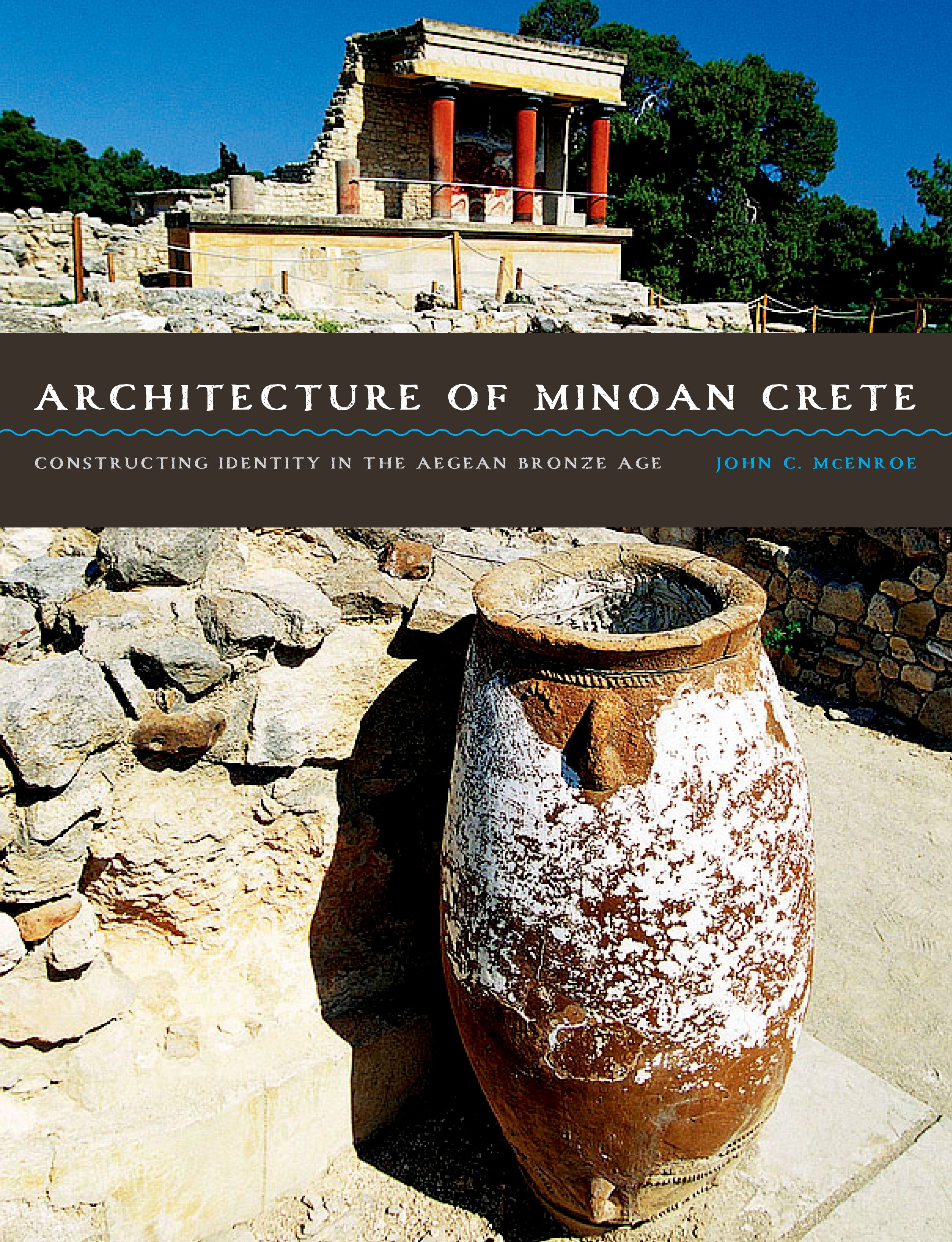
Architecture of Minoan Crete
Ever since Sir Arthur Evans first excavated at the site of the Palace at Knossos in the early twentieth century, scholars and visitors have been drawn to the architecture of Bronze Age Crete. Much of the attraction comes from the geographical and historical uniqueness of the island. Equidistant from Europe, the Middle East, and Africa, Minoan Crete is on the shifting conceptual border between East and West, and chronologically suspended between history and prehistory. In this culturally dynamic context, architecture provided more than physical shelter; it embodied meaning. Architecture was a medium through which Minoans constructed their notions of social, ethnic, and historical identity: the buildings tell us about how the Minoans saw themselves, and how they wanted to be seen by others. Architecture of Minoan Crete is the first comprehensive study of the entire range of Minoan architecture—including houses, palaces, tombs, and cities—from 7000 BC to 1100 BC. John C. McEnroe synthesizes the vast literature on Minoan Crete, with particular emphasis on the important discoveries of the past twenty years, to provide an up-to-date account of Minoan architecture. His accessible writing style, skillful architectural drawings of houses and palaces, site maps, and color photographs make this book inviting for general readers and visitors to Crete, as well as scholars.
eBook

Samothracian Connections
This volume of sixteen papers is dedicated to James R. McCredie in celebration of his outstanding contribution to the excavation and study of the sanctuary of the Great Gods on the Greek island of Samothrace. The papers focus mainly on the art and archaeology of Samothrace, while two contributions discuss Alexandria in Egypt and Florina in Macedonia, two areas that were closely connected with Samothrace in antiquity. The volume covers the latest research on the architecture, sculpture, pottery, epigraphy and cult of the sanctuary of the Great Gods on Samothrace, and contains many original architectural drawings and photos of previously unpublished material.
eBook

International Heritage and Historic Building Conservation
The majority of books in English on historic building conservation and heritage preservation training are often restricted to Western architecture and its origins. Consequently, the history of building conservation, the study of contemporary paradigms and case studies in most universities and within wider interest circles, predominantly in the UK, Europe, and USA focus mainly on Europe and sometimes the USA, although the latter is often excluded from European publications. With an increasingly multicultural student body in Euro-American universities and with a rising global interest in heritage preservation, there is an urgent need for publications to cover a larger geographical and social area including not only Asia, Australia, Africa and South America but also previously neglected countries in Europe like the new members of the European Community and the northern neighbour of the USA, Canada. The inclusion of the 'other' in built environment education in general and in building conservation in particular is a pre-requisite of cultural interaction and widening participation.
International Heritage and Historic Building Conservation assesses successful contemporary conservation paradigms from around the world. The book evaluates conservation case studies from previously excluded areas of the world to create an integrated account of Historic Building Conservation that crosses the boundaries of language and culture and sets an example for further inclusive research. Analyzing the influence of financial constraints, regional conflicts, and cultural differences on the heritage of disadvantaged countries, this leading-edge volume is essential for researchers and students of heritage studies interested in understanding their topics in a wider framework.
eBook

The Art of Building in the Classical World
This book examines the application of drawing in the design process of classical architecture, exploring how the tools and techniques of drawing developed for architecture subsequently shaped theories of vision and representations of the universe in science and philosophy. Building on recent scholarship that examines and reconstructs the design process of classical architecture, John R. Senseney focuses on technical drawing in the building trade as a model for the expression of visual order, showing that the techniques of ancient Greek drawing actively determined concepts about the world. He argues that the uniquely Greek innovations of graphic construction determined principles that shaped the massing, special qualities and refinements of buildings and the manner in which order itself was envisioned.
eBook

The Real Life of the Parthenon
Ownership battles over the marbles removed from the Parthenon by Lord Elgin have been rumbling into invective, pleading, and counterclaims for two centuries.The emotional temperature around them is high, and steering across the vast past to safe anchor in a brilliant heritage is tricky. The stories around antiquities become distorted by the pull.
eBook


Vitruvianism : origins and transformations
Although Antiquity itself has been intensively researched, together with its reception, to date this has largely happened in a compartmentalized fashion. This series presents for the first time an interdisciplinary contextualization of the productive acquisitions and transformations of the arts and sciences of Antiquity in the slow process of the European societies constructing a scientific system and their own cultural identity, a process which started in the Middle Ages and has continued up to the Modern Age. The series is a product of work in the Collaborative Research Centre \"Transformations of Antiquity\" and the \"August Boeckh Centre of Antiquity\" at the Humboldt University of Berlin. Their individual projects examine transformational processes on three levels in particular - the constitutive function of Antiquity in the formation of the European knowledge society, the role of Antiquity in the genesis of modern cultural identities and self-constructions, and the forms of reception in art, literature, translation and media. * new transdisciplinary series * the editors are prominent professors from different disciplines at the Humboldt University of Berlin * strengthens de Gruyter's profile in Classical Studies, Medieval Studies, Intellectual History _x000D_.
eBook
Antiochia in der Spätantike
This public lecture is staged annually in memory of the ecclesiastic historian Hans Lietzmann (1875–1942), Adolf von Harnacks's successor as director of the Academy project The Greek Christian Authors of the First Centuries (GDS). The invited speaker is an internationally renowned scholar from the field of archeology, classical studies, history of religion, and patristics. The lectures address central topics of the history of ancient religion that are of relevance to the present day.
eBook


The Roman Forum
One of the most visited sites in Italy, the Roman Forum is also one of the best-known wonders of the Roman world. David Watkin sheds completely new light on the Forum, examining the roles of the ancient remains while revealing what exactly the standing structures embody - including the rarely studied medieval, Renaissance, and Baroque churches, as well as the nearby monuments that have important histories of their own.
eBook