
Catalogue Search | MBRL


Are you sure you want to remove the book from the shelf?

{{itemTitle}}
2,939
result(s) for
"ARCHITECTURE / History / General."
Sort by:

Ultra-Modernism
The first half of the twentieth century was fraught with global tensions and political machinations. However, for all the destruction in that period, these geopolitical conditions in Manchuria cultivated an extraordinary variety of architecture and urban planning, which has completely escaped international attention until now. With over forty carefully chosen images, Ultra-Modernism: Architecture and Modernity in Manchuria is the first book in English that illustrates Manchuria’s encounter with modernity through its built environment. Edward Denison and Guangyu Ren take readers through Russia’s early territorial claims, Japan’s construction of the South Manchuria Railway (SMR), and the establishment of Manchukuo in 1932. The book examines in detail the creation of modern cities along the SMR and focuses on three of the most important modern urban centres in Manchuria: the Russian-dominated city of Harbin, the port of Dalian, and the new capital of Manchukuo, Hsinking (Changchun). Like so much of the world outside ‘the West’ during the twentieth century, Manchuria’s encounter with modernity is merely a faint whisper drowned out by the deafening master narrative of Western-centric modernism. This book attempts to redress an imbalance in the modern history of China by studying the impact of Japan on architecture and planning beyond the depredations of the Sino-Japanese War.
eBook

Ancient Origins of the Mexican Plaza
The plaza has been a defining feature of Mexican urban
architecture and culture for at least 4,000 years. Ancient
Mesoamericans conducted most of their communal life in outdoor
public spaces, and today the plaza is still the public living room
in every Mexican neighborhood, town, and city-the place where
friends meet, news is shared, and personal and communal rituals and
celebrations happen. The site of a community's most important
architecture-church, government buildings, and marketplace-the
plaza is both sacred and secular space and thus the very heart of
the community.
This extensively illustrated book traces the evolution of the
Mexican plaza from Mesoamerican sacred space to modern public
gathering place. The authors led teams of volunteers who measured
and documented nearly one hundred traditional Mexican town centers.
The resulting plans reveal the layers of Mesoamerican and European
history that underlie the contemporary plaza. The authors describe
how Mesoamericans designed their ceremonial centers as embodiments
of creation myths-the plaza as the primordial sea from which the
earth emerged. They discuss how Europeans, even though they sought
to eradicate native culture, actually preserved it as they overlaid
the Mesoamerican sacred plaza with the Renaissance urban concept of
an orthogonal grid with a central open space. The authors also show
how the plaza's historic, architectural, social, and economic
qualities can contribute to mainstream urban design and
architecture today.
eBook

Synagogues in the Islamic World
This beautifully illustrated volume looks at the spaces created by and for Jews in areas under the political or religious control of Muslims in regions such as Central Asia, the Middle East, North Africa and Spain.
eBook

Open Architecture
The International Building Exhibition 1984/87 in Berlin constitutes one of the most remarkable examples to discuss \"open architecture\". Almost 10,000 dwellings were constructed or restored in the Kreuzberg districts adjacent to the Berlin Wall, inhabited about halfway by immigrants. The renowned author Esra Akcan, related in many ways to Turkey, Berlin and the USA, narrates the history and reverberations of this architectural-political event.
eBook

Impossible Heights
The advent of the airplane and skyscraper in 1920s and '30s America offered the population an entirely new way to look at the world: from above. The captivating image of an airplane flying over the rising metropolis led many Americans to believe a new civilization had dawned. InImpossible Heights, Adnan Morshed examines the aesthetics that emerged from this valorization of heights and their impact on the built environment.
The lofty vantage point from the sky ushered in a modernist impulse to cleanse crowded twentieth-century cities in anticipation of an ideal world of tomorrow. Inspired by great new heights, American architects became central to this endeavor and were regarded as heroic aviators. Combining close readings of a broad range of archival sources, Morshed offers new interpretations of works such as Hugh Ferriss's Metropolis drawings, Buckminster Fuller's Dymaxion houses, and Norman Bel Geddes's Futurama exhibit at the 1939 New York World's Fair. Transformed by the populist imagination into \"master builders,\" these designers helped produce a new form of visuality: the aesthetics of ascension.
By demonstrating how aerial movement and height intersect with popular \"superman\" discourses of the time, Morshed reveals the relationship between architecture, art, science, and interwar pop culture. Featuring a marvelous array of never before published illustrations, this richly textured study of utopian imaginings illustrates America's propulsion into a new cultural consciousness.
eBook

Bloom and bust
More than two decades of deconstruction, renovation, and reconstruction have left the urban environments in the former German Democratic Republic completely transformed. This volume considers the changing urban landscapes in the former East - and how the filling of previous absences and the absence of previous presence - creates the cultural landscape of modern unified Germany. This broadens our understanding of this transformation by examining often-neglected cities, spaces, or structures, and historical narration and preservation.
eBook

Building antebellum New Orleans : free people of color and their influence
The Creole architecture of New Orleans is one of the city’s most-recognized features, but studies of it largely have focused on architectural typology. In Building Antebellum New Orleans, Tara A. Dudley examines the architectural activities and influence of gens de couleur libres—free people of color—in a city where the mixed-race descendants of whites and other free Blacks could own property.Between 1820 and 1850 New Orleans became an urban metropolis and industrialized shipping center with a growing population. Amidst dramatic economic and cultural change in the mid-antebellum period, the gens de couleur libres thrived as property owners, developers, building artisans, and patrons. Dudley writes an intimate microhistory of two prominent families of Black developers, the Dollioles and Souliés, to explore how gens de couleur libres used ownership, engagement, and entrepreneurship to construct individual and group identity and stability. With deep archival research, Dudley re-creates in fine detail the material culture, business and social history, and politics of the built environment for free people of color and adds new, revelatory information to the canon on New Orleans architecture.
eBook
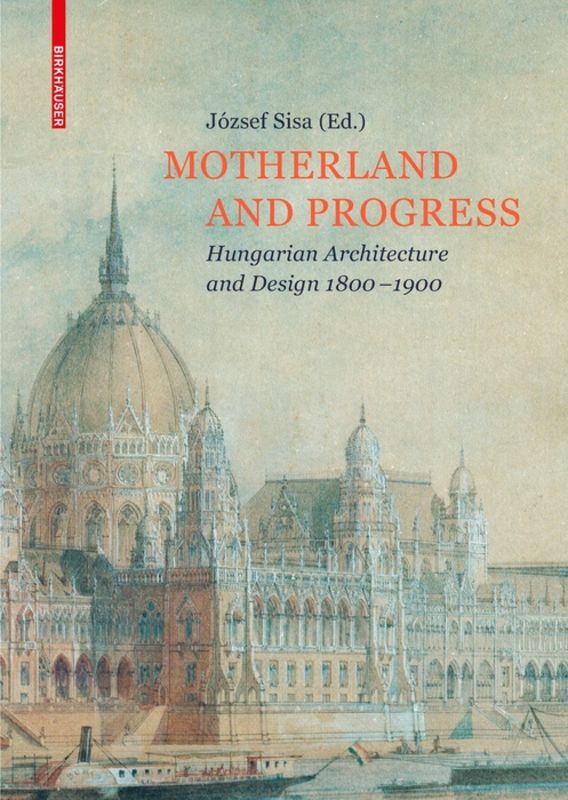
Motherland and Progress
In the 19th century Hungary witnessed unprecedented social, economic and cultural development. The country became an equal partner within the Dual Monarchy when the Austro-Hungarian Compromise of 1867 was concluded. Architecture and all forms of design flourished as never before. A distinctly Central European taste emerged, in which the artistic presence of the German-speaking lands was augmented by the influence of France and England. As this process unfolded, attempts were made to find a uniquely Hungarian form, based on motifs borrowed from peasant art as well as real (or fictitious) historical antecedents.
\"Motherland and Progress\" – the motto of 19th-century Hungarian reformers – reflected the programme embraced by the country in its drive to define its identity and shape its future.
eBook
Chora 1
Contents Chora: The Space of Architectural Representation - Alberto Pérez-Gómez - The Measure of Expression: Physiognomy and Character in the Nouvelle Méthode of Jean-Jacques Lequeu - Jean-François Bédard - Michelangelo: The Image of the Human Body, Artifice, and Architecture - Helmut Klassen - Architecture as Site of Reception - Part I: Cuisine, Frontality, and the Infra-thin - Donald Kunze - Fictional Cities - Graham Livesey - Instrumentality and the Organic Assistance of Looms - Indra Kagis McEwen - Space and Image in Andrey Tarkovsky's \"Nostalgia\": Notes on a Phenomenology of Architecture in Cinema - Juhani Pallasmaa - The Momentary Modern Magic of the Panorama - Stephen Parcell - The Building of a Horizon - Louise Pelletier - Anaesthetic Induction: An Excursion into the World of Visual Indifference - Natalija Subotincic. The essays in this collection explore architectural form and content in the hope of finding new and better alternatives to traditionally accepted practices.
eBook
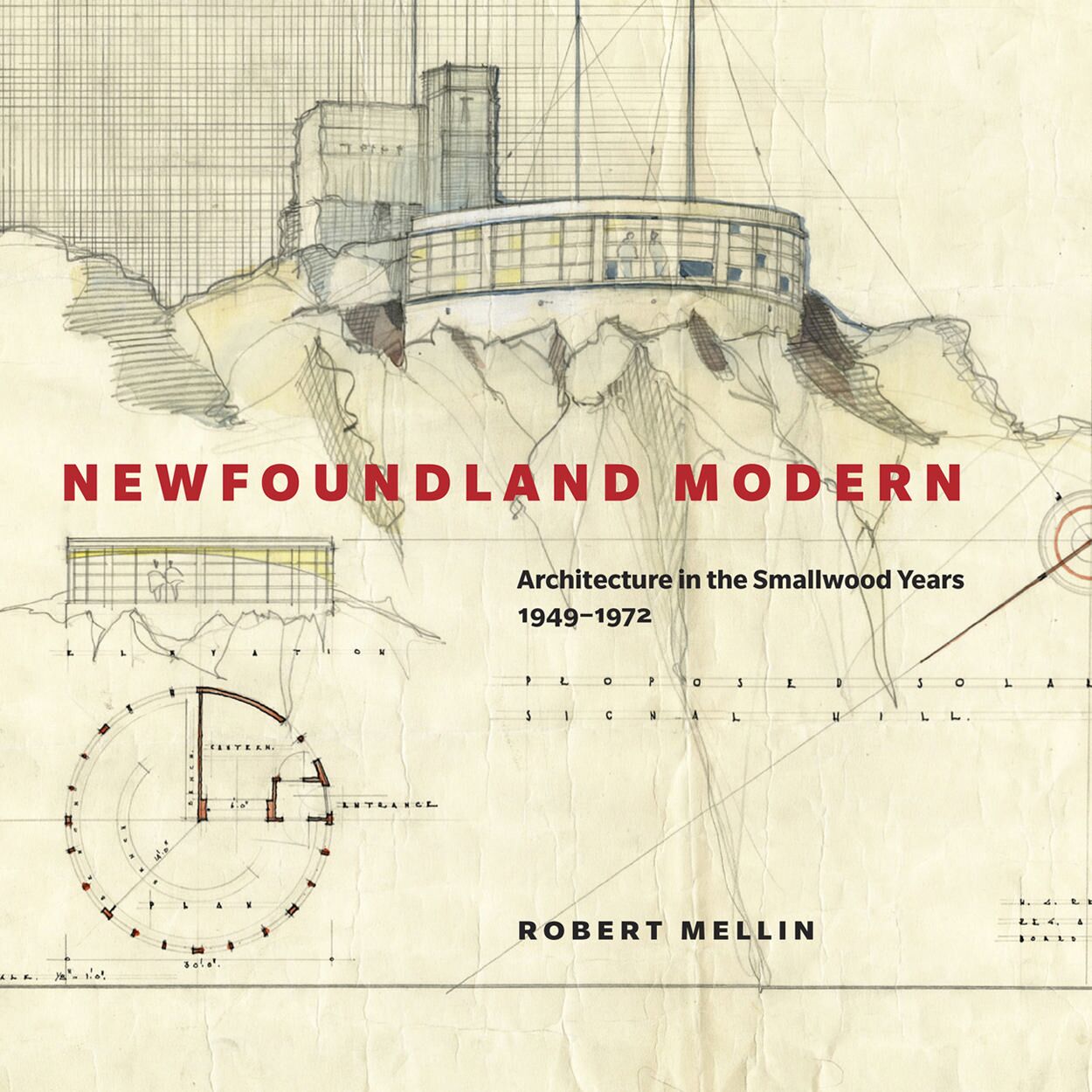
Newfoundland Modern
In over 220 drawings and photographs, Robert Mellin presents the development of architecture in the decades immediately following Newfoundland's 1949 union with Canada. Newfoundland's wholehearted embrace of modern architecture in this era affected planning as well as the design of cultural facilities, commercial and public buildings, housing, recreation, educational facilities, and places of worship, and Premier Joseph Smallwood often relied on modern architecture to demonstrate the progress made by his administration. Mellin explores the links between Smallwood and modern architecture, revealing how Smallwood guided the development of numerous architectural projects. He also looks at the work of two innovative local architects, Frederick A. Colbourne and Angus J. Campbell, showing how their architecture was influenced by their life-long interest in art. The first comprehensive work on an important period of architectural development in urban and rural Newfoundland, Newfoundland Modern complements Mellin's award-winning book on the outport of Tilting, Fogo Island.
eBook