
Catalogue Search | MBRL


Are you sure you want to remove the book from the shelf?

{{itemTitle}}
12,821
result(s) for
"ARCHITECTURE / Religious Buildings."
Sort by:
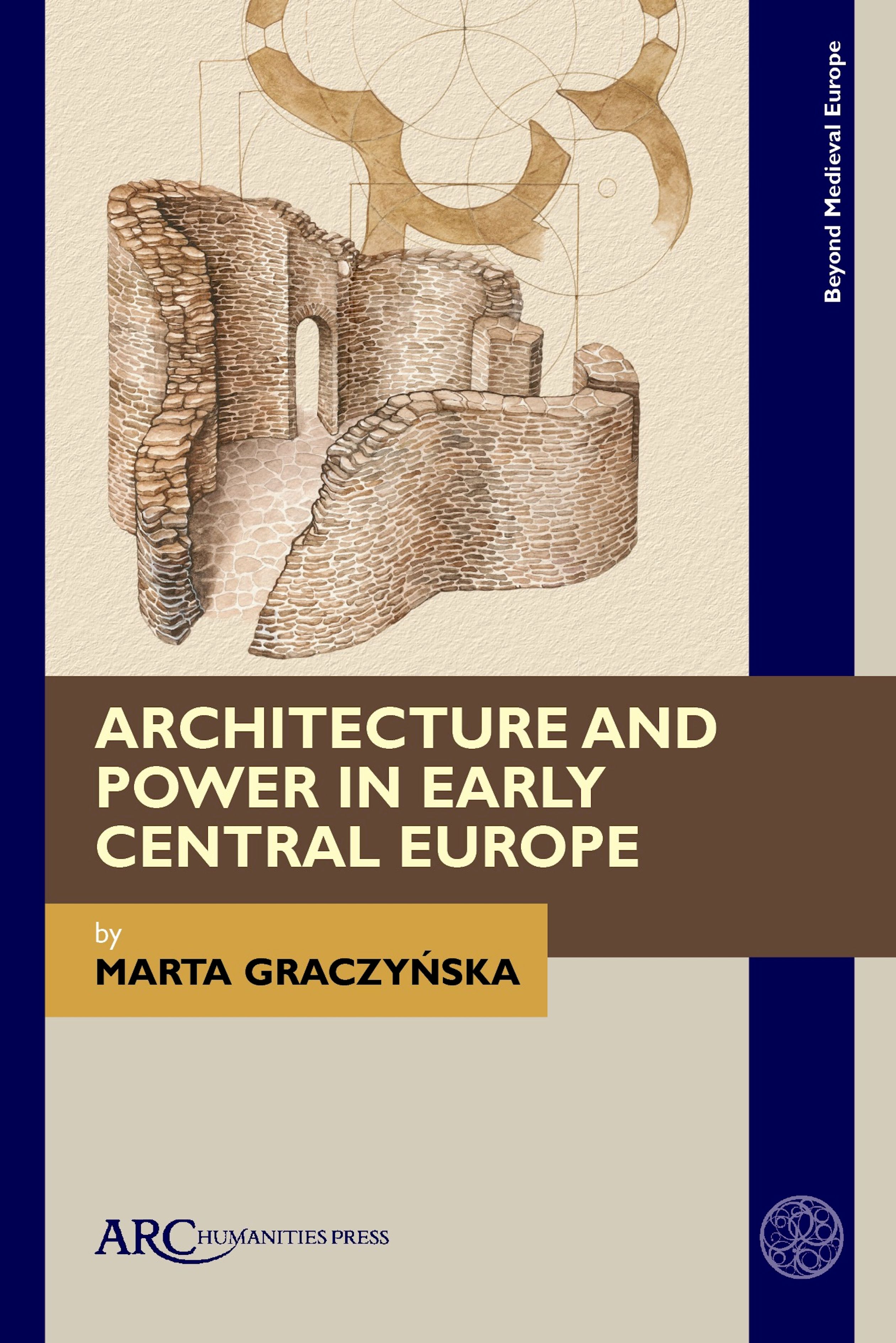
Architecture and Power in Early Central Europe
The book presents the panorama of social, cultural, and religious changes in the states of the Piast, Premyslid, and Arpad dynasties. Major change occurred in the tenth century and again at the turn of the eleventh century. Given the scarcity of written sources, the author employs an analysis of architectural forms which she applies to buildings founded by dukes, kings, and nobles at this period.Architecture serves as a reliable source of knowledge and can be successfully read as a text using comparative analysis, iconology, and semiotics. No piece of art appeared without an historical context: forms, functions, and styles are all documents created by its founders and creators. The conclusions of this research help us to understand the era that shaped the foundations of the Polish, Czech, and the Hungarian states.
eBook
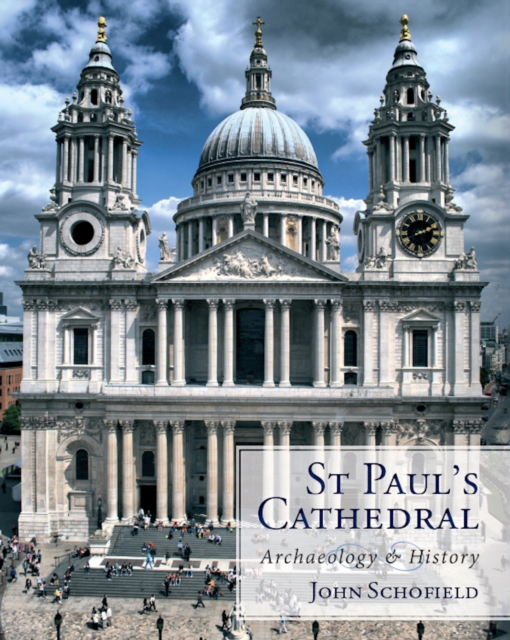
St Paul's Cathedral
This is the first volume concerned solely with the archaeology of a major late 17th century building in London, and the major changes it has undergone. St Paul’s Cathedral in the City of London was built in 1675–1711 to the designs of Sir Christopher Wren and has been described as an iconic building many times. In this major new account, John Schofield examines the cathedral from an archaeological perspective, reviewing its history from the early 18th to the early 21st century, as illustrated by recent archaeological recording, documentary research and engineering assessment. A detailed account of the construction of the cathedral is provided based on a comparison of the fabric with voluminous building accounts which have survived and evidence from recent archaeological investigation. The construction of the Wren building and its embellishments are followed by the main works of later surveyors such as Robert Mylne and Francis Penrose. The 20th century brought further changes and conservation projects, including restoration after the building was hit by two bombs in World War II, and all its windows blown out. The 1990s and first years of the present century have witnessed considerable refurbishment and cleaning involving archaeological and engineering works. Archaeological specialist reports and an engineering review of the stability and character of the building are provided.
eBook

Islamic Architecture
Winner of the American Publishers Association's Award for an outstanding Professional and Scholarly title and the Alice Davis Hitchcock Medallion 1996 from the Society of Architectural Historians of Great Britain.In a dazzling display of erudition, Robert Hillenbrand surveys the major building-types of the Islamic World: religious architecture (the mosque, the minaret, the madrasa), the mausoleum 'between Heaven and Earth', and the caravansarai and the palace representing the secular side.All the building-types are discussed in art-historical terms, with the interplay of form and function taken as the underlying theme of the analysis. All are comprehensively illustrated with a full range of colour and black-and-white photographs, analytical drawings, thumbnail comparative assemblies and ground plans.This major reference work, covering from Spain to Afghanistan and c. 700 to c. 1700, is a source of fascination for all seeking to appreciate the rich heritage of the Islamic World. Recurrent themes and patterns take on a wider significance - a persistent reminder that the Islamic faith and the particular type of society which it engendered makes light of vast gulfs of time and space.Features:*24 colour plates*300 black-and-white photographs*1246 line drawings*Section of composite drawings and ground plansAvailable in Hardback (originally published in 1994) and a revised paperback edition published in 2000.This new paperback edition includes a previously unpublished index, designed to make the book more user-friendly.
eBook

Building a Sacred Mountain
By the tenth century CE, Mount Wutai had become a major pilgrimage site within the emerging culture of a distinctively Chinese Buddhism. Famous as the abode of the bodhisattva Ma ju r (known for his habit of riding around the mountain on a lion), the site in northeastern China s Shanxi Province was transformed from a wild area, long believed by Daoists to be sacred, into an elaborate complex of Buddhist monasteries.
In Building a Sacred Mountain, Wei-Cheng Lin traces the confluence of factors that produced this transformation and argues that monastic architecture, more than texts, icons, relics, or pilgrimages, was the key to Mount Wutai s emergence as a sacred site. Departing from traditional architectural scholarship, Lin s interdisciplinary approach goes beyond the analysis of forms and structures to show how the built environment can work in tandem with practices and discourses to provide a space for encountering the divine.
For more information: http://arthistorypi.org/books/building-a-sacred-mountain
eBook

Divine Interiors
This illuminating study presents a thorough research into the wall paintings in Greek and Roman temples. While the official temples, which were connected to the city or state, usually had a simple but solemn appearance, the more popular buildings were true multi-colour expressions of religiosity. Scenes from the life of the revered deity, supporters and practitioners of the cult, or of plants and animals could carry visitors of the shrines away to different worlds. It is also striking to find in the vast Greco-Roman world that there are many similarities between often widely separated temples. The wall paintings were characterised by stylistic and taste changes, but they had the same look everywhere. Besides using archaeological remains, this book also uses the texts of antiquity, whose descriptions of the monuments provide additional information.
eBook

Gothic Pride
Newark's Cathedral Basilica of the Sacred Heart is one of the United States' greatest cathedrals and most exceptional Gothic Revival buildings. Rising from Newark's highest ground and visible for miles, it spectacularly evokes its historic models.Gothic Pridesets Sacred Heart in the context of American cathedral building and, blending diverse fields, accounts for the complex circumstances that produced it.
Calling upon a wealth of primary sources, Brian Regan describes in a compelling narrative the cathedral's almost century-long history. He traces the project to its origins in the late 1850s and the great expectations held by the project's prime movers-all passionate about Gothic architecture and immensely proud of Newark-that never wavered despite numerous setbacks and challenges. Construction did not begin until 1898 and, when completed in 1954, the cathedral became New Jersey's largest church-and the most expensive Catholic church ever built in America. During Pope John Paul II's visit to the United States in 1995, he celebrated evening prayer at the Cathedral. On that occasion, the Cathedral of the Sacred Heart was elevated to a basilica to become the Cathedral Basilica of the Sacred Heart.
Meticulously researched,Gothic Pridebrings to life the people who built, contributed to, and worshipped in Sacred Heart, recalling such remarkable personalities as George Hobart Doane, Jeremiah O'Rourke, Gonippo Raggi, and Archbishop Thomas Walsh. In many ways, the cathedral's story is a lens that lets us look at the history of Newark itself-its rise as an industrial city and its urban culture in the nineteenth century; its transformation in the twentieth century; its immigrants and the profound effects of their cultures, especially their religion, on American life; and the power of architecture to serve as a symbol of community values and pride..
eBook
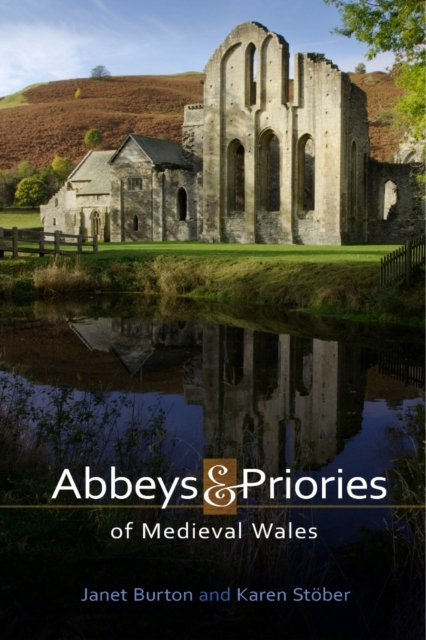
Abbeys and priories of medieval Wales
An illustrated guide to the religious houses of Wales from the 12th to the 16th centuries. It offers a thorough introduction to the monastic orders in Wales and the life inside medieval Welsh monasteries and nunneries, as well as providing the histories of almost 60 communities of religious men and women, and descriptions of the standing remains of their buildings.
eBook

John Gaw Meem at Acoma
Built by Spanish Franciscan missionaries in the seventeenth century, the magnificent mission church at Acoma Pueblo in west-central New Mexico is the oldest and largest intact adobe structure in North America. But in the 1920s, in danger of becoming a ruin, the building was restored in a cooperative effort among Acoma Pueblo, which owned the structure, and other interested parties. Kate Wingert-Playdon's narrative of the restoration and the process behind it is the only detailed account of this milestone example of historic preservation, in which New Mexico's most famous architect, John Gaw Meem, played a major role.
eBook

Rum Seljuq Architecture, 1170-1220
This lavishly illustrated volume presents the major surviving monuments of the early period of the Rum Seljuqs, the first major Muslim dynasty to rule Anatolia. A much-needed overview of the political history of the dynasty provides the context for the study of the built environment which follows. The book addresses the most significant monuments from across the region: a palace, a minaret and a hospital are studied in detail, along with an overview of the decorative portals attached to a wide array of different building types. The case studies are used to demonstrate the key themes and processes of architectural synthesis and development that were under way at the time, and how they reflect the broader society.
eBook