
Catalogue Search | MBRL


Are you sure you want to remove the book from the shelf?

{{itemTitle}}
45,693
result(s) for
"ARCHITECTURE / Urban "
Sort by:

Cities in Time
From street-markets and pop-up shops to art installations and Olympic parks, the temporary use of urban space is a growing international trend in architecture and urban design. Partly a response to economic and ecological crisis, it also claims to offer a critique of the status quo and an innovative way forward for the urban future. Cities in Time aims to explore and understand the phenomenon, offering a first critical and theoretical evaluation of temporary urbanism and its implications for the present and future of our cities. The book argues that temporary urbanism needs to be understood within the broader context of how different concepts of time are embedded in the city. In any urban place, multiple, discordant and diverse timeframes are at play – and the chapters here explore these different conceptions of temporality, their causes and their effects. Themes explored include how institutionalised time regulates everyday urban life, how technological and economic changes have accelerated the city’s rhythms, our existential and personal senses of time, concepts of memory and identity, virtual spaces, ephemerality and permanence.
eBook

Architecture, Politics, and Identity in Divided Berlin
On August 13, 1961, under the cover of darkness, East German authorities sealed the border between East and West Berlin using a hastily constructed barbed wire fence. Over the next twenty-eight years of the Cold War, the Berlin Wall grew to become an ever-present physical and psychological divider in this capital city and a powerful symbol of Cold War tensions. Similarly, stark polarities arose in nearly every aspect of public and private life, including the built environment.InArchitecture, Politics, and Identity in Divided BerlinEmily Pugh provides an original comparative analysis of selected works of architecture and urban planning in both halves of Berlin during the Wall era, revealing the importance of these structures to the formation of political, cultural, and social identities. Pugh uncovers the roles played by organizations such as the Foundation for Prussian Cultural Heritage and the Building Academy in conveying the political narrative of their respective states through constructed spaces. She also provides an overview of earlier notable architectural works, to show the precursors for design aesthetics in Berlin at large, and considers projects in the post-Wall period, to demonstrate the ongoing effects of the Cold War.Overall, Pugh offers a compelling case study of a divided city poised between powerful contending political and ideological forces, and she highlights the effort expended by each side to influence public opinion in Europe and around the World through the manipulation of the built environment.
eBook

The Aurelian Wall and the Refashioning of Imperial Rome, AD 271–855
This book explores the relationship between the city of Rome and the Aurelian Wall during the six centuries following its construction in the 270s AD, a period when the city changed and contracted almost beyond recognition, as it evolved from imperial capital into the spiritual center of Western Christendom. The Wall became the single most prominent feature in the urban landscape, a dominating presence which came bodily to incarnate the political, legal, administrative, and religious boundaries of urbs Roma, even as it reshaped both the physical contours of the city as a whole and the mental geographies of 'Rome' that prevailed at home and throughout the known world. With the passage of time, the circuit took on a life of its own as the embodiment of Rome's past greatness, a cultural and architectural legacy that dwarfed the quotidian realities of the post-imperial city as much as it shaped them.
eBook

The historic urban landscape : managing heritage in an urban century
This book offers a comprehensive overview of the intellectual developments in urban conservation.The authors offer unique insights from UNESCO's World Heritage Centre and the book is richly illustrated with colour photographs.
eBook
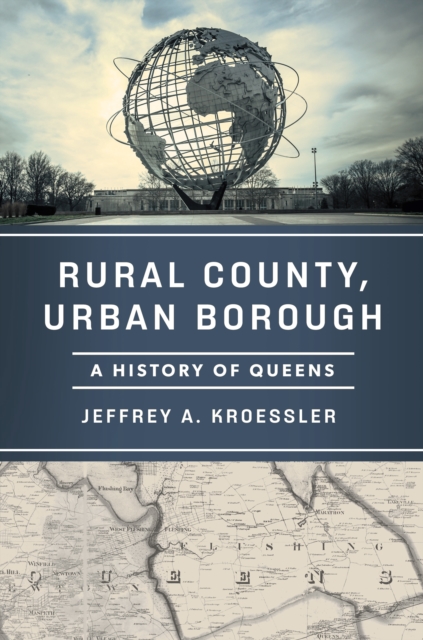
Rural County, Urban Borough
Once wetlands, Queens today is a crowded cityscape of dense urban neighborhoods and suburban sprawl. The largest of New York City's five boroughs by area, it has a larger population than every American city except Chicago, Los Angeles, and New York City itself. It possesses the most culturally, ethnically, linguistically, and religiously diverse population in the United States and possibly the world. This is the story of Queens, \"the world's borough,\" and how it transformed, in less than one hundred years, from an agricultural hinterland to a vital urban corridor. Rural County, Urban Borough is a history of place, charting the rapid transformation of the Queens landscape. It identifies what drove the borough's development, from public infrastructure, architecture, and transportation to technological innovation and urban planning. New York historian Jeffrey A. Kroessler takes us inside the backrooms and boardrooms where local powerbrokers shaped the borough's future, chronicling how its relationship with the city has evolved. He also shows the steps Queens residents from all backgrounds took to care for their neighborhoods and build their communities. Richly illustrated, this book underscores why Queens is integral to New York City and the wider world and reveals how, in its evolution, we see the whole arc of American urban history.
eBook

The Routledge Handbook of Planning Megacities in the Global South
Cities are now home to 55% of the world's population, and that number is rising. Urban populations across the world will continue to grow, including in megacities with populations over ten million. In 2016 there were 31 megacities globally, according to the United Nations' World Cities Report, with 24 of those cities located in the Global South. That number is expected to rise to 41 by 2030, with all ten new megacities in the Global South, where the processes of urbanization are intrinsically distinct from those in the Global North.
The Routledge Handbook of Planning Megacities in the Global South provides rigorous comparative analyses, discussing the challenges, processes, best practices, and initiatives of urbanization in Middle America, South America, the Middle East, Africa, South Asia, East Asia, and Southeast Asia. This book is indispensable reading for students and scholars of urban planning, and its significance as a resource will only continue to grow as urbanization reshapes the global population.
eBook

Reconnecting the city
Historic Urban Landscape is a new approach to urban heritage management, promoted by UNESCO, and currently one of the most debated issues in the international preservation community. However, few conservation practitioners have a clear understanding of what it entails, and more importantly, what it can achieve. * Examples drawn from urban heritage sites worldwide – from Timbuktu to Liverpool * Richly illustrated with colour photographs * Addresses key issues and best practice for urban conservation
eBook
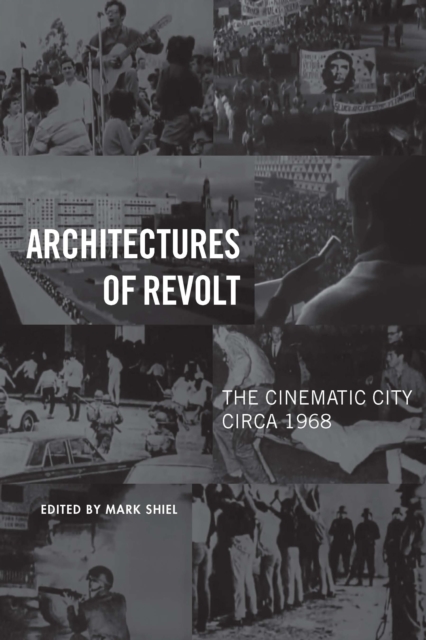
Architectures of Revolt
Coinciding with the fiftieth anniversary of the worldwide mass protest movements of 1968—against war, imperialism, racism, poverty, misogyny, and homophobia—the exciting anthology Architectures of Revolt explores the degree to which the real events of political revolt in the urban landscape in 1968 drove change in the attitudes and practices of filmmakers and architects alike. In and around 1968, as activists and filmmakers took to the streets, commandeering public space, buildings, and media attention, they sought to re-make the urban landscape as an expression of utopian longing or as a dystopian critique of the established order. In Architectures of Revolt, the editor and contributors chronicle city-specific case studies from Paris, Berlin, Milan, and Chicago to New York, Los Angeles, Mexico City, and Tokyo. The films discussed range from avant-garde and agitprop shorts to mainstream narrative feature films. All of them share a focus on the city and, often, particular streets and buildings as places of political contestation and sometimes violence, which the medium of cinema was uniquely equipped to capture. Contributors include: Stephen Barber, Stanley Corkin, Jesse Lerner, Jon Lewis, Gaetana Marrone, Jennifer Stob, Andrew Webber, and the editor.
eBook

The Fabric of Space
Water lies at the intersection of landscape and infrastructure, crossing between visible and invisible domains of urban space, in the tanks and buckets of the global South and the vast subterranean technological networks of the global North. In this book, Matthew Gandy considers the cultural and material significance of water through the experiences of six cities: Paris, Berlin, Lagos, Mumbai, Los Angeles, and London. Tracing the evolving relationships among modernity, nature, and the urban imagination, from different vantage points and through different periods, Gandy uses water as a lens through which to observe both the ambiguities and the limits of nature as conventionally understood. Gandy begins with the Parisian sewers of the nineteenth century, captured in the photographs of Nadar, and the reconstruction of subterranean Paris. He moves on to Weimar-era Berlin and its protection of public access to lakes for swimming, the culmination of efforts to reconnect the city with nature. He considers the threat of malaria in Lagos, where changing geopolitical circumstances led to large-scale swamp drainage in the 1940s. He shows how the dysfunctional water infrastructure of Mumbai offers a vivid expression of persistent social inequality in a postcolonial city. He explores the incongruous concrete landscapes of the Los Angeles River. Finally, Gandy uses the fictional scenario of a partially submerged London as the starting point for an investigation of the actual hydrological threats facing that city.
eBook
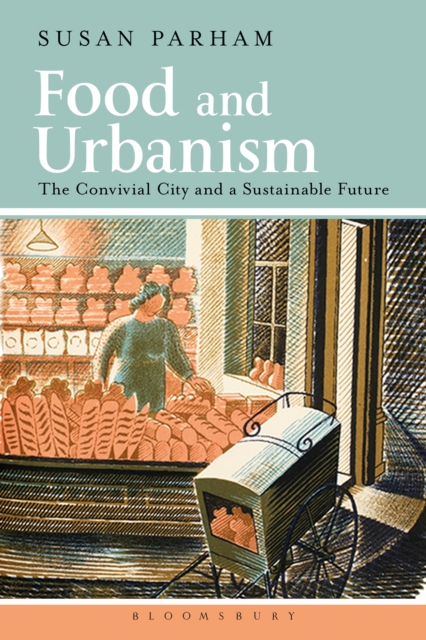
Food and Urbanism
Cities are now home to over fifty per cent of the world’s population, but the contribution of food to shaping cities is often overlooked. Food matters in designing and planning cities because how it is grown, transported, bought, cooked, eaten, cleaned up and disposed of has significant effects on creating a sustainable, resilient and convivial urban future. The book explores methods for extending the gastronomic possibilities of urban space - from the scale of the table to the metropolis. Using a wealth of examples from cities worldwide, the book explores how physical design and socio-spatial arrangements focused on food can help maintain socially rich, productive and sustainable urban space. Underpinning the book’s analysis of food and cities is the view that decisions about a hyper-urban future should recognise the fundamental role of food. Food and Urbanism provides an original and new contribution to food scholarship; exploring some intriguing research questions about the ways that food, urbanism and sustainable conviviality interconnect.
eBook