
Catalogue Search | MBRL


Are you sure you want to remove the book from the shelf?

{{itemTitle}}
3,014
result(s) for
"ARCHITECTURE History General."
Sort by:

Understanding architecture : its elements, history, and meaning
\"This bestselling, illustrated survey of Western architecture is now fully revised throughout, explaining the structure, function, history, and meaning of architecture in a way that is both accessible and engaging. The long-awaited third edition includes increased global coverage with new mini chapters on Africa, Japan, China, India, and Islamic Architecture; a new chapter covering the future of architecture in the twenty-first century; updated coverage of sustainability and green architecture and its impact on design; an update to the historical survey; and over fifty images in full color. Understanding Architecture continues to be the only text in the field to examine architecture as a cultural phenomenon as well as an artistic and technological achievement with its straightforward, two-part structure: (1) The Elements of Architecture and (2) The History and Meaning of Architecture. Comprehensive and clearly written, Understanding Architecture is a classic survey of Western architecture. \"-- Provided by publisher.
Book

Synagogues in the Islamic World
This beautifully illustrated volume looks at the spaces created by and for Jews in areas under the political or religious control of Muslims in regions such as Central Asia, the Middle East, North Africa and Spain.
eBook

A global history of architecture
\"A Global History of Architecture, Third Edition has been updated and revised throughout to reflect current scholarship, including an expanded section on contemporary global architecture. Spanning from 3,500 b.c.e. to the present, this unique guide is written by an all-star team of architectural experts in their fields who emphasize the connections, contrasts, and influences of architectural movements throughout history\"-- Provided by publisher.
Book
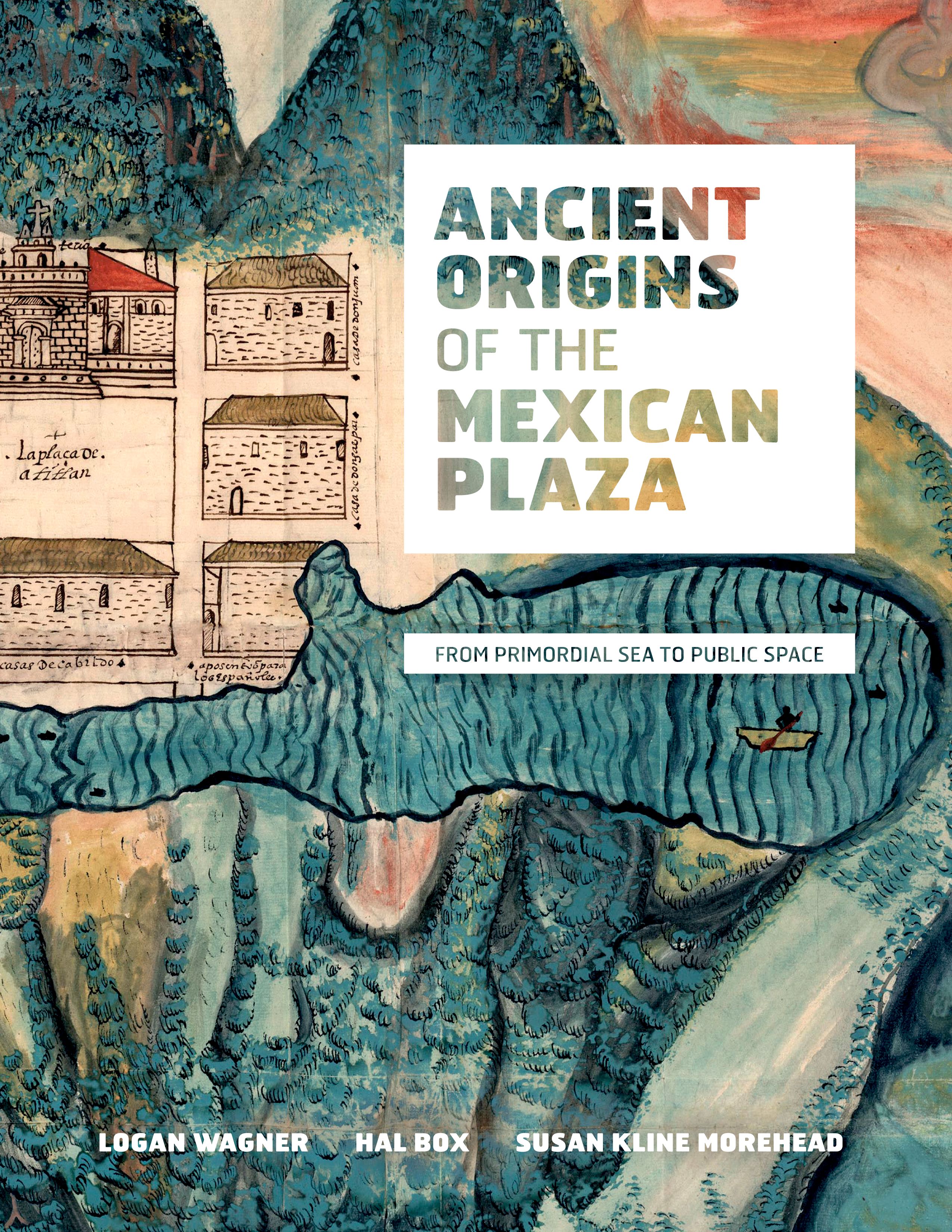
Ancient Origins of the Mexican Plaza
The plaza has been a defining feature of Mexican urban architecture and culture for at least 4,000 years. Ancient Mesoamericans conducted most of their communal life in outdoor public spaces, and today the plaza is still the public living room in every Mexican neighborhood, town, and city—the place where friends meet, news is shared, and personal and communal rituals and celebrations happen. The site of a community’s most important architecture—church, government buildings, and marketplace—the plaza is both sacred and secular space and thus the very heart of the community. This extensively illustrated book traces the evolution of the Mexican plaza from Mesoamerican sacred space to modern public gathering place. The authors led teams of volunteers who measured and documented nearly one hundred traditional Mexican town centers. The resulting plans reveal the layers of Mesoamerican and European history that underlie the contemporary plaza. The authors describe how Mesoamericans designed their ceremonial centers as embodiments of creation myths—the plaza as the primordial sea from which the earth emerged. They discuss how Europeans, even though they sought to eradicate native culture, actually preserved it as they overlaid the Mesoamerican sacred plaza with the Renaissance urban concept of an orthogonal grid with a central open space. The authors also show how the plaza’s historic, architectural, social, and economic qualities can contribute to mainstream urban design and architecture today.
eBook

The story of architecture
In this sweeping history, from the Stone Age to the present day, Witold Rybczynski shows how architectural ideals have been affected by technological, economic, and social changes-and by changes in taste. The host of examples ranges from places of worship such as Hagia Sophia and Brunelleschi's Duomo to living spaces such as the Katsura Imperial Villa and the Alhambra, national icons such as the Lincoln Memorial and the Sydney Opera House, and skyscrapers such as the Seagram Building and Beijing's CCTV headquarters. Rybczynski's narrative emphasizes the ways that buildings across time and space are united by the human desire for order, meaning, and beauty.0 Engaging and accessible, this is a coherent story of architecture's physical manifestation of the universal aspiration to celebrate, honor, and commemorate, and an exploration of the ways that each building is a unique product of individual patrons, architects, and builders. Firm in opinion, even-handed, and rooted in scholarship, this book will delight anyone interested in understanding the buildings they use, visit, and pass by each day.
BOOK

Ultra-Modernism
The first half of the twentieth century was fraught with global tensions and political machinations. However, for all the destruction in that period, these geopolitical conditions in Manchuria cultivated an extraordinary variety of architecture and urban planning, which has completely escaped international attention until now. With over forty carefully chosen images, Ultra-Modernism: Architecture and Modernity in Manchuria is the first book in English that illustrates Manchuria’s encounter with modernity through its built environment. Edward Denison and Guangyu Ren take readers through Russia’s early territorial claims, Japan’s construction of the South Manchuria Railway (SMR), and the establishment of Manchukuo in 1932. The book examines in detail the creation of modern cities along the SMR and focuses on three of the most important modern urban centres in Manchuria: the Russian-dominated city of Harbin, the port of Dalian, and the new capital of Manchukuo, Hsinking (Changchun). Like so much of the world outside ‘the West’ during the twentieth century, Manchuria’s encounter with modernity is merely a faint whisper drowned out by the deafening master narrative of Western-centric modernism. This book attempts to redress an imbalance in the modern history of China by studying the impact of Japan on architecture and planning beyond the depredations of the Sino-Japanese War.
eBook

Peripheries : edge conditions in architecture
\"Architects are now more than ever part of an interdisciplinary context. The emergence of creative art-based practices, film making, post-disaster designs and slum management, as part of the architecture discourse and curriculum, is an indication of how broad architecture has become, and the extent to which it has already merged peripheral practices into its core. This new volume in the AHRA Critiques Series is a statement about how broad, complex, influential, and, ironically central, architecture has become in the contemporary culture, economy and society, despite the marginal position the profession currently occupies. Peripheries questions and challenges the boundaries of architectural research by bringing together subjects and relevant streams of investigation, some of which rarely feature in architectural research and practice titles. Divided into four themes, Places of Formation and Insight, Practices at the Edge, People on the Margins and Edge Readings, each section presents a selection of high calibre interdisciplinary research papers, from a range of renowned contributors including Stephen Walker, Gerry Adler, Dana Vais and author Glen Patterson. The volume also includes a Dialogue between Murray Fraser, Christine Boyer and Kim Dovey. Each section interrogates a peripheral aspect of the built environment, and brings to the fore peripheral case studies. Chapters discuss architecture in United States, Lebanon, Egypt, Japan, Romania, and Europe. Hence, the book takes Architectural humanities discussions to new cultures, societies and practices and towards a global level of influence and impact.\"-- Provided by publisher.
Book

Open Architecture
The International Building Exhibition 1984/87 in Berlin constitutes one of the most remarkable examples to discuss \"open architecture\".Almost 10,000 dwellings were constructed or restored in the Kreuzberg districts adjacent to the Berlin Wall, inhabited about halfway by immigrants.
eBook


Impossible Heights
The advent of the airplane and skyscraper in 1920s and '30s America offered the population an entirely new way to look at the world: from above. The captivating image of an airplane flying over the rising metropolis led many Americans to believe a new civilization had dawned. InImpossible Heights, Adnan Morshed examines the aesthetics that emerged from this valorization of heights and their impact on the built environment.
The lofty vantage point from the sky ushered in a modernist impulse to cleanse crowded twentieth-century cities in anticipation of an ideal world of tomorrow. Inspired by great new heights, American architects became central to this endeavor and were regarded as heroic aviators. Combining close readings of a broad range of archival sources, Morshed offers new interpretations of works such as Hugh Ferriss's Metropolis drawings, Buckminster Fuller's Dymaxion houses, and Norman Bel Geddes's Futurama exhibit at the 1939 New York World's Fair. Transformed by the populist imagination into \"master builders,\" these designers helped produce a new form of visuality: the aesthetics of ascension.
By demonstrating how aerial movement and height intersect with popular \"superman\" discourses of the time, Morshed reveals the relationship between architecture, art, science, and interwar pop culture. Featuring a marvelous array of never before published illustrations, this richly textured study of utopian imaginings illustrates America's propulsion into a new cultural consciousness.
eBook