
Catalogue Search | MBRL


Are you sure you want to remove the book from the shelf?

{{itemTitle}}
21,506
result(s) for
"ART / Ceramics."
Sort by:
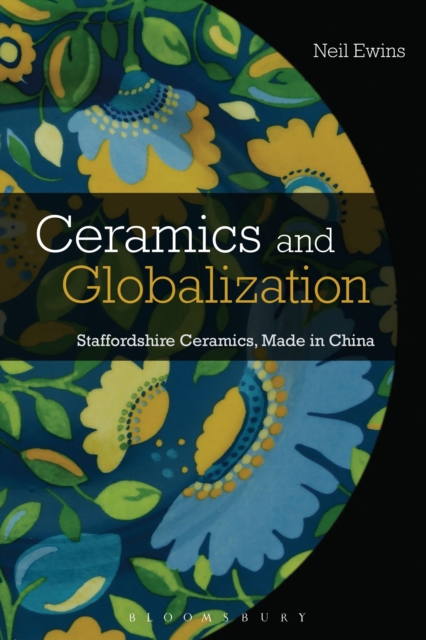
Ceramics and Globalization
Neil Ewins' study of the Staffordshire potteries in a period of great global change traces how ceramics production has been affected by globalisation in both familiar and unexpected ways. Although many manufacturers such as Wedgwood initially moved production to cheaper labour markets in East Asia, others remained in or returned to England once it became clear that outsourcing manufacturing was affecting the brand value and customer perception of their products. Neil Ewins explores the complex behaviour of the UK ceramics industry, using a combination of evidence from the press, trade journals, ceramic objects, and primary interview evidence of manufacturers, retailers and a ceramic designer. Ewins suggests that, although the surface designs of UK ceramics invariably reflect diverse cultural and stylistic influences, a notion of authenticity often still resides in the place and context in which the ceramic product was originally made. Overall, the book argues that UK ceramics remain culturally complex because of issues of supply and demand, and ties to heritage, imagined or otherwise. Within a context of globalization, the book highlights compelling issues which have huge ramifications on UK manufacturing futures.
eBook

Materiality, Techniques and Society in Pottery Production
Daniel Albero Santacreu presents a wide overview of certain aspects of the pottery analysis and summarizes most of the methodological and theoretical information currently applied in archaeology in order to develop wide and deep analysis of ceramic pastes. The book provides an adequate framework for understanding the way pottery production is organised and clarifies the meaning and role of the pottery in archaeological and traditional societies. The goal of this book is to encourage reflection, especially by those researchers who face the analysis of ceramics for the first time, by providing a background for the generation of their own research and to formulate their own questions depending on their concerns and interests. The three-part structure of the book allows readers to move easily from the analysis of the reality and ceramic material culture to the world of the ideas and theories and to develop a dialogue between data and their interpretation. Daniel Albero Santacreu is a Lecturer Assistant in the University of the Balearic Islands, member of the Research Group Arqueo UIB and the Ceramic Petrology Group. He has carried out the analysis of ceramics from several prehistoric societies placed in the Western Mediterranean, as well as the study of handmade pottery from contemporary ethnic groups in Northeast Ghana.
eBook
Corpus of Prehistoric Pottery and Palettes
Facsimile edition of the 1974 reissue of Flinders Petrie’s 1921 corpus of prehistoric pottery and slate palettes from pre-dynastic, prehistoric Egypt. The pottery corpus was produced separately to accompany the catalog of Egyptian artifacts in the volume Prehistoric Egypt and comprises hundreds of line drawings illustrating the shapes, forms and types of decoration. It was intended to be a ‘graveside’ aid for use during excavation, with the intent that it be used with record cards to classify and date pottery that could then be returned to the grave. The corpus of palettes updated Petrie’s original classification published Ballas and Naqada, to include many new finds and refine the typology and sequence.
eBook

Griot Potters of the Folona
While the women may have nominally given up their mothers' identities through marriage, over the generations the potters preserved their maternal heritage through their technological style, passing this knowledge on to their daughters.
eBook

Sustainable Ceramics
An essential resource for ceramicists, studios or schools looking for inspiration to reclaim, reuse and recycle in their studio or work. Producing work that is not only beautifully designed and produced, but is also environmentally friendly and socially responsible is now more important than ever. In Sustainable Ceramics, pioneer Robert Harrison draws on more than four decades of making, and a wealth of experience shared by other artists to present you with a range of practical possibilities. This book presents you all the factors to consider when going 'green', from fuels and alternative firing technology to energy-saving methods, sustainable ways to collect and use clay itself, and ways to deal with or recycle your waste materials and save water. He suggests simple and achievable methods by which to reduce the carbon footprint of your ceramic art, and draws on interviews and examples by practitioners who reclaim, reuse and recycle in their studio or work.
eBook

Pots and Practices
This third volume of the BEFIM series addresses the life history of vessels from the Early Celtic hillfort settlements of Heuneburg and Vix-Mont Lassois, from a detailed examination of the manufacturing process to the use and modifications of the final products. Pivotal was an extensive experimental program of dozens of experiments directed at a better understanding of the way this pottery was made and used. The participation of an experienced potter allowed us to reproduce exact replicas of the different wares and explore in detail the traces of production and the effect of temper, baking temperature and so forth on the development of production traces and wear. Especially variations in the temper material, like the frequently observed addition of calcite in the archaeological pottery, strongly affected the characteristics of the use wear traces that subsequently developed from the preparation of different products (grape wine, honey wine, different kinds of porridge etc.). The effect of alcohol production, including fermentation, on the pottery was also explored. We also tested the effect of different gestures of preparing food and drink (mixing, stirring, pounding), different ways of storage and handling, and the manner of consumption like decanting using various kinds of utensils. The traces we observed on the experimental vessels, using an integrated low and high power approach, formed the basis for our interpretation of the archaeological wares from the Heuneburg and Vix-Mont Lassois. Our data on the life history of the pottery added to a more detailed insight into foodways, including drinking habits, of the Early Celtic communities of Central Europe. This book presents in detail the experimental program and the archaeological observations.
eBook

Sherds of History
Ceramics serve as one of the best-known artifacts excavated by archaeologists. They are carefully described, classified, and dated, but rarely do scholars consider their many and varied uses. Breaking from this convention, Myriam Arcangeli examines potsherds from four colonial sites in the Antillean island of Guadeloupe to discover what these everyday items tell us about the people who used them. In the process, she reveals a wealth of information about the lives of the elite planters, the middle and lower classes, and enslaved Africans.
By analyzing how the people of Guadeloupe used ceramics-whether jugs for transporting and purifying water, pots for cooking, or pearlware for eating-Arcangeli spotlights the larger social history of Creole life. What emerges is a detail rich picture of water consumption habits, changing foodways, and concepts of health.Sherds of History offers a compelling and novel study of the material record and the \"ceramic culture\" it represents to broaden our understanding of race, class, and gender in French-colonial societies in the Caribbean and the United States.
Arcangeli's innovative interpretation of the material record will challenge the ways archaeologists analyze ceramics.
eBook

Ancient Maya Pottery
The ancient Maya produced a broad range of ceramics that has attracted concerted scholarly attention for over a century. Pottery sherds--the most abundant artifacts recovered from sites--reveal much about artistic expression, religious ritual, economic systems, cooking traditions, and cultural exchange in Maya society.
Today, nearly every Maya archaeologist uses the type-variety classificatory framework for studying sherd collections. This impressive volume brings together many of the archaeologists signally involved in the analysis and interpretation of ancient Maya ceramics and represents new findings and state-of-the-art thinking. The result is a book that serves both as a valuable resource for archaeologists involved in pottery classification, analysis, and interpretation and as an illuminating exploration of ancient Mayan culture.
eBook

Persian Pottery in the First Global Age
In Persian Pottery in the First Global Age: the Sixteenth and Seventeeth Centuries the authors, L. Golombek, R. B. Mason, P. Proctor, and E. Reilly, challenge the commonly accepted narrative regarding Safavid pottery workshops and chronology and relate changes to historical context.
eBook
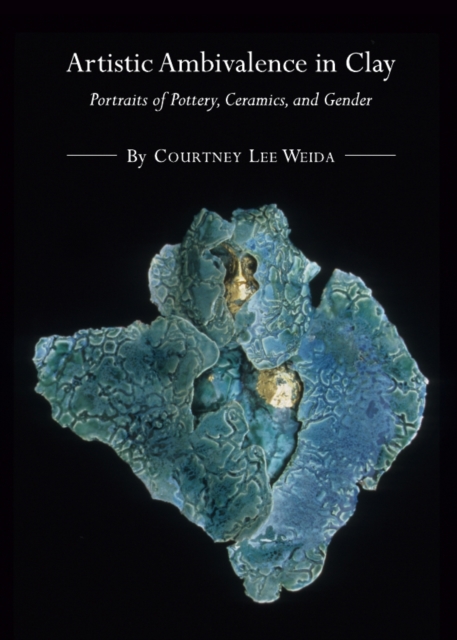
Artistic Ambivalence in Clay
This book is a collection of glimpses into the lives and works of fifteen prominent women artists in contemporary ceramics. Spanning multiple genres, generations, and geographies, these potters and ceramic sculptors describe nuances, contradictions, and tensions surrounding their artworks, artistic processes, and professional lives. Otherin this text, artistic ambivalences are questioned and analyzed in terms of myriad gender issues. Featured ceramicists include: Maureen Burns-Bowie, Esta Carn.
eBook