
Catalogue Search | MBRL


Are you sure you want to remove the book from the shelf?

{{itemTitle}}
33,850
result(s) for
"ART / European"
Sort by:

Giants and Dwarfs in European Art and Culture, ca. 1350-1750
Not since Edward Wood's Giants and Dwarfs published in 1868 has the subject been the focus of a scholarly study in English. Treating the topic afresh, this volume offers new insights into the vogue for giants and dwarfs that flourished in late-medieval and early modern Europe. From chapters dealing with the real dwarfs and giants in the royal and princely courts, to the imaginary giants and dwarfs that figured in the crafting of nationalistic and ancestral traditions, to giants and dwarfs used as metaphorical expression, scholars discuss their role in art, literature, and ephemeral display. Some essays examine giants and dwarfs as monsters and marvels and collectibles, while others show artists and writers emphasizing contrasts in scale to inspire awe or for comic effect. As these investigations reveal, not all court dwarfs functioned as jesters, and giant figures might equally be used to represent heroes, anti-heroes, and even a saint.
eBook

The Total Work of Art in European Modernism
In this groundbreaking book David Roberts sets out to demonstrate the centrality of the total work of art to European modernism since the French Revolution. The total work of art is usually understood as the intention to reunite the arts into the one integrated whole, but it is also tied from the beginning to the desire to recover and renew the public function of art. The synthesis of the arts in the service of social and cultural regeneration was a particularly German dream, which made Wagner and Nietzsche the other center of aesthetic modernism alongside Baudelaire and Mallarmé. The history and theory of the total work of art pose a whole series of questions not only to aesthetic modernism and its utopias but also to the whole epoch from the French Revolution to the totalitarian revolutions of the twentieth century. The total work of art indicates the need to revisit key assumptions of modernism, such as the foregrounding of the autonomy and separation of the arts at the expense of the countertendencies to the reunion of the arts, and cuts across the neat equation of avant-gardism with progress and deconstructs the familiar left-right divide between revolution and reaction, the modern and the antimodern. Situated at the interface between art, religion, and politics, the total work of art invites us to rethink the relationship between art and religion and art and politics in European modernism. In a major departure from the existing literature David Roberts argues for twin lineages of the total work, a French revolutionary and a German aesthetic, which interrelate across the whole epoch of European modernism, culminating in the aesthetic and political radicalism of the avant-garde movements in response to the crisis of autonomous art and the accelerating political crisis of European societies from the 1890s forward.
eBook

Local antiquities, local identities
This collection investigates the wide array of local antiquarian practices that developed across Europe in the early modern era. Breaking new ground, it explores local concepts of antiquity in a period that has been defined as a uniform 'Renaissance'. Contributors take a novel approach to the revival of the antique in different parts of Italy, as well as examining other, less widely studied antiquarian traditions in France, the Netherlands, Spain, Portugal, Britain and Poland. They consider how real or fictive ruins, inscriptions and literary works were used to demonstrate a particular idea of local origins, to rewrite history or to vaunt civic pride. In doing so, they tackle such varied subjects as municipal antiquities collections in Southern Italy and France, the antiquarian response to the pagan, Christian and Islamic past on the Iberian Peninsula, and Netherlandish interest in megalithic ruins thought to be traces of a prehistoric race of Giants.
eBook

Contamination and Purity in Early Modern Art and Architecture
The concepts of purity and contamination preoccupied early modern Europeans fundamentally, structuring virtually every aspect of their lives, not least how they created and experienced works of art and the built environment. In an era that saw a great number of objects and people in motion, the meteoric rise of new artistic and building technologies, and religious upheaval exert new pressures on art and its institutions, anxieties about the pure and the contaminated - distinctions between the clean and unclean, sameness and difference, self and other, organization and its absence - took on heightened importance. In this series of geographically and methodologically wide-ranging essays, thirteen leading historians of art and architecture grapple with the complex ways that early modern actors negotiated these concerns, covering topics as diverse as Michelangelo's unfinished sculptures, Venetian plague hospitals, Spanish-Muslim tapestries, and emergency currency. The resulting volume offers surprising new insights into the period and into the modern disciplinary routines of art and architectural history.
eBook

Art and Ocean Objects of Early Modern Eurasia
During the early modern period, objects of maritime material culture were removed from their places of origin and traded, collected and displayed worldwide. Focusing on shells and pearls exchanged within local and global networks, this monograph compares and connects Asian, in particular Chinese, and European practices of oceanic exploitation in the framework of a transcultural history of art with an understanding of maritime material culture as gendered. Perceiving the ocean as mother of all things, as womb and birthplace, Chinese and European artists and collectors exoticized and eroticized shells' shapes and surfaces. Defining China and Europe as spaces entangled with South and Southeast Asian sites of knowledge production, source and supply between 1500 and 1700, the book understands oceanic goods and maritime networks as transcending and subverting territorial and topographical boundaries. It also links the study of globally connected port cities to local ecologies of oceanic exploitation and creative practices.
eBook

Contraband guides : race, transatlantic culture, and the arts in the Civil War era
In his best-selling travel memoir, The Innocents Abroad, Mark Twain punningly refers to the black man who introduces him to Venetian Renaissance painting as a \"contraband guide,\" a term coined to describe fugitive slaves who assisted Union armies during the Civil War. By means of this and similar case studies, Paul H. D. Kaplan documents the ways in which American cultural encounters with Europe and its venerable artistic traditions influenced nineteenth-century concepts of race in the United States. Americans of the Civil War era were struck by the presence of people of color in European art and society, and American artists and authors, both black and white, adapted and transformed European visual material to respond to the particular struggles over the identity of African Americans. Taking up the work of both well- and lesser-known artists and writers—such as the travel writings of Mark Twain and William Dean Howells, the paintings of German American Emanuel Leutze, the epistolary exchange between John Ruskin and Charles Eliot Norton, newspaper essays written by Frederick Douglass and William J. Wilson, and the sculpture of freed slave Eugène Warburg—Kaplan lays bare how racial attitudes expressed in mid-nineteenth-century American art were deeply inflected by European traditions. By highlighting the contributions people of black African descent made to the fine arts in the United States during this period, along with the ways in which they were represented, Contraband Guides provides a fresh perspective on the theme of race in Civil War–era American art. It will appeal to art historians, to specialists in African American studies and American studies, and to general readers interested in American art and African American history.
eBook

The Insect and the Image
The Insect and the Image explores the ways in which visual images defined the insect as a proper subject of study for Europeans of the early modern period. Revealing how sixteenth- and seventeenth-century artists and image makers shaped ideas of the natural world, Janice Neri enhances our knowledge of the convergence of art, science, and commerce today.
eBook

The Green Bloc
Expanding the horizon of established accounts of Central European art under socialism, this book uncovers the neglected history of artistic engagement with the natural environment in the Eastern Bloc. The turbulent legacy of 1968, which saw the confluence of political upheaval, spread of counterculture, rise of ecological consciousness, and emergence of global conceptual art, provides the setting for Maja Fowkes's innovative reassessment of the environmental practice of the Central European neo-avant-garde. Focussing on artists and artist groups whose ecological dimension has rarely been considered, including the Pécs Workshop from Hungary, OHO in Slovenia, TOK in Croatia, Rudolf Sikora in Slovakia, and the Czech artist Petr Štembera, 'The Green Bloc: Neo-avant-garde Art and Ecology under Socialism' brings to light an array of distinctive approaches to nature, from attempts to raise environmental awareness among socialist citizens to the exploration of non-anthropocentric positions and the quest for cosmological existence in the midst of red ideology. Embedding artistic production in social, political, and environmental histories of the region, this book reveals the Central European artists' sophisticated relationship to nature, at the precise moment when ecological crisis was first apprehended on a planetary scale.
eBook

Indecent Bodies in Early Modern Visual Culture
The life-like depiction of the body became a central interest and defining characteristic of the European Early Modern period that coincided with the establishment of which images of the body were to be considered 'decent' and representable, and which disapproved, censored, or prohibited. This book explores the concept of indecency.
eBook
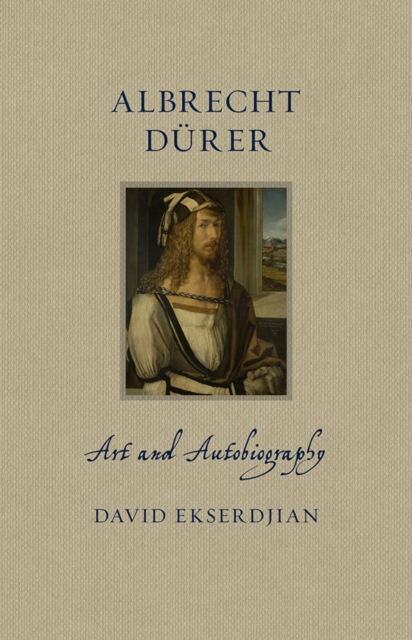
Albrecht Dürer
The Italian Renaissance is conventionally thought of as the historical period that bore witness to the rise of the individual. Yet no other artist of the time begins to compare with Albrecht Dürer in terms of the almost obsessive interest he displayed in depicting his life, his dreams and his surroundings in his art. Exploring Dürer's life and times, the natural world in his work, and his studies, travel and influences, David Ekserdjian closely examines Dürer's paintings, as well as his drawings and prints, which are often comparatively overlooked. Revealing Dürer's remarkable, unique status, both in his own time and across the centuries, this book is essential reading for anyone interested in Renaissance or northern European art.
eBook