
Catalogue Search | MBRL


Are you sure you want to remove the book from the shelf?

{{itemTitle}}
4,978
result(s) for
"ART / Individual Artist."
Sort by:

Actional Poetics - ASH SHE HE
Authoritative study of the Scottish born artist Alastair MacLennan who has achieved worldwide renown as a performance artist. Includes comprehensive visual documentation of his performative practice drawn extensively from his archival resources, with essays from leading national and international scholars in the field. 350 colour illustrations. New Books Network (New Books in Art) interview with Sandra Johnston, Brian Patterson and Alastair MacLennan.
eBook

Rembrandt and his Circle
This collection brings together art historians, museum professionals, conservators, and conservation scientists whose work involves Rembrandt van Rijn and associated artists such as Gerrit Dou, Jan Lievens, and Ferdinand Bol.
eBook

The Dinner Party
Judy Chicago's monumental art installation The Dinner Party was an immediate sensation when it debuted in 1979, and today it is considered the most popular work of art to emerge from the second-wave feminist movement. Jane F. Gerhard examines the piece's popularity to understand how ideas about feminism migrated from activist and intellectual circles into the American mainstream in the last three decades of the twentieth century. More than most social movements, feminism was transmitted and understood through culture-art installations, Ms. Magazine, All in the Family, and thousands of other cultural artifacts. But the phenomenon of cultural feminism came under extraordinary criticism in the late 1970s and 1980s Gerhard analyzes these divisions over whether cultural feminism was sufficiently activist in light of the shifting line separating liberalism from radicalism in post-1970s America. She concludes with a chapter on the 1990s, when The Dinner Party emerged as a target in political struggles over public funding for the arts, even as academic feminists denounced the piece for its alleged essentialism. The path that The Dinner Party traveled-from inception (1973) to completion (1979) to tour (1979-1989) to the permanent collection of the Brooklyn Museum (2007)-sheds light on the history of American feminism since 1970 and on the ways popular feminism in particular can illuminate important trends and transformations in the broader culture.
eBook

Picasso and the Chess Player
In the fateful year of 1913, events in New York and Paris launched a great public rivalry between the two most consequential artists of the twentieth century, Pablo Picasso and Marcel Duchamp. The New York Armory Show art exhibition unveiled Duchamp's Nude Descending a Staircase, a \"sensation of sensations\" that prompted Americans to declare Duchamp the leader of cubism, the voice of modern art. In Paris, however, the cubist revolution was reaching its peak around Picasso. In retrospect, these events form a crossroads in art history, a moment when two young bohemians adopted entirely opposite views of the artist, giving birth to the two opposing agendas that would shape all of modern art. Today, the museum-going public views Pablo Picasso as the greatest figure in modern art. Over his long lifetime, Picasso pioneered several new styles as the last great painter in the Western tradition. In the rarefied world of artists, critics, and collectors, however, the most influential artist of the last century was not Picasso, but Marcel Duchamp: chess player, prankster, and a forefather of idea-driven dada, surrealism, and pop art. Picasso and the Chess Player is the story of how Picasso and Duchamp came to define the epochal debate between modern and conceptual art-a drama that features a who's who of twentieth-century art and culture, including Henri Matisse, Gertrude Stein, André Breton, Salvador Dalí, and Andy Warhol. In telling the story, Larry Witham weaves two great art biographies into one tumultuous century.
eBook
Creative Infrastructures
Creative Infrastructures is a new collection of connected essays that examines the relationships between art, innovation, entrepreneurship and money. Essig uses her extensive knowledge of the field of arts entrepreneurship and puts it to broader practical use and greater impact by offering a theory for arts entrepreneurship that places more emphasis on means over ends. Essig uses illustrative case studies to show how her theoretical framework explains a number of innovative efforts in culturally and racially diverse communities.
The Ouroboros, the serpent eating its own tail, is a visual metaphor deployed by Essig in the opening essay to shift commonly held perspectives on, especially, the relationship between art and money. Art is the head; money is the tail, feeding and nourishing the head in a cycle that enables the organism to not only survive but also thrive.
Between the art and the money is the body: innovation and entrepreneurship. Innovation is understood to be a novel idea that is implemented and has impact on a domain. For that is what the artist does: create something new and unique that has impact. Entrepreneurship is conceived of as the discovery or creation of a mediating structure that can convert the artistic innovation into capital (financial and other types) that can be re-invested in the artist and the making of more art. This book endeavours to untie the knotty relationships between artists and entrepreneurship in order to answer the question 'How can artists make work and thrive in our late-capitalist society?'
Other essays in the collection consider a range of topics including how aesthetic and cultural value are transmitted from the artist to the audience; the complexity of the tension between what art fundamentally is and the reproduction of that work and the recent foregrounding of the idea that art can produce positive social change – through current and late-twentieth-century trends in 'social impact art' or 'art for change'.
As in sports, business and other sectors, the star artists, the top 1 per cent, have disproportionately influenced the public expectations for what 'a successful artist' means. It isn't necessary to retell the stories of the one per cent of arts entrepreneurs; instead Essig looks instead at the quotidian artist, at what they do and why, not what they make.All too often, artists who are attentive to the 'business' of their creative practice are accused of 'selling out'. But for many working artists, that attention to business is what enables an artist to not just survive, but to thrive. When artists follow their mission, Essig contends that they don't sell out, they spiral up by keeping mission at the forefront.
The closing essay is a work of speculative fiction, based in all that comes before, both in the preceding essays and in Essig's work as an artist, arts advocate and scholar of cultural policy. Returning to the symbol of the Ouroboros, it connects the head (art) to the tail (not money specifically, but resources), and back again. It is a 'future imaginary', in which she profiles three fictional artists in the year 2050.
The field of arts entrepreneurship is growing – thanks in large part to the work of Linda Essig. The case studies in the book are US-based, but the issues addressed are universal.
This book is ideal for use in training programmes for arts administrators and advocates; policy analysts and business schools that are looking to add in arts programmes. It will be of great interest and significance to people working in the cultural industries in the United Kingdom and Europe, especially Germany, where there has also been some recent research interest on similar topics.
It is also relevant to the many artists who participate in training and professional development programmes in their community, as well as those who are just starting out.
eBook

Michael Wegerer. Bouncing Borders: Daten, Skulptur Und Grafik / Data, Sculpture and Graphic
The publication represents a cross-section through Michael Wegerer's oeuvre who became internationally known through his graphic paper sculptures, space installations, and interdisciplinary exhibition projects. Essays from authors from the worlds of art, philosophy and music complement the artist's own works. For this publication, two invited artists have even designed their own visual interventions as a reply to the artist's design position.
eBook
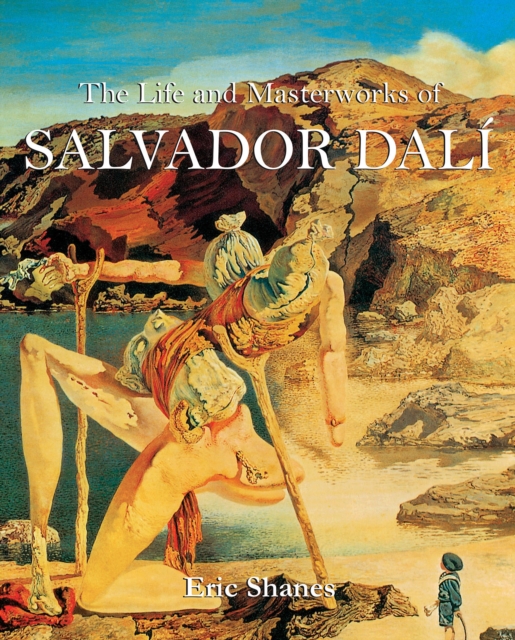
The life and masterworks of Salvador Dalí
Painter, designer, creator of bizarre objects, author and film maker, Dalí became the most famous of the Surrealists. Buñuel, Lorca, Picasso and Breton all had a great influence on his career. Dalí's film, An Andalusian Dog, produced with Buñuel, marked his official entry into the tightly-knit group of Parisian Surrealists, where he met Gala, the woman who became his lifelong companion and his source of inspiration. But his relationship soon deteriorated until his final rift with André Breton in 1939. Nevertheless Dalí's art remained surrealist in its philosophy and expression and a prime example of his freshness, humour and exploration of the subconscious mind. Throughout his life, Dalí was a genius at self-promotion, creating and maintaining his reputation as a mythical figure.
eBook
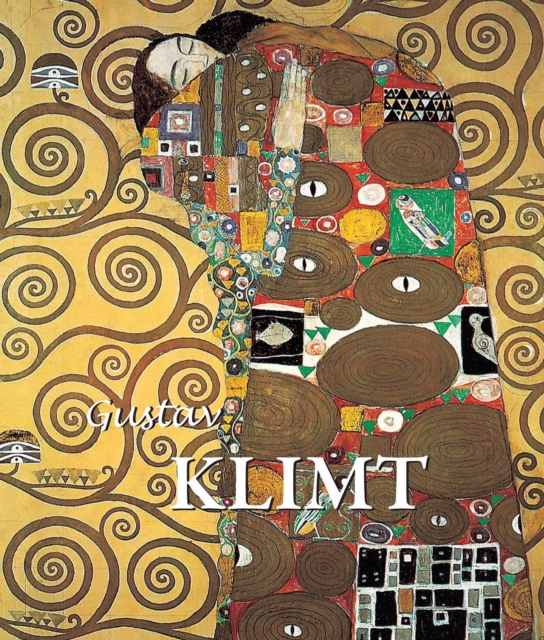
Gustav Klimt
Gustav Klimt was born in Austria in 1862 and spent his working life in Vienna, a city whose artistic chaos made it an extraordinary place to live. In his early career he received a public commission to paint a series of frescos, and received the \"Gold Cross for Artistic Merit\" for his Burgtheater murals. However, his name is most enduringly linked to the Viennese Secession. This revolutionary movement separated itself definitively from public, academic art. The atmosphere of Klimt's Nuda Veritas could be likened to the slow languor of Strauss's operas or to the theatre productions of Schnitzler. His paintings and the few of his drawings that were not destroyed by fire demonstrate a sensuality of rare delicacy. For Klimt, \"All art is erotic\", whether expressed through the extravagant Byzantine decoration of his Judith I, or through pure nudity.
eBook

The unsung hero of the Russian avant-garde : the life and times of Nikolay Punin
The first biography of Nikolay Punin, this book offers a comprehensive analysis of his life in the context of Russian political, social and cultural history in the first half of the 20th century.
eBook
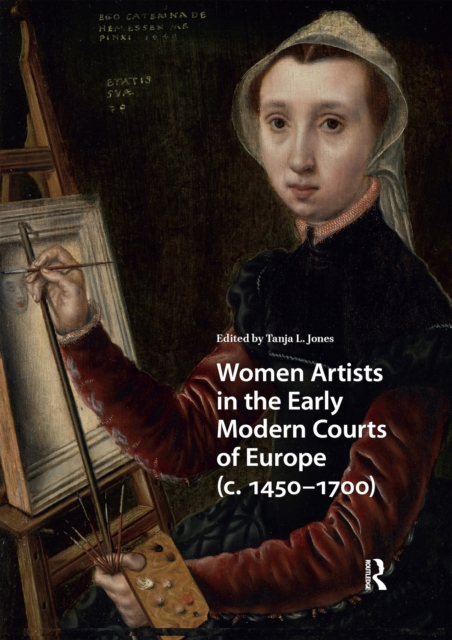
Women Artists in the Early Modern Courts of Europe
Women Artists in the Early Modern Courts of Europe, c. 1450.1700 presents the first collection of essays dedicated to women as producers of visual and material culture in the Early Modern European courts, offering fresh insights into the careers of, among others, Caterina van Hemessen, Sofonisba Anguissola, Luisa Roldán, and Diana Mantuana. Also considered are groups of female makers, such as ladies-in-waiting at the seventeenth-century Medici court. Chapters address works by women who occupied a range of social and economic positions within and around the courts and across media, including paintings, sculpture, prints, and textiles. Both individually and collectively, the texts deepen understanding of the individual artists and courts highlighted and, more broadly, consider the variety of experiences of female makers across traditional geographic and chronological distinctions. The book is also accompanied by the Global Makers: Women Artists in the Early Modern Courts digital humanities project (www.globalmakers.ua.edu), extending and expanding the work begun here.
eBook