
Catalogue Search | MBRL


Are you sure you want to remove the book from the shelf?

{{itemTitle}}
9,386
result(s) for
"ART / Mixed Media."
Sort by:


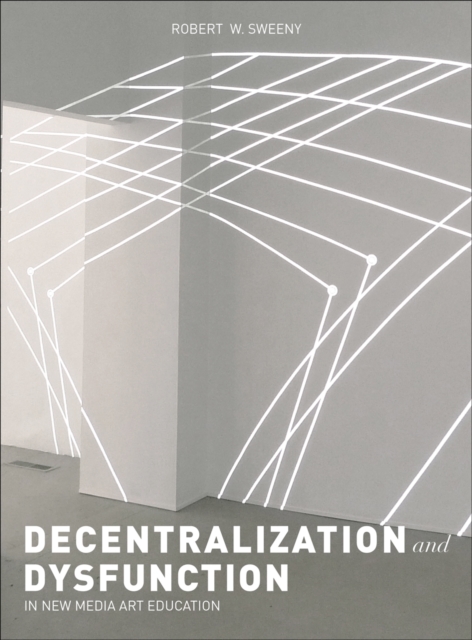
Dysfunction and decentralization
When using digital technologies, many types of dysfunction can occur, ranging from hardware malfunctions to software errors to human ineptitude. Many new media artworks employ various strategies of dysfunctionality in order to explore issues of power within societies and culture.
eBook


Traditional craft conservation and technological innovation of Xuan paper: An exploration applicable to Chinese mixed-materials art
Xuan paper, an essential treasure of Chinese culture, has long been the heart of calligraphy and ink painting. This paper delves into the delicate balance between preserving the traditional craft of Xuan paper and embracing the innovation of modern technology, highlighting how these advancements have transformed its production process and expanded its role in contemporary mixed-media art. The traditional methods, rooted in skilled craftsmanship and natural materials, have served as the foundation for a material that can withstand centuries of artistic expression. With the rise of modern machinery and digital printing techniques, Xuan paper has evolved to meet the demands of today’s artists, offering enhanced durability and consistency while maintaining its unique texture. The fusion of old and new not only revitalizes this ancient art form but opens new avenues in contemporary art, where Xuan paper is now integrated with diverse materials and techniques. This editorial explores how technological innovations breathe new life into Xuan paper, providing artists with fresh tools for creative expression, while ensuring that its cultural heritage remains intact. Ultimately, this exploration aims to chart a course for the sustainable future of Xuan paper, making it relevant for both traditional and modern art forms.
Journal Article


Shizu Saldamando
Shizu Saldamando's art explores identity and subcultures through intimate depictions of her friends at backyard parties, dance clubs, music shows, hangout spots, and art receptions. Her work challenges social and artistic norms by spotlighting overlooked lives and examining how language, fashion, and memory shape culture. \"A lot of what I try to capture,\" she says, \"are different subcultures or scenes in which people have created their own world outside of larger alienating constructs.\" Born to parents of Japanese and Mexican descent, Saldamando grew up in San Francisco and now resides in Los Angeles. She earned her undergraduate degree at the University of California, Los Angeles, and an MFA at the California Institute of the Arts. Saldamando has worked in media ranging from drawing and printmaking to video, installation, and performance art. She is known for her work merging painting and collage (often using origami paper) and has a flourishing tattoo practice, specializing in portrait tattoos.
Journal Article
Selected Work
Jennifer O'Connell, who works under the artist names Jennifer Strings and Known As Myself, is a polymathic artist and educator whose work explores the psychological landscapes of memory, embodiment, and myth. Drawing from personal history and an expansive multidisciplinary practice, she creates imagery that moves between the intimate and the archetypal. Her work spans stop-motion animation, watercolor painting, ballpoint-pen drawing, sculpting in miniature, and intricate world-building, including the creation of hand-sewn props and clothing for her stop-motion sets--a home-based studio practice that unites craft, performance, and cinematic storytelling. Recognized for her nuanced, emotionally charged aesthetic, O'Connell's work has been exhibited in museum and gallery settings as well as screened at film festivals internationally. She is currently developing a new body of work that deepens her exploration of psychological space, mythmaking, and personal narrative through expanded animation and immersive visual worlds. In addition to her home studio practice, she teaches art with an empathic, inquiry driven approach, fostering creativity and agency in young makers. She lives and works in New York City.
Journal Article
Textile Landscape
Textile Landscapes demonstrates how to develop your approach to textile art with a focus on using found objects and paint and stitch on cloth and paper. Cas explains how to exploit the contrast between the hands-on textural quality of working with fabrics and threads and the spontaneity and movement of brush marks to lend a painterly quality to your work. She begins with the basics – keeping a sketchbook to generate ideas, painting and stitching on cloth and on paper and working digitally; Inspiring Landscapes looks at natural and urban space, the changing seasons and great landscapes as well as intimate spaces and travel diaries; Painting and Marking with Cloth explains the practical aspects of painting and dyeing cloth and how to make connections between paint, print, dye, stencil and stitch; Stitch-scapes looks at the different forms of landscape, experimenting with photographs and prints and how to translate those images using ink, stitch, abstract and collage techniques and then at how to transform the image using digital techniques; On Closer Inspection covers using elements and details from landscape and the environment as found objects and for research; finally People and Place explores the relationship we have with the outdoors and the built environment, as well as personal interpretations of place. The book includes artworks by the author that explore the UK, USA, Europe and Australia, as well as works by other internationally renowned textile artists. A creative guide ideal for textile artists of all levels – students, teachers and practising artists and makers – to make unique and beautiful work inspired by the world around us.
eBook

Between ISpring Banquet/I and ICannibal Banquet/I: Cannibalistic Imagery in Meret Oppenheim’s Works
This article discusses the cannibalistic imagery in Meret Oppenheim's works. The crucial aspect is the comparison of two versions of a seemingly similar event in which anthropophagic motifs were significantly present-Spring Banquet and Cannibal Banquet. Often mistaken or wrongly attributed, these events were essentially non-identical and evoked contrasting meanings. The comparison of Spring Banquet and Cannibal Banquet proves that they represent contradictory aspects of anthropophagic imagery. The primary research question is whether Oppenheim's use of cannibalistic motifs differs from the manner in which they are utilized by male surrealists. Therefore, cannibalistic imagery in the works of Oppenheim is described in the context of avant-garde preoccupation with gendered anthropophagy in which a woman is imagined as an object of consumption. This article concludes with an argument that Oppenheim attempted to subvert the prevailing meanings of cannibalism in surrealism. This article also discusses Oppenheim's other artworks with anthropophagic connotations, including Ma gouvernante-My Nurse-mein Kindermädchen (1936) and the less-known Bon appétit, Marcel! (The White Queen, 1966).
Journal Article