
Catalogue Search | MBRL


Are you sure you want to remove the book from the shelf?

{{itemTitle}}
20,711
result(s) for
"ART / Popular Culture"
Sort by:

The politics of the provisional : art and ephemera in revolutionary France
In revolutionary France the life of things could not be assured. War, shortage of materials, and frequent changes in political authority meant that few large-scale artworks or permanent monuments to the Revolution's memory were completed. On the contrary, visual practice in revolutionary France was characterized by the production and circulation of a range of transitional, provisional, ephemeral, and half-made images and objects, from printed paper money, passports, and almanacs to temporary festival installations and relics of the demolished Bastille. Addressing this mass of images conventionally ignored in art history, The Politics of the Provisional contends that they were at the heart of debates on the nature of political authenticity and historical memory during the French Revolution. Thinking about material durability, this book suggests, was one of the key ways in which revolutionaries conceptualized duration, and it was crucial to how they imagined the Revolution's transformative role in history.
The Politics of the Provisional is the first book in the Art History Publication Initiative (AHPI), a collaborative grant from the Andrew W. Mellon Foundation. Thanks to the AHPI grant, this book is available on a variety of popular e-book platforms.
eBook

Votive Panels and Popular Piety in Early Modern Italy
In the late fifteenth century, votive panel paintings, or tavolette votive, began to accumulate around reliquary shrines and miracle-working images throughout Italy. Although often dismissed as popular art of little aesthetic consequence, more than 1,500 panels from the fifteenth and sixteenth centuries are extant, a testimony to their ubiquity and importance in religious practice. Humble in both their materiality and style, they represent donors in prayer and supplicants petitioning a saint at a dramatic moment of crisis. In this book, Fredrika H. Jacobs traces the origins and development of the use of votive panels in this period. She examines the form, context and functional value of votive panels, and considers how they created meaning for the person who dedicated them as well as how they accrued meaning in relationship to other images and objects within a sacred space activated by practices of cultic culture.
eBook

Between the Avant-garde and the Everyday
The wave of anti-authoritarian political activity associated with the term \"1968\" can by no means be confined under the rubric of \"protest,\" understood narrowly in terms of street marches and other reactions to state initiatives. Indeed, the actions generated in response to \"1968\" frequently involved attempts to elaborate resistance within the realm of culture generally, and in the arts in particular. This blurring of the boundary between art and politics was a characteristic development of the political activism of the postwar period. This volume brings together a group of essays concerned with the multifaceted link between culture and politics, highlighting lesser-known case studies and opening new perspectives on the development of anti-authoritarian politics in Europe from the 1950s to the fall of Communism and beyond.
eBook

Art Worlds
The growth of Shanghai in the late nineteenth century gave rise to an exciting new art world in which a flourishing market in popular art became a highly visible part of the treaty port’s commercialized culture. Art Worlds examines the relationship between the city’s visual artists and their urban audiences. Through a discussion of images ranging from fashionable painted fans to lithograph-illustrated magazines, the book explores how popular art intersected with broader cultural trends. It also investigates the multiple roles played by the modern Chinese artist as image-maker, entrepreneur, celebrity, and urban sojourner. Focusing on industrially produced images, mass advertisements, and other hitherto neglected sources, the book offers a new interpretation of late Qing visual culture at a watershed moment in the history of modern Chinese art. Art Worlds will be of interest to scholars of art history and to anyone with an interest in the cultural history of modern China.
eBook

Wide Awake in Slumberland
Cartoonist Winsor McCay (1869-1934) is rightfully celebrated for the skillful draftmanship and inventive design sense he displayed in the comic stripsLittle Nemo in SlumberlandandDream of the Rarebit Fiend. McCay crafted narratives of anticipation, abundance, and unfulfilled longing. This book explores McCay's interest in dream imagery in relation to the larger preoccupation with fantasy that dominated the popular culture of early twentieth-century urban America.
McCay's role as a pioneer of early comics has been documented; yet, no existing study approaches him and his work from an art historical perspective, giving close readings of individual artworks while situating his output within the larger visual culture and the rise of modernism. From circus posters and vaudeville skits to department store window displays and amusement park rides, McCay found fantastical inspiration in New York City's burgeoning entertainment and retail districts.Wide Awake in Slumberlandconnects McCay's work to relevant children's literature, advertising, architecture, and motion pictures in order to demonstrate the artist's sophisticated blending and remixing of multiple forms from mass culture.
Studying this interconnection in McCay's work and, by extension, the work of other early twentieth-century cartoonists, Roeder traces the web of relationships connecting fantasy, leisure, and consumption. Readings of McCay's drawings and the eighty-one black and white and color illustrations reveal a man who was both a ready participant and an incisive critic of the rising culture of fantasy and consumerism.
eBook

Only what's necessary : Charles M. Schulz and the art of Peanuts
Drawn from the archives of the Charles M.Schulz Museum, an in-depth look at Peanuts with a \"wealth of original art\" ( The New York Times ).Charles M.Schulz believed that the key to cartooning was to take out the extraneous details and leave in only what's necessary.
eBook

Cultural Democracy
Cultural Democracy explores the crisis of our national cultural vitality, as access to the arts becomes increasingly mediated by a handful of corporations and the narrow tastes of wealthy elites. Graves offers the concept of cultural democracy as corrective--an idea with important historic and contemporary validation, and an alternative pathway toward ethical cultural development that is part of a global shift in values. _x000B__x000B_Drawing upon a range of scholarship and illustrative anecdotes from his own experiences with cultural programs in ethnically diverse communities, Graves explains in convincing detail the dynamics of how traditional and grassroots cultures may survive and thrive--or not--and what we can do to provide them opportunities equal to those of mainstream, Eurocentric culture.
eBook

Super Bodies
An examination of the art in superhero comics and how
style influences comic narratives. For many, the idea of
comic book art implies simplistic four-color renderings of stiff
characters slugging it out. In fact, modern superhero comic books
showcase a range of complex artistic styles, with diverse
connotations. Leading comics scholar Jeffrey A. Brown assesses six
distinct approaches to superhero illustration-idealism, realism,
cute, retro, grotesque, and noir-examining how each visually
represents the superhero as a symbolic construct freighted with
meaning.
Whereas comic book studies tend to focus on text and narrative,
Super Bodies gives overdue credit to the artwork, which is
not only a principal source of the appeal of comic books but also
central to the values these works embody. Brown argues that
superheroes are to be taken not as representations of people but as
iconic types, and the art conveys this. Even the most realistic
comic illustrations are designed to suggest not persons but
ideas-ideas about bodies and societies. Thus the appearance of
superheroes both directly and indirectly influences the story being
told as well as the opinions readers form concerning justice,
authority, gender, puberty, sexuality, ethnicity, violence, and
other concepts central to political and cultural life.
eBook
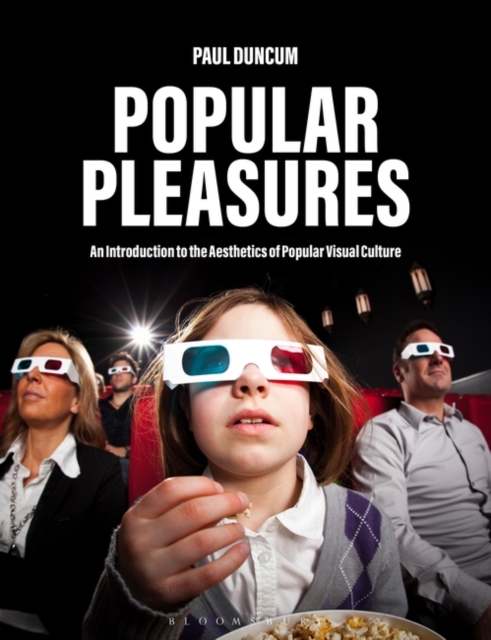
Popular pleasures : an introduction to the aesthetics of popular visual culture
The aesthetic pleasures of today's popular visual culture - sentimental, violent, vulgar, spectacular, humorous, and many more - are roundly criticised and condemned in elite discourse, but this book shows that they are perennial in nature and an intrinsic part of what it is to be human.
eBook
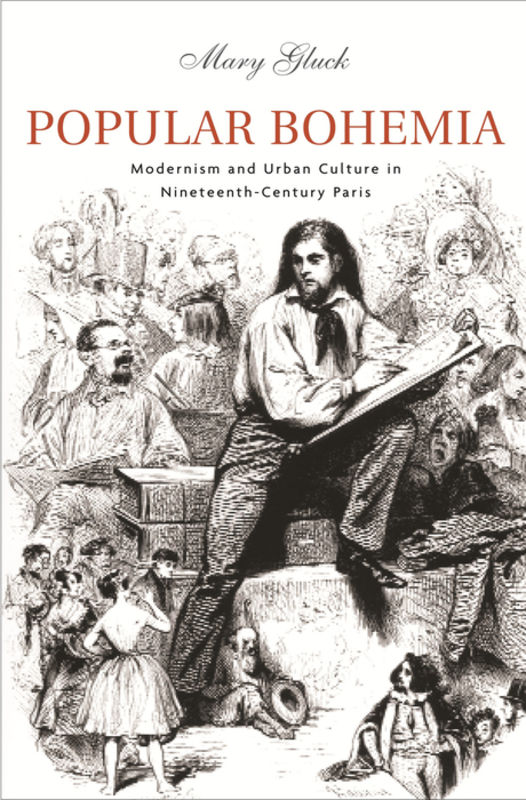
Popular Bohemia
This book revises dominant historical narratives about modernism from the perspective of a theoretically informed cultural history that spans the period between 1830 and 1914. In doing so, it reconnects the intellectual history of avant-garde art with the cultural history of bohemia and the social history of the urban experience to reveal the circumstances in which a truly modernist culture emerged.
eBook