
Catalogue Search | MBRL


Are you sure you want to remove the book from the shelf?

{{itemTitle}}
20
result(s) for
"ART / Techniques / Cartooning."
Sort by:

Invisible Presence
The most complete study of women in French-language comics to date - and the first published in English. Taking a two-pronged approach of historical and case-study analysis, and with a chronological span of over a century, it is the fullest examination thus far of female depiction in Francophone sequential art. 16 plates, 7 col. 9 b/w.
eBook

Carl Larsson
Carl Larsson (1853-1919), artiste suédois bien-aimé, émergea d'un milieu pauvre et gagna une place estimée dans le coeur et l'esprit de ses compatriotes.Aujourd'hui célèbre dans le monde entier pour ses images lumineuses et délicates de sa famille et de sa vie idyllique dans la campagne suédoise, il lutta pendant de nombreuses années en tant que.
eBook
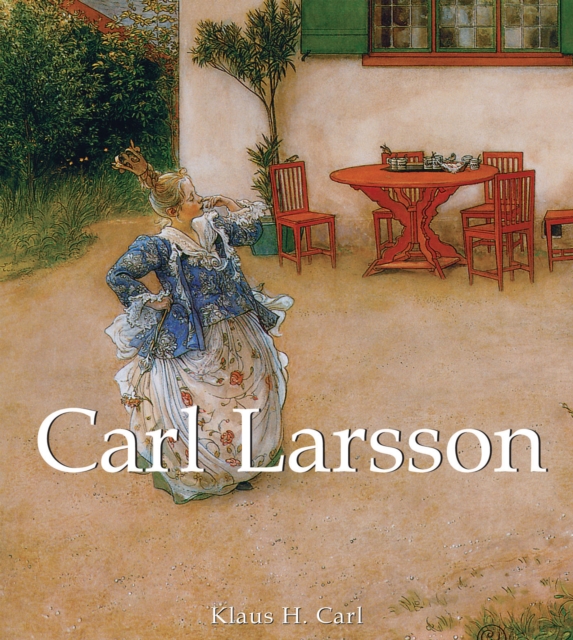
Carl Larsson
Slip into the idyllic world of turn-of-the-century, rural Sweden with this monograph dedicated to Carl Larsson, the national treasure whose delicate drawings and paintings proffer a vision of his enchanting family life. Accompanying details of every work of art offer an invaluable insight into the exquisite, charming minutiae of these pictures which demand a closer look. Beloved Swedish artist Carl Larsson (1853-1919) emerged from poor beginnings to earn an esteemed place in the hearts and minds of his countrymen. Nowadays known worldwide for his delicate, luminous pictures of his family and their idyllic life in the Swedish countryside, he initially struggled as a painter for many years before finding international fame as a book illustrator. His delicate, charming portraits and major decorative projects in the Stockholm Opera House and the National Museum are deservedly much admired, despite the criticism he provoked from conservative art institutions. Yet it is undoubtedly his series of watercolors and pen-and-ink drawings showcasing the innovative interior design of the house he created together with his wife Karin which are cherished above all, for their vision of a happy, stylish, modern home which he offered to his millions of readers.
eBook
Carl Larsson
Carl Larsson (1853-1919), artiste suédois bien-aimé, émergea d'un milieu pauvre et gagna une place estimée dans le coeur et l'esprit de ses compatriotes. Aujourd'hui célèbre dans le monde entier pour ses images lumineuses et délicates de sa famille et de sa vie idyllique dans la campagne suédoise, il lutta pendant de nombreuses années en tant que peintre avant de trouver la reconnaissance internationale grâce à ses illustrations de livre. Ses charmants portraits et ses projets décoratifs majeurs pour l'opéra de Stockholm et le Nationalmuseum méritent l'admiration qu'ils suscitent, malgré la critique des institutions artistiques conservatrices. Toutefois, ce sont ses séries d'aquarelles et de dessins à l'encre et au crayon représentant l'intérieur innovant de la maison qu'il imagina avec sa femme Karin qui sont appréciées par-dessus tout, pour la vision heureuse, élégante et moderne du foyer qu'elles offrent à ses millions de lecteurs.
eBook

Cartooning
The best cartooning is efficient visual storytelling-it is as much a matter of writing as it is of drawing. In this book, noted cartoonist and illustrator Ivan Brunetti presents fifteen distinct lessons on the art of cartooning, guiding his readers through wittily written passages on cartooning terminology, techniques, tools, and theory. Supplemented by Brunetti's own illustrations, prepared specially for this book, these lessons move the reader from spontaneous drawings to single-panel strips and complicated multipage stories.
Through simple, creative exercises and assignments, Brunetti offers an unintimidating approach to a complex art form. He looks at the rhythms of storytelling, the challenges of character design, and the formal elements of comics while composing pages in his own iconic style and experimenting with a variety of tools, media, and approaches. By following the author's sophisticated and engaging perspective on the art of cartooning, aspiring cartoonists of all ages will hone their craft, create their personal style, and discover their own visual language.
eBook
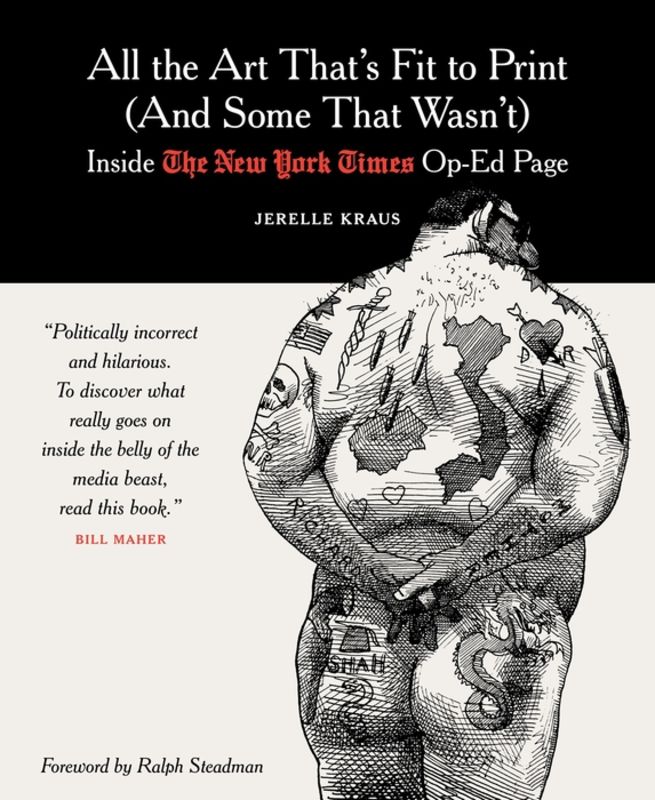
All the art that's fit to print (and some that wasn't)
All the Art That's Fit to Print reveals the true story of the world's first Op-Ed page, a public platform that—in 1970—prefigured the Internet blogosphere. Not only did the New York Times's nonstaff bylines shatter tradition, but the pictures were revolutionary. Unlike anything ever seen in a newspaper, Op-Ed art became a globally influential idiom that reached beyond narrative for metaphor and changed illustration's very purpose and potential. Jerelle Kraus, whose thirteen-year tenure as Op-Ed art director far exceeds that of any other art director or editor, unveils a riveting account of working at the Times. Her insider anecdotes include the reasons why artist Saul Steinberg hated the Times, why editor Howell Raines stopped the presses to kill a feature by Doonesbury's Garry Trudeau, and why reporter Syd Schanburgwhose story was told in the movie The Killing Fieldsstated that he would travel anywhere to see Kissinger hanged, as well as Kraus's tale of surviving two and a half hours alone with the dethroned peerless outlaw, Richard Nixon. All the Art features a satiric portrayal of John McCain, a classic cartoon of Barack Obama by Jules Feiffer, and a drawing of Hillary Clinton and Obama by Barry Blitt. But when Frank Rich wrote a column discussing Hillary Clinton exclusively, the Times refused to allow Blitt to portray her. Nearly any notion is palatable in prose, yet editors perceive pictures as a far greater threat. Confucius underestimated the number of words an image is worth; the thousand-fold power of a picture is also its curse. Op-Ed's subject is the world, and its illustrations are created by the world's finest graphic artists. The 142 artists whose work appears in this book hail from thirty nations and five continents, and their 324 pictures-gleaned from a total of 30,000-reflect artists' common drive to communicate their creative visions and to stir our vibrant cultural-political pot.
eBook

God of Comics
Cartoonist Osamu Tezuka (1928-1989) is the single most important figure in Japanese post-World War II comics. During his four-decade career, Tezuka published more than 150,000 pages of comics, produced animation films, wrote essays and short fiction, and earned a Ph.D. in medicine. Along with creating the character Astro Boy (Mighty Atom in Japan), he is best known for establishing story comics as the mainstream genre in the Japanese comic book industry, creating narratives with cinematic flow and complex characters. This style influenced all subsequent Japanese output.God of Comicschronicles Tezuka's life and works, placing his creations both in the cultural climate and in the history of Japanese comics.
The book emphasizes Tezuka's use of intertextuality. His works are filled with quotations from other texts and cultural products, such as film, theater, opera, and literature. Often, these quoted texts and images bring with them a world of meanings, enriching the narrative. Tezuka also used stock characters and recurrent visual jokes as a way of creating a coherent world that encompasses all of his works.
God of Comicsincludes close analysis of Tezuka's lesser-known works, many of which have never been translated into English. It offers one of the first in-depth studies of Tezuka's oeuvre to be published in English.
eBook

Arguing Comics
When Art Spiegelman's
Maus -a two-part graphic novel about the Holocaust-won a Pulitzer Prize in 1992, comics scholarship grew increasingly popular and notable. The rise of \"serious\" comics has generated growing levels of interest as scholars, journalists, and public intellectuals continue to explore the history, aesthetics, and semiotics of the comics medium.
Yet those who write about the comics often assume analysis of the medium didn't begin until the cultural studies movement was underway.
Arguing Comics: Literary Masters on a Popular Medium brings together nearly two dozen essays by major writers and intellectuals who analyzed, embraced, and even attacked comic strips and comic books in the period between the turn of the century and the 1960s. From e. e. cummings, who championed George Herriman's
Krazy Kat , to Irving Howe, who fretted about Harold Gray's
Little Orphan Annie , this volume shows that comics have provided a key battleground in the culture wars for over a century.
With substantive essays by Umberto Eco, Marshall McLuhan, Leslie Fiedler, Gilbert Seldes, Dorothy Parker, Irving Howe, Delmore Schwartz, and others, this anthology shows how all of these writers took up comics-related topics as a point of entry into wider debates over modern art, cultural standards, daily life, and mass communication.
Arguing Comics shows how prominent writers from the Jazz Age and the Depression era to the heyday of the New York Intellectuals in the 1950s thought about comics and, by extension, popular culture as a whole.
A columnist for the
National Post (Canada), Jeet Heer has been published in
Slate , the
Boston Globe , the
Guardian , the
Comics Journal and many other venues.
Kent Worcester, a professor of political science and international studies at Marymount Manhattan College, is the author of
C. L. R. James: A Political Biography . His work has appeared in the
Comics Journal ,
New Statesman ,
Popular Culture Review , and numerous other publications.
eBook

Drawing from Life
Autobiography has seen enormous expansions and challenges over
the past decades. One of these expansions has been in comics, and
it is an expansion that pushes back against any postmodern notion
of the death of the author/subject, while also demanding new
approaches from critics.
Drawing from Life: Memory and Subjectivity in Comic Art
is a collection of essays about autobiography, semiautobiography,
fictionalized autobiography, memory, and self-narration in
sequential art, or comics. Contributors come from a range of
academic backgrounds including English, American studies,
comparative literature, gender studies, art history, and cultural
studies. The book engages with well-known figures such as Art
Spiegelman, Marjane Satrapi, and Alison Bechdel; with cult-status
figures such as Martin Vaughn James; and with lesser-known works by
artists such as Frédéric Boilet.
Negotiations between artist/writer/body and drawn/written/text
raise questions of how comics construct identity, and are read and
perceived, requiring a critical turn towards theorizing the comics'
viewer. At stake in comic memoir and semi-autobiography is
embodiment. Remembering a scene with the intent of rendering it in
sequential art requires nonlinear thinking and engagement with
physicality. Who was in the room and where? What was worn? Who
spoke first? What images dominated the encounter? Did anybody
smile? Man or mouse? Unhinged from the summary paragraph, the
comics artist must confront the fact of the flesh, or the corporeal
world, and they do so with fascinating results.
eBook