
Catalogue Search | MBRL


Are you sure you want to remove the book from the shelf?

{{itemTitle}}
590
result(s) for
"ART - Techniques - Drawing."
Sort by:

Pencil art workshop : techniques, ideas, and inspiration for drawing and designing with pencil
\"In Pencil Art Workshop, artist and illustrator Matt Rota shows to achieve various techniques using graphite, and includes the work of an international gallery of artists for inspiration\"-- Provided by publisher.
Book

Art of 3D Drawing
Transform simple pencil sketches into jaw-dropping, photorealistic masterpieces with The Art of 3D Drawing. World-famous 3D artist Stefan Pabst shows you how to take your drawing and painting skills to the next level with techniques for creating lifelike three-dimensional art. Begin with an overview of tools and materials, color theory and color mixing, and drawing and painting techniques. Then follow along with 12 stunning, step-by-step demonstrations that teach fundamental principles of 3D art, such as perspective, shading, rendering textures, and building dimension. Also find tips on adding color with oil paints to add even greater dimension and realism to your artwork and complete your three-dimensional masterpieces. An inspiration gallery at the back offers even more ideas for creating 3D art. Whatever your skill level, you will learn something new as you draw and paint a range of subjects in realistic detail. The projects are: A cube that appears to pop up from the paper A floating sphere A hole that seems to dip below the surface of the paper A group of LEGO® blocks An airplane \"flying\" over the paper Planet Earth A glass of water A ladybug that looks like it might crawl off the page A shiny classic car The Mayan ruin of Chichen Itza The Leaning Tower of Pisa A child \"jumping\" off the page With The Art of 3D Drawing, friends and family won't believe their eyes as they admire your amazing photorealistic artwork.
eBook

Cats : secrets of observational drawing
\"Whether scribbling out a quick sketch with minimal detail, or making a finished portrait where every silky hair and polished whisker stands out, the best cat artists can capture the very essence of feline-ness. How do they do it? Firsthand observation of cats will tell you a lot about the way they sit, yawn, position their tails, and curl up to sleep, but it won't tell you how to get those things down on paper. Classic Sketchbook: Cats is the second in a series of instructional books that began with Classic Sketchbook: Botanicals. The series shows how it's done by looking at details of museum-quality works, then coaching readers through the techniques with the help an expert's suggestions. In this case the expert is Patricia Wynne, a noted illustrator with a specialty in animals. Wynne will guide you through fur, paws, and eyes, as well as cats sleeping, playing, or pouncing. Her unique instructions places a close-up of a drawing or painting by a noted artist like Gauguin, Chardin, Gwen John, and Theodore Steinlen on the left side of the page. And on the right side of the page Patricia Wynne coaches you with detailed, step-by-step drawings, that illuminate the process\"-- Provided by publisher.
Book

The FORCE Companion
Swendly Benilia shares with us simple and tangible tips and tricks to understanding and drawing FORCE across hundreds of drawings full of dunamism and energy! This book is an expellant companion to the FORCE brand since it delivers hundreds of FORCE drawings with succinct notations, filtered and approved by Mike Mattesi, about how to improve your FORCE drawing skills
Key Features:
Hundreds of dynamic FORCE drawing that inspire the reader to see and draw FORCE
Succinct tips and tricks keep it light and educational
The tips and tricks not only explain how but also why the drawings are successful. This is unique to the FORCE Drawing method
Each page shares numerous drawing around a FORCE idea with a short paragraph to further clarify the FORCE tip or trick. Explaining to the reader why the drawings work increases their ability of achieving the same level of excellence
Swendly Benilia is a professional character designer and illustrator. During his five years in the field he contributed with artwork for various game and publishing projects. Swendly also instructs FORCE Drawing.
Michael Mattesi has authored four FORCE books, published in numerous languages, utilized around the world to inspire and educate artists on the concept of FORCE. He has instructed FORCE Drawing for over twenty years and inspired thousands of artists. Simultaneously, Michael has been contributing his skills as a professional artists on numerous award-winning projects in varied capacities and has collaborated with Pixar, Walt Disney Feature Animation, Walt Disney Consumer Products, Marvel Comics, Hasbro Toys, ABC, Microsoft, Electronic Arts, DreamWorks/PDI, Zynga, The School of Visual Arts, Beijing University, Art Center, Scuola Internazionale di Comics, San Jose State University. The Academy of Art University, Nickelodeoan, LeapFrog and many others. Micael’s students occupy all fields of the art industry and have themselves gained prestige for their abilities. Michael lives in northern California with his wife and two daughters. Visit him at: DrawingFORCE.com and connect with Michael on Facebook at: DrawingFORCE.com with Mike Mattesi or email him directly: mike@drawingforce.com
Key Features
Hundreds of dynamic FORCE drawings that inspire the reader to see and draw FORCE.
Compact tips and tricks keep it light and educational.
The tips and tricks explain how and why the drawings are successful.
Explaining to the you why the drawings work increases your ability of achieving the same level of excellence.
Chapter 1: FORCE Basics. Chapter 2: FORCE Form. Chapter 3: FORCE Shape.
Learn from Mike Mattesi and Swendly Benilia at DrawingFORCE.com
Swendly Benilia is a professional character designer and illustrator. During his five years in the field he contributed with artwork for various game and publishing projects. Swendly also instructs FORCE Drawing.
Michael Mattesi has authored four FORCE books, published in numerous languages, utilized around the world to inspire and educate artists on the concept of FORCE. He has instructed FORCE Drawing for over twenty years.
Simultaneously, Michael has been contributing his skills as a professional artist on numerous award-winning projects in Gaming, Animation and Advertising industries. Here is a short list of clients: Pixar, Walt Disney Feature Animation, Walt Disney Consumer Products, Marvel Comics, Hasbro Toys, ABC, Microsoft, Electronic Arts, DreamWorks/PDI, Zynga,
Michael lives in northern California with his wife and two daughters. Visit him at:
DrawingFORCE.com
and connect with Michael on Facebook at:
DrawingFORCE.com with Mike Mattesi
or email him directly :
mike@drawingforce.com
eBook

Figure drawing : a complete guide
Figure Drawing: A Complete Guide is an essential handbook for anyone particularly interested in portrait drawing, and includes in-depth studies of human anatomy by master artist Civardi. Civardi's technical advice and practical tips, accompanied by his own outstanding drawings, make this an invaluable resource for any portrait artist. A fresh collection of content from previously-published works.
Book
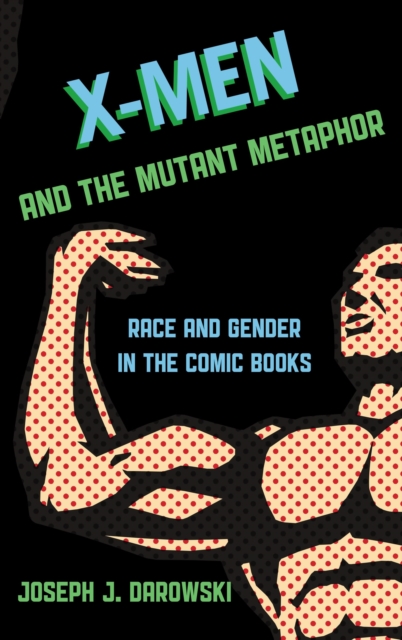
X-men and the mutant metaphor
First appearing in 1963, The Uncanny X-Men had a rough start, lasting until 1970 when the comic book was canceled due to low sales. Following a relaunch in 1975, however, it found new popularity thanks to intricate scripting by Chris Claremont and the artwork of John Byrne. Within a few years, The Uncanny X-Men was one of Marvel Comics’ best-selling series and over the decades it became one of the most successful and popular franchises in comic book history. Spin-off titles, mini-series, multimedia adaptations, and a massively expanded cast of characters followed. One of the reasons for the success of X-Men is its powerful “mutant metaphor,” which enhances the stories with cultural significance and the exploration of themes such as societal prejudice and discrimination. In X-Men and the Mutant Metaphor: Race and Gender in the Comic Books, Joseph J. Darowski thoroughly analyzes The Uncanny X-Men, providing its historical background and dividing the long-running series into distinct eras. Each chapter examines the creators and general plot lines, followed by a closer analysis of the principal characters and key stories. The final chapter explores the literal use of race and gender rather than the metaphorical or thematic ways such issues have been addressed. This analysis includes insights gained from interviews with several comic book creators, and dozens of illustrations from the comic book series. Of particular significance are statistics that track the race and gender of every X-Men hero, villain, and supporting character. By delving into the historical background of the series and closely examining characters and stories, X-Men and the Mutant Metaphor illuminates an important popular culture phenomenon.
eBook

Figure it out! : drawing essential poses : the beginner's guide to the natural-looking figure
\"Bestselling how-to-draw author Christopher Hart helps artists fine-tune their skills with the fundamentals of drawing natural-looking figures. Eschewing the esoteric \"art poses\" and wooden mannequins commonly found in art books, he portrays everyday, real-life gestures on human-looking foundation figures: standing, sitting, kneeling, and reclining, with arms folded, ankles crossed, hands on hips, and more, all shown from various angles. Hart also explores deeper concepts such as perspective, illusion of depth, casting shadows, and foreshortening, and provides step-by-step tutorials that take artists through complete, naturally posed figure drawings from start to finish\"-- Provided by publisher.
Restricted Access

Make Ours Marvel
The creation of the Fantastic Four effectively launched the Marvel Comics brand in 1961. Within ten years, the introduction (or reintroduction) of characters such as Spider-Man, the Hulk, Iron Man, Captain America, and the X-Men catapulted Marvel past its primary rival, DC Comics, for domination of the comic book market. Since the 2000s, the company’s iconic characters have leaped from page to screens with the creation of the Marvel Cinematic Universe, which includes everything from live-action film franchises of Iron Man and the Avengers to television and streaming media, including the critically acclaimed Netflix series Daredevil and Jessica Jones. Marvel, now owned by Disney, has clearly found the key to transmedia success. Make Ours Marvel traces the rise of the Marvel brand and its transformation into a transmedia empire over the past fifty years. A dozen original essays range across topics such as how Marvel expanded the notion of an all-star team book with The Avengers, which provided a roadmap for the later films, to the company’s attempts to create lasting female characters and readerships, to its regular endeavors to reinvigorate its brand while still maintaining the stability that fans crave. Demonstrating that the secret to Marvel’s success comes from adeptly crossing media boundaries while inviting its audience to participate in creating Marvel’s narrative universe, this book shows why the company and its characters will continue to influence storytelling and transmedia empire building for the foreseeable future.
eBook


Maarten van Heemskerck's Rome
The first comprehensive analysis of the artist's Roman ruin drawings. Three parts take us from Van Heemskerck's training to his Roman stay and his post-Roman phase. A catalog presents Van Heemskerck's drawings in up-to-date digital photographs.
eBook