
Catalogue Search | MBRL


Are you sure you want to remove the book from the shelf?

{{itemTitle}}
2,908
result(s) for
"Abnormal Psychology"
Sort by:

Enter the body
\"Enter the Body gives voice to a cast of the young women who die in Shakespeare's most iconic plays. Focusing on the stories of Juliet, Ophelia, and Cordelia, ...McCullough brilliantly weaves retellings of Romeo & Juliet, Hamlet, and King Lear into a larger story of young women reclaiming their stories in the aftermath of trauma.\"--Front cover flap.
BOOK

Development of psychopathology : a vulnerability-stress perspective
Edited by Benjamin L. Hankin and John R. Z. Abela, Development of Psychopathology: A Vulnerability-Stress Perspective brings together the foremost experts conducting groundbreaking research into the major factors shaping psychopathological disorders across the lifespan in order to review and integrate the theoretical and empirical literature in this field. The volume editors build upon two important and established research and clinical traditions: developmental psychopathology frameworks and vulnerability-stress models of psychological disorders.
eBook

Goldenseal : a novel
\"Downtown Los Angeles, 1990. Alone in her luxury hotel suite, the reclusive Lacey Crane receives a message: Edith is waiting for her in the lobby. Former best friends, Lacey and Edith haven't spoken to one another in over four decades. As young adults meeting at summer camp in Maine, and later making their way in the glitzy spotlight of postwar Hollywood, Edith and Lacey share a deep-rooted bond that once saved them from isolation and despair, providing comfort from the public and private traumas that they had each endured and which a newly optimistic world was eager to forget. Told through a continuous, twisting conversation that unfolds over the course of a single evening, in which each woman tells her story and reveals long-hidden secrets, the narratives of Edith and Lacey burn with atmosphere, mystery, resentment, and regret\"-- Provided by publisher.
BOOK

Internet Addiction in Psychotherapy
Current knowledge about effective internet addiction treatment is limited. This book explores how 20 international internet addiction therapy experts experience the presenting problem of internet addiction in psychotherapy.
eBook

Killing the Wittigo : Indigenous culture-based approaches to waking up, taking action, and doing the work of healing : a book for young adults
\"A powerful book that uses plain language to talk about colonial trauma and transformational change. History. Identity. Lateral Violence. Complex Trauma. Who are we and how are we seen? How do we learn what safety is when we've never experienced it? Killing the Wittigo talks about the effects of colonization and the healing work being done by young Indigenous people toward individual and systemic change, through song lyrics and first-person accounts of their own journeys of decolonization and healing. Sexual Abuse. Relationships. Kindness and Kinship. Are your relationships harmful or healthy? What do healthy families look like? Killing the Wittigo shatters the isolation and shame to talk about everything from managing triggers to what young people are asking of their parents and their leadership. Abandonment. Dis-Ease. Reconnection. Change. How do you turn distressing feelings into emotions that you can understand? How does making sense of your stories help you gain choice and control? From market capitalism and food security to community hubs and sustainable development goals, Killing the Wittigo has everything a young person needs to move from surviving to thriving. Killing the Wittigo offers: Reflection questions to anchor/reframe life experiences. Mindfulness activities to help readers center themselves in the present, develop self-awareness, and create new patterns of behaviour. Activities and exercises to support meaning making and change. Full of bold graphics, Killing the Wittigo is a much-needed resource for young Indigenous people and those who work in the helping professions.\" -- Back cover.
Book
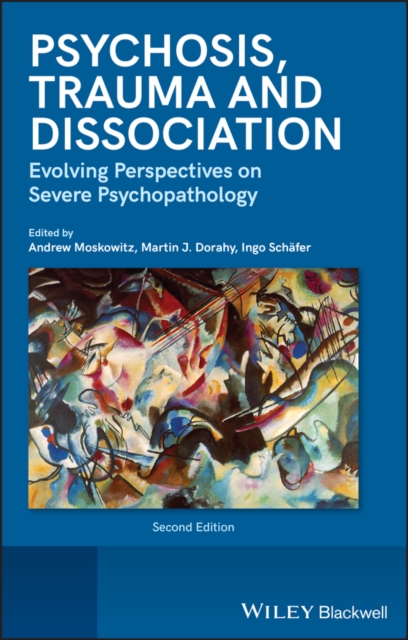
Psychosis, Trauma and Dissociation
An invaluable sourcebook on the complex relationship between psychosis, trauma, and dissociation, thoroughly revised and updated This revised and updated second edition of Psychosis, Trauma and Dissociation offers an important resource that takes a wide-ranging and in-depth look at the multifaceted relationship between trauma, dissociation and psychosis. The editors – leaders in their field – have drawn together more than fifty noted experts from around the world, to canvas the relevant literature from historical, conceptual, empirical and clinical perspectives. The result documents the impressive gains made over the past ten years in understanding multiple aspects of the interface between trauma, dissociation and psychosis. The historical/conceptual section clarifies the meaning of the terms dissociation, trauma and psychosis, proposes dissociation as central to the historical concepts of schizophrenia and borderline personality disorder, and considers unique development perspectives on delusions and the onset of schizophrenia. The empirical section of the text compares and contrasts psychotic and dissociative disorders from a wide range of perspectives, including phenomenology, childhood trauma, and memory and cognitive disturbances, whilst the clinical section focuses on the assessment, differential diagnosis and treatment of these disorders, along with proposals for new and novel hybrid disorders. This important resource: • Offers extensive updated coverage of the field, from all relevant perspectives • Brings together in one text contributions from scholars and clinicians working in diverse geographical and theoretical areas • Helps define and bring cohesion to this new and important field • Features nine new chapters on: conceptions of trauma, dissociation and psychosis, PTSD with psychotic features, delusions and memory, trauma treatment of psychotic symptoms, and differences between the diagnostic groups on hypnotizability, memory disturbances, brain imaging, auditory verbal hallucinations and psychological testing Written for clinicians, researchers and academics in the areas of trauma, child abuse, dissociation and psychosis, but relevant for psychiatrists, psychologists and psychotherapists working in any area, the revised second edition of Psychosis, Trauma and Dissociation makes an invaluable contribution to this important evolving field.
eBook

Nature and Nurture in Mental Disorders
Over the last two decades, spurred particularly by the decoding of the genome, neuroscience has advanced to become the primary basis of clinical psychiatry, even as environmental risk factors for mental disorders have been deemphasized. In this thoroughly revised, second edition of Nature and Nurture in Mental Disorders, the author argues that an overreliance on biology at the expense of environment has been detrimental to the field -- that, in fact, the \"nature versus nurture\" dichotomy is unnecessary. Instead, he posits a biopsychosocial model that acknowledges the role an individual's predisposing genetic factors, interacting with environmental stressors, play in the etiology of many mental disorders. The first several chapters of the book provide an overview of the theories that affect the study of genes, the environment, and their interaction, examining what the empirical evidence has revealed about each of these issues. Subsequent chapters apply the integrated model to a variety of disorders, reviewing the evidence on how genes and environment interact to shape disorders including: • Depressive disorders• PTSD• Neurodevelopmental disorders• Eating disorders• Personality disorders By rejecting both biological and psychosocial reductionism in favor of an interactive model, Nature and Nurture in Mental Disorders offers practicing clinicians a path toward a more flexible, effective treatment model. And where controversy or debate still exist, an extensive reference list provided at the end of the book, updated for this edition to reflect the most current literature, encourages further study and exploration.
eBook

Classifying Psychopathology
Scholars question the extent to which current psychiatric classification systems are inadequate for diagnosis, treatment, and research of mental disorders and offer suggestions for improvement.
In this volume, leading philosophers of psychiatry examine psychiatric classification systems, including the Diagnostic and Statistical Manual of Mental Disorders (DSM), asking whether current systems are sufficient for effective diagnosis, treatment, and research. Doing so, they take up the question of whether mental disorders are natural kinds, grounded in something in the outside world. Psychiatric categories based on natural kinds should group phenomena in such a way that they are subject to the same type of causal explanations and respond similarly to the same type of causal interventions. When these categories do not evince such groupings, there is reason to revise existing classifications.
The contributors all question current psychiatric classifications systems and the assumptions on which they are based. They differ, however, as to why and to what extent the categories are inadequate and how to address the problem. Topics discussed include taxometric methods for identifying natural kinds, the error and bias inherent in DSM categories, and the complexities involved in classifying such specific mental disorders as “oppositional defiance disorder” and pathological gambling.
Contributors
George Graham, Nick Haslam, Allan Horwitz, Harold Kincaid, Dominic Murphy, Jeffrey Poland, Nancy Nyquist Potter, Don Ross, Dan Stein, Jacqueline Sullivan, Serife Tekin, Peter Zachar
eBook
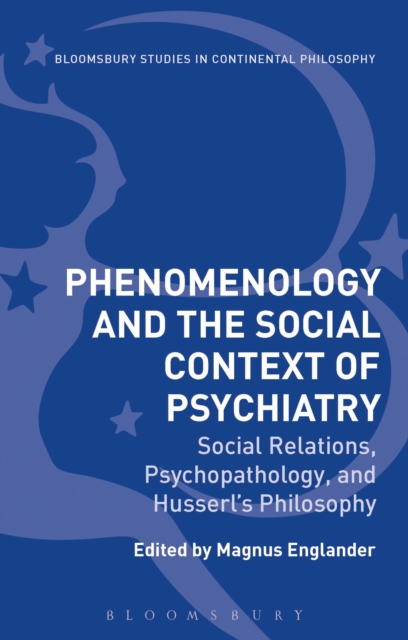
Phenomenology and the Social Context of Psychiatry
Exploring phenomenological philosophy as it relates to psychiatry and the social world, this book establishes a common language between psychiatrists, anti-psychiatrists, psychologists and social workers. Phenomenology and the Social Context of Psychiatry is an inter-disciplinary work by phenomenological philosophers, psychiatrists, and psychologists to discover the essence and foundations of social psychiatry. Using the phenomenology of Husserl as a point of departure, the meanings of empathy, interpersonal understanding, we-intentionality, ethics, citizenship and social inclusion are investigated in relation to psychopathology, nosology, and clinical research. This work, drawing upon the rich classical and contemporary phenomenological tradition, touching on a broad range of thinkers such as Deleuze, Levinas, and R.D. Laing, also explicates how phenomenology is a method capable of capturing the human condition and its intricate relation to the social world and mental illness
eBook
Krankheit und Begriff
In der Geschichte der Medizin gab es immer wieder Phänomene, die an der Schwelle zur Krankheit standen, in einer Art Grenzbereich zwischen gesund und krank, und die gewissermaßen als präpathologische Phänomene bezeichnet werden können. Erst durch einen passenden Begriff, oftmals einen Neologismus, konnten die Phänomene diese kritische Schwelle überschreiten und zumindest für einen gewissen Zeitraum offiziell in die Kategorie der Krankheiten aufgenommen werden. Innerhalb dieser Arbeit stehen drei vergängliche Krankheitskonzepte im Zentrum des Interesses: die Nostalgie, die Monomanie und die Neurasthenie. Tobias-Jan Kohler beschreibt jeweils den Moment, in dem sich ein präpathologisches Phänomen mit einem konstruierten, sprachlichen Begriff vereinigte, wodurch mit einem pathologischen Neologismus schließlich eine Krankheit konstituiert wurde. Daran anschließend zeichnet Kohler die Wege nach, die diese Dualismen aus pathologischem einerseits und sprachlichem, begrifflichem Phänomen andererseits gegangen sind, wie sie in den Enzyklopädien, Nosologien, Klassifikationssystemen und Klinischen Wörterbüchern ihre Abdrücke gefunden haben, von der ersten Diagnostizierung über den allgemeinen Diskurs und die Kritik bis hin zu dem Fall der Krankheit in die medizi-nische Bedeutungslosigkeit und das allgemeine, sprachliche Vergessen. Durch den Vergleich der Krankheitsphänomene und deren medizinischen sowie sprachlichen Entwicklungen untereinander können schlussendlich weitere Erkenntnisse hinzugewonnen werden, wie solche Phänomene oder auch Diskurse aus dem Bereich der Medizin generell entstehen und welche Rolle dabei die Sprache bzw. der einzelne Begriff spielt.
eBook