
Catalogue Search | MBRL


Are you sure you want to remove the book from the shelf?

{{itemTitle}}
112
result(s) for
"Abolitionismus."
Sort by:

Slavery, abolitionism and empire in India, 1772-1843
Explores the political, economic, and ideological agendas that at the height of the British abolition and missionary movements allowed East Indian slavery to be represented as qualitatively different from its trans-Atlantic counterpart.
Book

Abolition Time
How Black Atlantic literature can challenge conventions
and redefine literary scholarship Abolition Time
is an invitation to reenvision abolitionist justice through
literary studies. Placing critical race theory, queer theory,
critical prison studies, and antiprison activism in conversation
with an archive of Black Atlantic literatures of slavery, Jess A.
Goldberg reveals how literary studies can help undo carceral
epistemologies embedded in language and poetics.
Goldberg examines poetry, drama, and novels from the nineteenth
century through the twenty-first-such as William Wells Brown's
The Escape, Angelina Weld Grimké's Rachel, Toni
Morrison's A Mercy, and Claudia Rankine's
Citizen -to consider literature and literary scholarship's
roles in shaping societal paradigms. Focusing on how Black Atlantic
literature disrupts the grammar of law and order, they show how
these texts propose nonlinear theories of time that imagine a queer
relationality characterized by care rather than inheritance,
property, or biology.
Abolition Time offers a framework for thinking
critically about what is meant by the term justice in the
broadest and deepest sense, using close reading to inform the
question of abolishing prisons or the police and to think seriously
about the most fundamental questions at the heart of the
abolitionist movement.
eBook
Awakening to Justice
\"O where are the sympathies of Christians for the slave and where are their exertions for their liberation? . . . It seems as if the church were asleep.\"
David Ingraham, 1839
In 2015, the historian Chris Momany helped discover a manuscript that had been forgotten in a storage closet at Adrian College in Michigan. He identified it as the journal of a nineteenth-century Christian abolitionist and missionary, David Ingraham. As Momany and a fellow historian Doug Strong pored over the diary, they realized that studying this document could open new conversations for twenty-first-century Christians to address the reality of racism today. They invited a multiracial team of fourteen scholars to join in, thus launching the Dialogue on Race and Faith Project.
Awakening to Justice presents the groundbreaking work of these scholars. In addition to reflecting on Ingraham's journal, chapters also explore the life and writings of two of Ingraham's Black colleagues, James Bradley and Nancy Prince. Appendixes feature writings by all three abolitionists so readers can engage the primary sources directly.
Through considering connections between the revivalist, holiness, and abolitionist movements; the experiences of enslaved and freed people; abolitionists' spiritual practices; various tactics used by abolitionists; and other themes, the authors offer insight and hope for Christians concerned about racial justice. They highlight how Christians associated with Charles Finney's style of revivalism formed intentional, countercultural communities such as Oberlin College to be exemplars of interracial cooperation and equality.
Christians have all too often compromised with racism throughout history, but that's not the whole story. Hearing the prophetic witness of revivalist social justice efforts in the nineteenth century can provide a fresh approach to today's conversations about race and faith in the church.
eBook

The Creation of a Crusader
The story of one Ohio senator's impact on the early abolition movement More than 175 years after his death, Senator Thomas Morris has remained one of the few early national champions of political and constitutional antislavery without a biography devoted to him.In this first expansive study of Morris's life and contributions, David C.
eBook
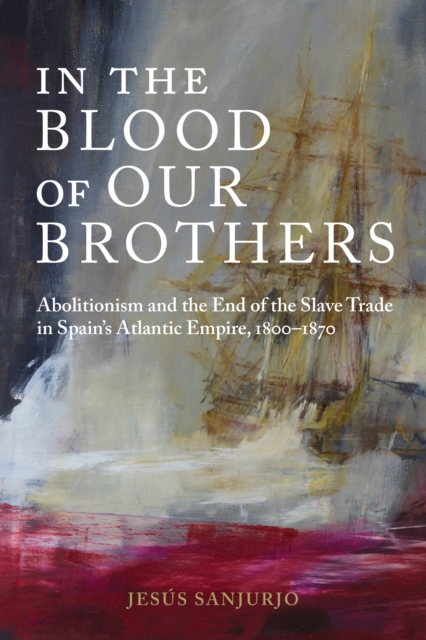
In the Blood of Our Brothers
Finalist for the Paul E.Lovejoy Book Prize Details the abolition of the slave trade in the Atlantic World to the 1860s Throughout the nineteenth century, very few people in Spain campaigned to stop the slave trade and did even less to abolish slavery.
eBook

The Anti-Slavery Project
It is commonly assumed that slavery came to an end in the nineteenth century. While slavery in the Americas officially ended in 1888, millions of slaves remained in bondage across Africa, Asia, and the Middle East well into the first half of the twentieth century. Wherever laws against slavery were introduced, governments found ways of continuing similar forms of coercion and exploitation, such as forced, bonded, and indentured labor. Every country in the world has now abolished slavery, yet millions of people continue to find themselves subject to contemporary forms of slavery, such as human trafficking, wartime enslavement, and the worst forms of child labor.The Anti-Slavery Project: From the Slave Trade to Human Traffickingoffers an innovative study in the attempt to understand and eradicate these ongoing human rights abuses. InThe Anti-Slavery Project, historian and human rights expert Joel Quirk examines the evolution of political opposition to slavery from the mid-eighteenth century to the present day. Beginning with the abolitionist movement in the British Empire, Quirk analyzes the philosophical, economic, and cultural shifts that eventually resulted in the legal abolition of slavery. By viewing the legal abolition of slavery as a cautious first step-rather than the end of the story-he demonstrates that modern anti-slavery activism can be best understood as the latest phase in an evolving response to the historical shortcomings of earlier forms of political activism. By exposing the historical and cultural roots of contemporary slavery,The Anti-Slavery Projectpresents an original diagnosis of the underlying causes driving one of the most pressing human rights problems in the world today. It offers valuable insights for historians, political scientists, policy makers, and activists seeking to combat slavery in all its forms.
eBook

Bonds of Womanhood
Class, race, and gender collide in this insightful examination
of the life of Susanna (Susan) Preston Shelby Grigsby (1830-1890)-a
white plantation mistress and slaveholder who struggled to
participate in the economic modernization of antebellum Kentucky.
Drawing on Grigsby's correspondence, author Susanna Delfino uses
Grigsby's story to explore the complex cultural and social issues
at play in the state's economy before, during, and after the Civil
War.
Delfino demonstrates that Grigsby engaged in certain kinds of
abolitionist activism, such as hiring white servants as a way of
conveying her support for free labor and avoiding ever selling an
enslaved person. Despite her beliefs, however, Grigsby failed to
hold to her moral compass when faced with her husband's patriarchal
authority or when she experienced serious economic trouble. This
compelling study not only illuminates how white women participated
in the South's nineteenth-century economy, but also offers new
perspectives on their complicity in slavery.
eBook

A Civilised Savagery
In the two decades before World War One, Great Britain witnessed the largest revival of anti-slavery protest since the legendary age of emancipation in the mid-nineteenth century. Rather than campaigning against the trans-Atlantic slave trade, these latter-day abolitionists focused on the so-called 'new slaveries' of European imperialism in Africa, condemning coercive systems of labor taxation and indentured servitude, as well as evidence of atrocities.
A Civilized Savagery illuminates the multifaceted nature of British humanitarianism by juxtaposing campaigns against different forms of imperial labor exploitation in three separate areas: the Congo Free State, South Africa, and Portuguese West Africa. In doing so, Kevin Grant points out how this new type of humanitarianism influenced the transition from Empire to international government and the advent of universal human rights in subsequent decades.
eBook
Abolition
In one form or another, slavery has existed throughout the world for millennia. It helped to change the world, and the world transformed the institution. In the 1450s, when Europeans from the small corner of the globe least enmeshed in the institution first interacted with peoples of other continents, they created, in the Americas, the most dynamic, productive, and exploitative system of coerced labor in human history. Three centuries later these same intercontinental actions produced a movement that successfully challenged the institution at the peak of its dynamism. Within another century a new surge of European expansion constructed Old World empires under the banner of antislavery. However, twentieth-century Europe itself was inundated by a new system of slavery, larger and more deadly than its earlier system of New World slavery. This book examines these dramatic expansions and contractions of the institution of slavery and the impact of violence, economics, and civil society in the ebb and flow of slavery and antislavery during the last five centuries.
eBook

Contested Bodies
It is often thought that slaveholders only began to show an interest in female slaves' reproductive health after the British government banned the importation of Africans into its West Indian colonies in 1807. However, as Sasha Turner shows in this illuminating study, for almost thirty years before the slave trade ended, Jamaican slaveholders and doctors adjusted slave women's labor, discipline, and health care to increase birth rates and ensure that infants lived to become adult workers. Although slaves' interests in healthy pregnancies and babies aligned with those of their masters, enslaved mothers, healers, family, and community members distrusted their owners' medicine and benevolence. Turner contends that the social bonds and cultural practices created around reproductive health care and childbirth challenged the economic purposes slaveholders gave to birthing and raising children.
Through powerful stories that place the reader on the ground in plantation-era Jamaica,Contested Bodiesreveals enslaved women's contrasting ideas about maternity and raising children, which put them at odds not only with their owners but sometimes with abolitionists and enslaved men. Turner argues that, as the source of new labor, these women created rituals, customs, and relationships around pregnancy, childbirth, and childrearing that enabled them at times to dictate the nature and pace of their work as well as their value. Drawing on a wide range of sources-including plantation records, abolitionist treatises, legislative documents, slave narratives, runaway advertisements, proslavery literature, and planter correspondence-Contested Bodiesyields a fresh account of how the end of the slave trade changed the bodily experiences of those still enslaved in Jamaica.
eBook