
Catalogue Search | MBRL


Are you sure you want to remove the book from the shelf?

{{itemTitle}}
992
result(s) for
"Abolitionists Biography."
Sort by:

Speak a word for freedom : women against slavery
\"With archival photographs, selected sources and a comprehensive index, Speak a Word for Freedom is an inspirational, shocking and informative account of lives of women abolitionists, from the eighteenth century to the present\"--Book jacket.
Book
Awakening to Justice
\"O where are the sympathies of Christians for the slave and where are their exertions for their liberation? . . . It seems as if the church were asleep.\"
David Ingraham, 1839
In 2015, the historian Chris Momany helped discover a manuscript that had been forgotten in a storage closet at Adrian College in Michigan. He identified it as the journal of a nineteenth-century Christian abolitionist and missionary, David Ingraham. As Momany and a fellow historian Doug Strong pored over the diary, they realized that studying this document could open new conversations for twenty-first-century Christians to address the reality of racism today. They invited a multiracial team of fourteen scholars to join in, thus launching the Dialogue on Race and Faith Project.
Awakening to Justice presents the groundbreaking work of these scholars. In addition to reflecting on Ingraham's journal, chapters also explore the life and writings of two of Ingraham's Black colleagues, James Bradley and Nancy Prince. Appendixes feature writings by all three abolitionists so readers can engage the primary sources directly.
Through considering connections between the revivalist, holiness, and abolitionist movements; the experiences of enslaved and freed people; abolitionists' spiritual practices; various tactics used by abolitionists; and other themes, the authors offer insight and hope for Christians concerned about racial justice. They highlight how Christians associated with Charles Finney's style of revivalism formed intentional, countercultural communities such as Oberlin College to be exemplars of interracial cooperation and equality.
Christians have all too often compromised with racism throughout history, but that's not the whole story. Hearing the prophetic witness of revivalist social justice efforts in the nineteenth century can provide a fresh approach to today's conversations about race and faith in the church.
eBook


Black Abolitionists in Ireland
The story of the anti-slavery movement in Ireland is little known, yet when Frederick Douglass visited the country in 1845, he described Irish abolitionists as the most ‘ardent’ that he had ever encountered. Moreover, their involvement proved to be an important factor in ending the slave trade, and later slavery, in both the British Empire and in America.
While Frederick Douglass remains the most renowned black abolitionist to visit Ireland, he was not the only one. This publication traces the stories of ten black abolitionists, including Douglass, who travelled to Ireland in the decades before the American Civil War, to win support for their cause. It opens with former slave, Olaudah Equiano, kidnapped as a boy from his home in Africa, and who was hosted by the United Irishmen in the 1790s; it closes with the redoubtable Sarah Parker Remond, who visited Ireland in 1859 and chose never to return to America. The stories of these ten men and women, and their interactions with Ireland, are diverse and remarkable.
eBook

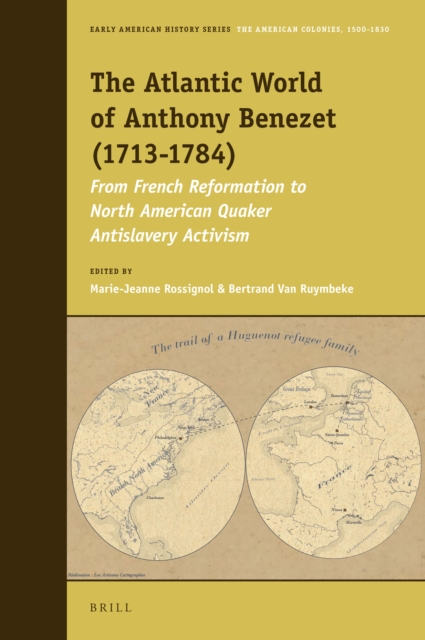
The Atlantic World of Anthony Benezet (1713-1784)
In The Atlantic World of Anthony Benezet (1713-1784): From French Reformation to North American Quaker Antislavery Activism, Marie-Jeanne Rossignol and Bertrand Van Ruymbeke offer the first scholarly volume examining Anthony Benezet, inspirator of 18th-century antislavery activism, as an Atlantic figure.
eBook

Frederick Douglass : fugitive slave & abolitionist
A biography on Frederick Douglas, the former slave who became an American social reformer, orator, writer and statesman.
BOOK
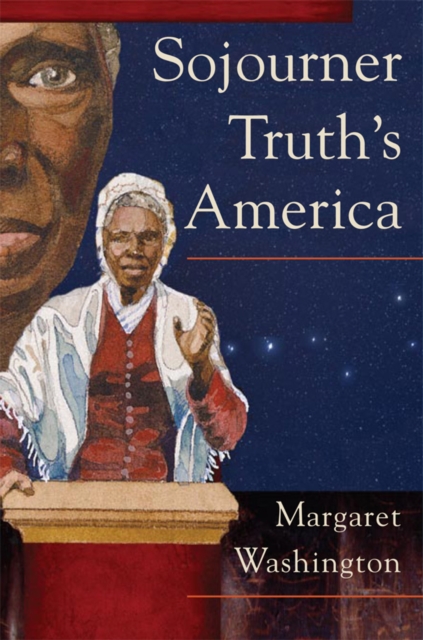
Sojourner Truth's America
This fascinating biography tells the story of nineteenth-century America through the life of one of its most charismatic and influential characters: Sojourner Truth. In an in-depth account of this amazing activist, Margaret Washington unravels Sojourner Truth's world within the broader panorama of African American slavery and the nation's most significant reform era. _x000B__x000B_Born into bondage among the Hudson Valley Dutch in Ulster County, New York, Isabella was sold several times, married, and bore five children before fleeing in 1826 with her infant daughter one year before New York slavery was abolished. In 1829, she moved to New York City, where she worked as a domestic, preached, joined a religious commune, and then in 1843 had an epiphany. Changing her name to Sojourner Truth, she began traveling the country as a champion of the downtrodden and a spokeswoman for equality by promoting Christianity, abolitionism, and women's rights._x000B__x000B_Gifted in verbal eloquence, wit, and biblical knowledge, Sojourner Truth possessed an earthy, imaginative, homespun personality that won her many friends and admirers and made her one of the most popular and quoted reformers of her times. Washington's biography of this remarkable figure considers many facets of Sojourner Truth's life to explain how she became one of the greatest activists in American history, including her African and Dutch religious heritage; her experiences of slavery within contexts of labor, domesticity, and patriarchy; and her profoundly personal sense of justice and intuitive integrity._x000B__x000B_Organized chronologically into three distinct eras of Truth's life, Sojourner Truth's America examines the complex dynamics of her times, beginning with the transnational contours of her spirituality and early life as Isabella and her embroilments in legal controversy. Truth's awakening during nineteenth-century America's progressive surge then propelled her ascendancy as a rousing preacher and political orator despite her inability to read and write. Throughout the book, Washington explores Truth's passionate commitment to family and community, including her vision for a beloved community that extended beyond race, gender, and socioeconomic condition and embraced a common humanity. For Sojourner Truth, the significant model for such communalism was a primitive, prophetic Christianity._x000B__x000B_Illustrated with dozens of images of Truth and her contemporaries, Sojourner Truth's America draws a delicate and compelling balance between Sojourner Truth's personal motivations and the influences of her historical context. Washington provides important insights into the turbulent cultural and political climate of the age while also separating the many myths from the facts concerning this legendary American figure.
eBook


Delia Webster and the Underground Railroad
In this captivating tale, Randolph Paul Runyon follows the trail of the first woman imprisoned for assisting runaway slaves and explores the mystery surrounding her life and work.
eBook