
Catalogue Search | MBRL


Are you sure you want to remove the book from the shelf?

{{itemTitle}}
190
result(s) for
"Abortion in Georgia (U.S. state)"
Sort by:

Rethinking Abortion
Mark Graber looks at the history of abortion law in action to argue that the only defensible, constitutional approach to the issue is to afford all women equal choice--abortion should remain legal or bans should be strictly enforced. Steering away from metaphysical critiques of privacy, Graber compares the philosophical, constitutional, and democratic merits of the two systems of abortion regulation witnessed in the twentieth century: pre-Roe v. Wadestatutory prohibitions on abortion andRoe'sban on significant state interference with the market for safe abortion services. He demonstrates that beforeRoe,pro-life measures were selectively and erratically administered, thereby subverting our constitutional commitment to equal justice. Claiming that these measures would be similarly administered if reinstated, the author seeks to increase support for keeping abortion legal, even among those who have reservations about its morality.
Abortion should remain legal, Graber argues, because statutory bans on abortion have a history of being enforced in ways that intentionally discriminate against poor persons and persons of color. In the years beforeRoe, the same law enforcement officials who routinely ignored and sometimes assisted those physicians seeking to terminate pregnancies for their private patients too often prevented competent abortionists from offering the same services to the general public. This double standard violated the fundamental human and constitutional right of equal justice under law, a right that remains a major concern of the equal protection clause of the Fourteenth Amendment.
eBook
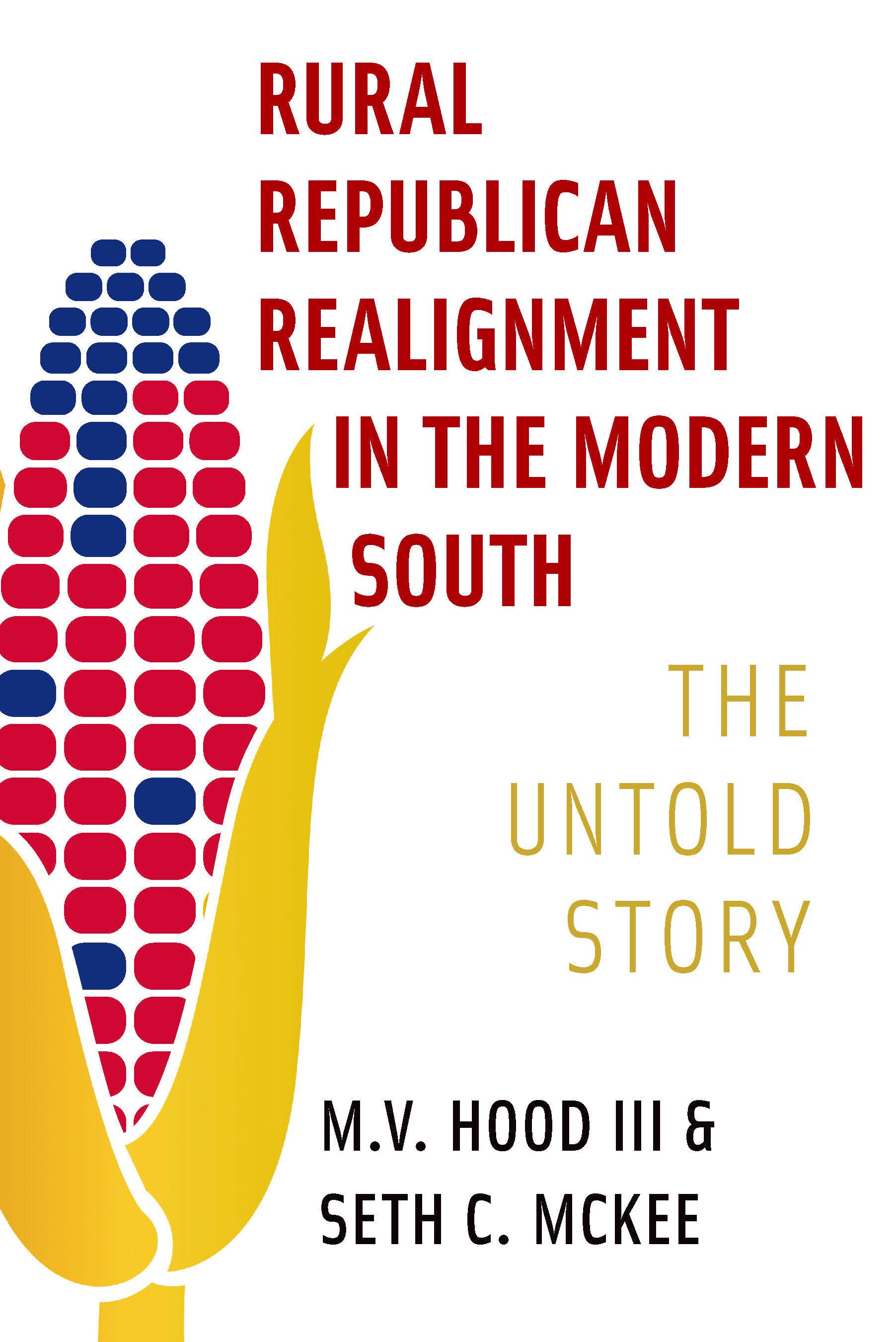
Rural Republican Realignment in the Modern South
An inside look at why the Republican Party has come to dominate
the rural American South
Beginning with the Dixiecrat Revolt of 1948 and extending
through the 2020 election cycle, political scientists M.V. Hood III
and Seth C. McKee trace the process by which rural white
southerners transformed from fiercely loyal Democrats to stalwart
Republicans. While these rural white southerners were the slowest
to affiliate with the Grand Old Party, they are now its staunchest
supporters. This transition and the reasons for it are vital to
understanding the current electoral landscape of the American
South, including states like Georgia, Florida, North Carolina,
Texas, and Virginia, all of which have the potential to exert
enormous influence over national electoral outcomes.
In this first book-length empirically based study focusing on
rural southern voters, Hood and McKee examine their changing
political behavior, arguing that their Democratic-to-Republican
transition is both more recent and more durable than most political
observers realize. By analyzing data collected from their own
region-wide polling along with a variety of other carefully mined
sources, the authors explain why the initial appeal of 1950s
Republicanism to upscale white southerners in metropolitan settings
took well over a half-century to yield to, and morph into, its
culturally conservative variant now championed by rural residents.
Hood and McKee contend that it is impossible to understand current
American electoral politics without understanding the longer
trajectory of voting behavior in rural America and they offer not
only a framework but also the data necessary for doing so.
eBook

More Than Medicine
In 1948, the Constitution of the World Health Organization declared, \"Health is a state of complete physical, mental and social well-being and not merely the absence of disease or infirmity.\" Yet this idea was not predominant in the United States immediately after World War II, especially when it came to women's reproductive health. Both legal and medical institutions-and the male legislators and physicians who populated those institutions-reinforced women's second class social status and restricted their ability to make their own choices about reproductive health care.
InMore Than Medicine, Jennifer Nelson reveals how feminists of the '60s and '70s applied the lessons of the new left and civil rights movements to generate a women's health movement. The new movement shifted from the struggle to revolutionize health care to the focus of ending sex discrimination and gender stereotypes perpetuated in mainstream medical contexts. Moving from the campaign for legal abortion to the creation of community clinics and feminist health centers, Nelson illustrates how these activists revolutionized health care by associating it with the changing social landscape in which women had power to control their own life choices.
More Than Medicinepoignantly reveals how social justice activists in the United States gradually transformed the meaning of health care, pairing traditional notions of medicine with less conventional ideas of \"healthy\" social and political environments.
eBook