
Catalogue Search | MBRL


Are you sure you want to remove the book from the shelf?

{{itemTitle}}
26,429
result(s) for
"Abortion services"
Sort by:

Afraid of the light
\"Brendan has always lived a careful, constrained life. A salesman who never liked the work, he's a man who has stayed in his marriage and his faith because it was what was expected of him. But now, having lost his job after corporate downsizing and on the cusp of sixty, he finds himself scrambling to somehow stay afloat in the only Los Angeles work on offer to a man his age - driving for Uber. When one of his rides, a retired professor named Elise, asks to be dropped off outside an abortion clinic where she now volunteers, Brendan finds himself literally driving right into the virulent epicentre of one of the major issues of our time, engulfing his life in the process.\"--Publisher.

Abortion after Roe
Abortion is and always has been an arena for contesting power relations between women and men. When in 1973 the Supreme Court made the procedure legal throughout the United States, it seemed that women were at last able to make decisions about their own bodies. In the four decades that followed, however, abortion became ever more politicized and stigmatized. Abortion after Roe chronicles and analyzes what the new legal status and changing political environment have meant for abortion providers and their patients. Johanna Schoen sheds light on the little-studied experience of performing and receiving abortion care from the 1970s a period of optimism to the rise of the antiabortion movement and the escalation of antiabortion tactics in the 1980s to the 1990s and beyond, when violent attacks on clinics and abortion providers led to a new articulation of abortion care as moral work. As Schoen demonstrates, more than four decades after the legalization of abortion, the abortion provider community has powerfully asserted that abortion care is a moral good.
eBook

A spark of light : a novel
\"[A] novel about ordinary lives that intersect during a heart-stopping crisis. The warm fall day starts like any other at the Center, a women's reproductive health services clinic, its staff offering care to anyone who passes through its doors. Then, in late morning, a desperate and distraught gunman bursts in and opens fire, taking all inside hostage. After rushing to the scene, Hugh McElroy, a police hostage negotiator, sets up a perimeter and begins making a plan to communicate with the gunman. As his phone vibrates with incoming text messages, he glances at it, and, to his horror, finds out that his fifteen-year-old daughter, Wren, is inside the clinic. But Wren is not alone. She will share the next and the next few hours of her young life with a cast of unforgettable characters ... [T]his is a story that traces its way back to what brought each of these very different individuals to the same place on this fateful day\"-- Provided by publisher.
Book

Dying to Count
During the early 1990s, global health experts developed a new model of emergency obstetric care: post-abortion care or PAC. In developing countries with restrictive abortion laws and where NGOs relied on US family planning aid, PAC offered an apolitical approach to addressing the consequences of unsafe abortion. In Dying to Count , Siri Suh traces how national and global population politics collide in Senegal as health workers, health officials, and NGO workers strive to demonstrate PAC’s effectiveness in the absence of rigorous statistical evidence that the intervention reduces maternal mortality. Suh argues that pragmatically assembled PAC data convey commitments to maternal mortality reduction goals while obscuring the frequency of unsafe abortion and the inadequate care women with complications are likely to receive if they manage to reach a hospital. At a moment when African women face the highest risk worldwide of death from complications related to pregnancy, birth, or abortion, Suh’s ethnography of PAC in Senegal makes a critical contribution to studies of global health, population and development, African studies, and reproductive justice.
eBook

San Francisco's queen of vice : the strange career of abortionist Inez Brown Burns
\"San Francisco's Queen of Vice uncovers the story of one of the most skilled, high-priced, and corrupt abortion entrepreneurs in America. Even as Prohibition was the driving force behind organized crime, abortions became the third-largest illegal enterprise as state and federal statutes combined with changing social mores to drive abortionists into hiding. Inez Brown Burns, a notorious socialite and abortionist in San Francisco, made a fortune providing her services to desperate women throughout California. Beginning in the 1920s, Burns oversaw some 150,000 abortions until her trial and conviction brought her downfall. In San Francisco's Queen of Vice, Lisa Riggin tells the story of the rise and fall of San Francisco's \"abortion queen\" and explores the rivalry between Burns and the city's newly elected district attorney, Edmund G. \"Pat\" Brown (father of the present governor of California). Pledging to clean up the graft-ridden city, Brown exposed the hidden yet not-so-secret life of backroom deals, political payoffs, and corrupt city cops. Through the arrest, prosecution, and conviction of Burns, Brown used his success as a stepping-stone for his political rise to California's governor's mansion. Featuring an array of larger-than-life characters, Riggin shows how Cold War domestic ideology and the national quest to return to a more traditional America quickly developed into a battle against internal decay. Based on a combination of newspaper accounts, court records, and personal interviews, San Francisco's Queen of Vice reveals how the drama played out in the life and trial of one of the wealthiest women in California history\"-- Provided by publisher.
Book

The Safety and Quality of Abortion Care in the United States
Abortion is a legal medical procedure that has been provided to millions of American women. Since the Institute of Medicine first reviewed the health implications of national legalized abortion in 1975, there has been a plethora of related scientific research, including well-designed randomized clinical trials, systematic reviews, and epidemiological studies examining abortion care. This research has focused on examining the relative safety of abortion methods and the appropriateness of methods for different clinical circumstances. With this growing body of research, earlier abortion methods have been refined, discontinued, and new approaches have been developed.
The Safety and Quality of Abortion Care in the United States offers a comprehensive review of the current state of the science related to the provision of safe, high-quality abortion services in the United States. This report considers 8 research questions and presents conclusions, including gaps in research.
eBook

Abortion Care Is Health Care
A history of the challenges facing medical abortion provision in Australia and the people trying to overcome them.
eBook
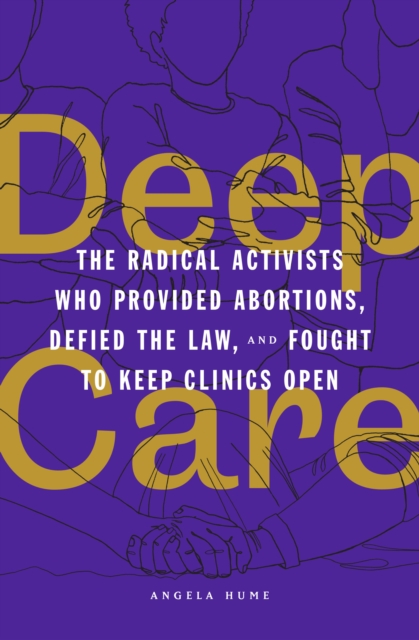
Deep Care
The story of the radical feminist networks who worked outside the law to defend abortion. Starting in the 1970s, small groups of feminist activists met regularly to study anatomy, practice pelvic exams on each other, and learn how to safely perform a procedure known as menstrual extraction, which can empty the contents of the uterus in case of pregnancy using equipment that can be easily bought and assembled at home. This \"self-help\" movement grew into a robust national and international collaboration of activists and health workers determined to ensure access to reproductive healthcare, including abortion, at all costs—to the point of learning how to do the necessary steps themselves. Even after abortion was legalized in 1973 with Roe v. Wade, activists continued meeting, studying, and teaching these skills, reshaping their strategies alongside decades of changing legal, medical, and cultural landscapes such as the legislative war against abortion rights, the AIDS epidemic, and the rise of anti-abortion domestic terrorism in the 1980s and 90s. The movement's drive to keep abortion accessible led to the first clinic defense mobilizations against anti-abortion extremists trying to force providers to close their doors. From the self-help movement sprang a constellation of licensed feminist healthcare clinics, community programs to promote reproductive health, even the nation's first known-donor sperm bank, all while fighting the oppression of racism, poverty, and gender violence. Deep Care follows generations of activists and clinicians who orbited the Women's Choice clinic in Oakland from the early 1970s until 2010, as they worked underground and above ground, in small cells and broad coalitions and across political movements with grit, conviction, and allegiances of great trust to do what they believed needed to be done—despite the law, when required. Grounded in interviews of activists sharing details of their work for the first time, Angela Hume retells three decades of this critical, if under-recognized story of the radical edge of the abortion movement. These lessons are more pertinent than ever following the Supreme Court's 2022 Dobbs v. Jackson decision and the devastation to abortion access nationwide.
eBook

When the law makes doors slightly open: ethical dilemmas among abortion service providers in Addis Ababa, Ethiopia
Background
In 2005, Ethiopia changed its abortion law to curb its high maternal mortality. This has led to a considerable reduction in deaths from unsafe abortions. Abortion is now legal if the woman’s pregnancy is a result of rape or incest, if her health is endangered, if the fetus has a serious deformity, if she suffers from a physical or mental deficiency, or if she is under 18 years of age. The word of the woman, if in compliance with the law, is sufficient to qualify for an abortion. In this context, where the law makes the door slightly open, health workers become important in deciding who gets access to safe services and who doesn’t, thus creating considerable ethical dilemmas.
Methods
The objective of this study was to explore abortion service providers’ personal experiences and reflections, perceptions of the abortion law, and ethical and dilemmas that arise. Data collection took place from March to May 2016 in Addis Ababa, at different health clinics providing abortion services. Thirty in-depth interviews and three focus group discussions were conducted with 41 abortion service providers at governmental and non-governmental clinics. Content analysis was drawn upon in the interpretation of the findings.
Results
When working in a context where the law has slightly opened the door for abortion seeking women, the health workers describe conflicting concerns, burdensome responsibilities, and ambiguity concerning how to interpret and implement the law. They describe efforts to balance their religious faith and values against their professional obligations and concern for women’s health and well-being. This negotiation is particularly evident in the care of women who fall outside the law’s indications. They usually handle ethical dilemmas and decision-making alone without guidance. Moreover, many health workers face a stigma from fellow colleagues not performing abortions and therefore keep their job a secret from family and friends.
Conclusions
Health workers in Ethiopia experience ethical dilemmas trying to maneuver between the abortion law, their personal values, and their genuine concern for the health of women. More research is needed to further explore this.
Journal Article

Methods women use for induced abortion and sources of services: insights from poor urban settlements of Accra, Ghana
Background
Increasing access to safe abortion methods is crucial for improving women’s health. Understanding patterns of service use is important for identifying areas for improvement. Limited evidence is available in Ghana on factors associated with the type of method used to induce abortion. This paper examined the methods and sources of services used for abortion by women living in poor urban settings of Accra.
Methods
Data are from a survey that was conducted in 2018 among 1233 women aged 16–44 years who reported ever having had an induced abortion. We estimated a multinomial logistic regression model to examine factors associated with the type of abortion methods women used. We further generated descriptive statistics for the source of abortion services.
Results
About 50% women used surgical procedures for their last abortion, 28% used medication abortion (MA), 12% used other pills, 3% used injection, and 7% used non-medical methods. However, nearly half (46%) of the women who terminated a pregnancy within the year preceding the survey used medication abortion (MA), 32% used surgical procedures, while 5% used non-medical methods. Women who terminated a pregnancy within three years preceding the survey had a 60% lower chance of using surgical procedures if they did not use MA compared to those who terminated a pregnancy more than 3 years before the survey (Relative Risk Ratio [RRR] 0.4; 95% CI 0.3–0.5). The vast majority (74%) of women who used MA obtained services from pharmacies.
Conclusions
The use of MA pills to terminate pregnancies has increased in recent years in Ghana and these pills are mostly accessed from pharmacies. This suggests a need for a review of the national guidelines to include pharmacists and chemists in the provision of MA services.
Journal Article