
Catalogue Search | MBRL


Are you sure you want to remove the book from the shelf?

{{itemTitle}}
109
result(s) for
"Absolutismus"
Sort by:

A Cultural Theory of International Relations
In this volume, Richard Ned Lebow introduces his own constructivist theory of political order and international relations based on theories of motives and identity formation drawn from the ancient Greeks. His theory stresses the human need for self-esteem, and shows how it influences political behavior at every level of social aggregation. Lebow develops ideal-type worlds associated with four motives: appetite, spirit, reason and fear, and demonstrates how each generates a different logic concerning cooperation, conflict and risk-taking. Expanding and documenting the utility of his theory in a series of historical case studies, ranging from classical Greece to the war in Iraq, he presents a novel explanation for the rise of the state and the causes of war, and offers a reformulation of prospect theory. This is a novel theory of politics by one of the world's leading scholars of international relations.
eBook
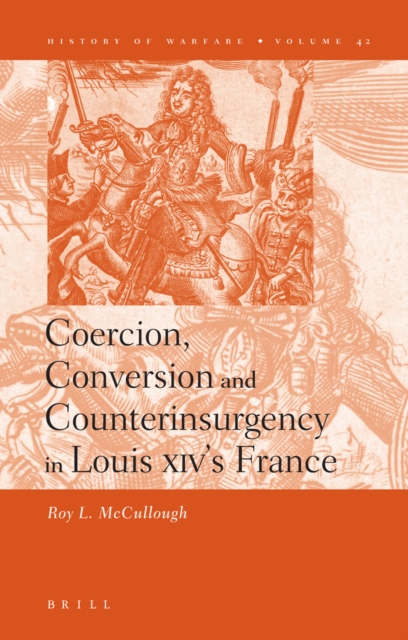
Coercion, Conversion and Counterinsurgency in Louis XIV's France
This is a study of the domestic application of armed coercion during the reign of Louis XIV. Relying heavily on archival sources, this study demonstrates that the coercive inclination of Louis XIV and the coercive potential of the Sun King's army have been overstated.
eBook

War Leibniz Absolutist?
What was Leibniz’s position on ‘absolute monarchy’? My contribution breaks this question down into two: Firstly, it asks about Leibniz’s opinion on absolute sovereignty as a theoretical paradigm, and secondly, about his view on the enhanced power of some monarchies that could be observed de facto. Leibniz rejects the theoretical paradigm developed, for instance, by Hobbes - rather, he proposes a gradual understanding of sovereignty inspired by the Holy Roman Empire, in which both the Empire and the individual territories can be said to be ‘sovereign’. On the other hand, Leibniz’s position on the de facto shift of power in favour of some monarchs was more ambivalent and pragmatic: Which system of government he favoured depended on its political consequences in each individual case, especially with regard to the balance of power in Europe. Leibniz rejected the pronounced anti-absolutism of his liberal contemporaries in Britain. In his view, whatever its system of government, a state is good if it follows reason.
Leibniz, quelle était sa position au sujet de la « monarchie absolue » ? Ma contribution divise cette question en deux démarches : Premièrement, elle met en évidence la pensée de Leibniz sur la souveraineté absolue en tant que paradigme théorique ; deuxièmement, elle analyse son attitude à l’égard de la montée factuelle du pouvoir de certains monarques. Leibniz rejette le paradigme théorique développé, par exemple, par Hobbes, en proposant plutôt un modèle graduel de souveraineté analogue au Saint-Empire. Dans ce dernier l’empereur ainsi que les princes étaient « souveraines » dans un certain sens. Leibniz est plus ambivalent et pragmatique là où il s’agit de la monté effective de pouvoir des princes de certains états : Il peut approuver des régimes tant « absolus » que parlementaires, suivant les conséquences politiques dans chaque cas individuel - particulièrement à propos de l’équilibre européen. Leibniz critique l’anti-absolutisme prononcé de ces contemporains libéraux britanniques. Quel que soit le régime politique, à son avis, un état est bon quand il suit la raison.
Wie stand Leibniz zur „absoluten Monarchie“? Mein Beitrag unterteilt diese Frage in zwei Schritte und fragt erstens nach Leibnizens Position zur absoluten Souveränität als einem theoretischen Paradigma, zweitens nach seiner Bewertung der faktisch beobachtbaren fürstlichen Machtsteigerung in manchen Staaten. Das theoretische Paradigma, wie es etwa Hobbes entwickelt, lehnt Leibniz als realitätsfern und nicht wünschenswert ab und favorisiert stattdessen das graduelle Souveränitätsmodell des Heiligen Römischen Reiches, das mehrere Souveräne neben- und übereinander kennt. Ambivalenter und pragmatischer steht Leibniz hingegen zu der Frage, wie die faktische Machtsteigerung der Fürsten zu bewerten sei: Er kann sowohl absolute als auch parlamentarische Regierungsformen befürworten, je nach den politischen Konsequenzen im Einzelfall - insbesondere für das europäische Gleichgewicht. Die scharfe antiabsolutische Orientierung des englischen Frühliberalismus lehnt er ab. Unabhängig von der Regierungsform ist ein Staat für Leibniz immer dann gut, wenn er der Vernunft folgt.
Journal Article
War Leibniz Absolutist?
What was Leibniz’s position on ‘absolute monarchy’? My contribution breaks this question down into two: Firstly, it asks about Leibniz’s opinion on absolute sovereignty as a theoretical paradigm, and secondly, about his view on the enhanced power of some monarchies that could be observed de facto. Leibniz rejects the theoretical paradigm developed, for instance, by Hobbes - rather, he proposes a gradual understanding of sovereignty inspired by the Holy Roman Empire, in which both the Empire and the individual territories can be said to be ‘sovereign’. On the other hand, Leibniz’s position on the de facto shift of power in favour of some monarchs was more ambivalent and pragmatic: Which system of government he favoured depended on its political consequences in each individual case, especially with regard to the balance of power in Europe. Leibniz rejected the pronounced anti-absolutism of his liberal contemporaries in Britain. In his view, whatever its system of government, a state is good if it follows reason.
Leibniz, quelle était sa position au sujet de la « monarchie absolue » ? Ma contribution divise cette question en deux démarches : Premièrement, elle met en évidence la pensée de Leibniz sur la souveraineté absolue en tant que paradigme théorique ; deuxièmement, elle analyse son attitude à l’égard de la montée factuelle du pouvoir de certains monarques. Leibniz rejette le paradigme théorique développé, par exemple, par Hobbes, en proposant plutôt un modèle graduel de souveraineté analogue au Saint-Empire. Dans ce dernier l’empereur ainsi que les princes étaient « souveraines » dans un certain sens. Leibniz est plus ambivalent et pragmatique là où il s’agit de la monté effective de pouvoir des princes de certains états : Il peut approuver des régimes tant « absolus » que parlementaires, suivant les conséquences politiques dans chaque cas individuel - particulièrement à propos de l’équilibre européen. Leibniz critique l’anti-absolutisme prononcé de ces contemporains libéraux britanniques. Quel que soit le régime politique, à son avis, un état est bon quand il suit la raison.
Wie stand Leibniz zur „absoluten Monarchie“? Mein Beitrag unterteilt diese Frage in zwei Schritte und fragt erstens nach Leibnizens Position zur absoluten Souveränität als einem theoretischen Paradigma, zweitens nach seiner Bewertung der faktisch beobachtbaren fürstlichen Machtsteigerung in manchen Staaten. Das theoretische Paradigma, wie es etwa Hobbes entwickelt, lehnt Leibniz als realitätsfern und nicht wünschenswert ab und favorisiert stattdessen das graduelle Souveränitätsmodell des Heiligen Römischen Reiches, das mehrere Souveräne neben- und übereinander kennt. Ambivalenter und pragmatischer steht Leibniz hingegen zu der Frage, wie die faktische Machtsteigerung der Fürsten zu bewerten sei: Er kann sowohl absolute als auch parlamentarische Regierungsformen befürworten, je nach den politischen Konsequenzen im Einzelfall - insbesondere für das europäische Gleichgewicht. Die scharfe antiabsolutische Orientierung des englischen Frühliberalismus lehnt er ab. Unabhängig von der Regierungsform ist ein Staat für Leibniz immer dann gut, wenn er der Vernunft folgt.
Journal Article
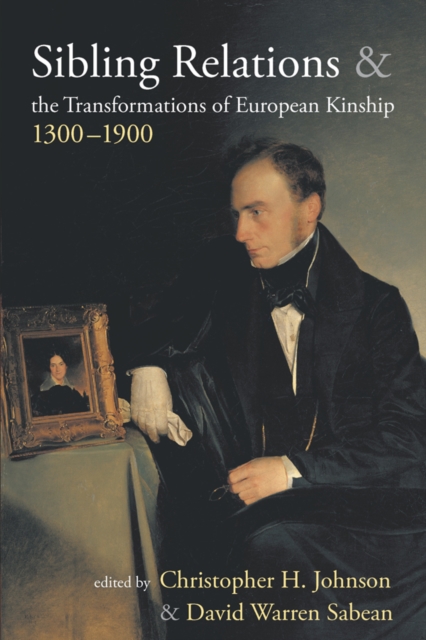
Sibling relations and the transformations of European kinship
Recently considerable interest has developed about the degree to which anthropological approaches to kinship can be used for the study of the long-term development of European history. From the late middle ages to the dawn of the twentieth century, kinship - rather than declining, as is often assumed - was twice reconfigured in dramatic ways and became increasingly significant as a force in historical change, with remarkable similarities across European society. Applying interdisciplinary approaches from social and cultural history and literature and focusing on sibling relationships, this volume takes up the challenge of examining the systemic and structural development of kinship over the long term by looking at the close inner-familial dynamics of ruling families (the Hohenzollerns), cultural leaders (the Mendelssohns), business and professional classes, and political figures (the Gladstones)in France, Italy, Germany, and England. It offers insight into the current issues in kinship studies and draws from a wide range of personal documents: letters, autobiographies, testaments, memoirs, as well as genealogies and works of art.
eBook
Figuraciones Literarias Del Poder Político en el Siglo de Oro
El volumen estudia las formas en las que se constituye y desfigura el poder político en la literatura y la cultura del Siglo de Oro. Las contribuciones parten de la premisa de que la ficción literaria desempeña un papel fundamental en las construcciones del poder, como lo demuestran los ejemplos de varios géneros literarios de los siglos XVI y XVII. Esta interacción puede rastrearse en casi todas las esferas de la vida del imperio español: desde las élites cortesanas y religiosas hasta el creciente aparato administrativo, pasando por los mundos cotidianos picarescos y los territorios coloniales. Las posiciones abarcan referencias miméticas y afirmativas, así como construcciones de contramundos utópicos y satíricos.
eBook

Passing Judgment
The royal judge was an archetypal character in French tragedy during the 17 th century. This figure impersonated the king by asserting his judicial authority and bringing order to an otherwise chaotic world.
In Passing Judgement , Hélène Bilis examines how an overlooked character-type—the royal judge—remained a constant of the tragic genre throughout the 17th century, although the specifics of his role and position fluctuated as playwrights experimented with changing models of sovereignty onstage. Her readings analyze how this royal decision-maker stood at the intersection of political and theatrical debates, and evolved through a process of trial and error in which certain portrayals of kingship were deemed obsolete and were discarded, while others were promoted as culturally allowable and resonant. In tracing the royal judge’s persistent presence and transformation, Bilis argues that we can better grasp the weighty political stakes of theatrical representations under the ancien régime.
eBook
Barock und Aufklarung
A standard work in a revised edition: Matthias Schnettger and Heinz Duckhardt have fully updated this highly praised textbook on the Enlightenment and the Baroque period. Their overview considers the latest perspectives in research, and the bibliography has been supplemented with key works published since the last edition. The volume is sure to remain an essential tool for students and teachers of modern history.
eBook
Theories of Bildung and growth
The present book analyzes theoretical thinking on education from the standpoints of both traditions. The book deals with continental educational thinking while discussing the notion of Bildung and its diversity, from J. A.comenius to Th. Adorno. In addition, the book discusses the idea of growth inherited from American progressive education and classical Pragmatism.
eBook
Power and Politics in Old Regime France, 1720-1745
First Published in 2004. Routledge is an imprint of Taylor & Francis, an informa company.
'Dr Peter Campbell is to be congratulated on a bold, important and learned work' – Literary Review '[Peter Campbell] has given a valuable synthesis of recent work on seventeenth-century France' – Times Literary Supplement 'Bulges with stimulating insights and bright ideas.' – French History 'A rare snapshot of how high politics actually worked ... With this manual in hand the reader could survive at the court of Louis XV - and probably score.' – History Today
eBook