
Catalogue Search | MBRL


Are you sure you want to remove the book from the shelf?

{{itemTitle}}
723
result(s) for
"Abyssinia"
Sort by:
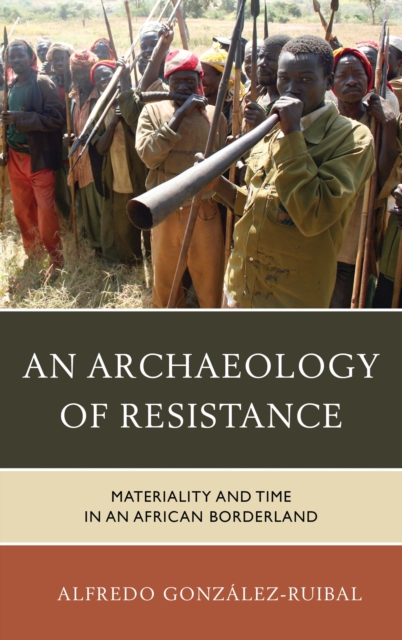
An Archaeology of Resistance
An Archaeology of Resistance: Materiality and Time in an African Borderland studies the tactics of resistance deployed by a variety of indigenous communities in the borderland between Sudan and Ethiopia. The Horn of Africa is an early area of state formation and at the same time the home of many egalitarian, small scale societies, which have lived in the buffer zone between states for the last three thousand years. For this reason, resistance is not something added to their sociopolitical structures: it is an inherent part of those structures—a mode of being. The main objective of the work is to understand the diverse forms of resistance that characterizes the borderland groups, with an emphasis on two essentially archaeological themes, materiality and time, by combining archaeological, political and social theory, ethnographic methods and historical data to examine different processes of resistance in the long term.
eBook

Nutritional Comparison of White and Red Coccinia Abyssinica (Lam.) Cong. Accessions: An Under-Utilised Edible Tuber of the Ethiopian Highlands
Anchote (Coccinia abyssinica) is an indigenous tuber crop of the Ethiopian Highlands. It is popular in the western Oromia Region of the country. Apart from food, the crop is also used in traditional medicine. Anchote tubers possess two variations in its tissue colour, red and white. In this study, a small market survey and a nutritional comparison of red and white anchote were conducted. White tissue anchote seems to be more popular, due to its soft texture and ease of cooking. However, the red variant was considered for flour making (by dehydration), for use in porridge and soups for various medicinal and supplementary food applications. Red anchote tubers contained significantly higher protein content (16.85 mg/100 g dry matter basis) than the white variant. However, apart from the marginally higher protein content compared to other tropical root and tuber crops, anchote seems to remain a primary source of carbohydrates. In macro minerals, white anchote proves to be a more important source of Ca with 81 mg/100 g edible portion; however, on dry matter basis, the content was similar to the red variant (316 and 309 mg/100 g dry matter, white and red respectively). Further research on vitamin content (especially vitamin A in the red variant) would be useful to understand the full nutrition potential of the crop.
Journal Article

The Soviet Union and the Horn of Africa during the Cold War
At the height of the Cold War, Soviet ideologues, policymakers, diplomats, and military officers perceived the countries of Africa, Asia, and Latin America as the future reserve of socialism, holding the key to victory over Western forces.
eBook

A Decade of Ethiopia
The Federal Democratic Republic of Ethiopia has gone through a decade of significant economic change and political contestation since 2004. The ruling EPRDF party has redefined the country as a 'developmental state' and has tried to increase its presence on the African and world stage. Preceded by a new Introduction casting a broader perspective on some underlying trends, this monograph presents a chronology for 2004 to 2016, compiling the chapters on Ethiopia previously published in the Africa Yearbook. Politics, Economy and Society South of the Sahara. A list of further reading suggestions has also been added.
eBook

Visions of Zion
In reggae song after reggae song Bob Marley and other reggae singers speak of the Promised Land of Ethiopia. Repatriation is a must! they cry. The Rastafari have been travelling to Ethiopia since the movement originated in Jamaica in 1930s. They consider it the Promised Land, and repatriation is a cornerstone of their faith. Though Ethiopians see Rastafari as immigrants, the Rastafari see themselves as returning members of the Ethiopian diaspora. InVisions of Zion, Erin C. MacLeod offers the first in-depth investigation into how Ethiopians perceive Rastafari and Rastafarians within Ethiopia and the role this unique immigrant community plays within Ethiopian society.Rastafari are unusual among migrants, basing their movements on spiritual rather than economic choices. This volume offers those who study the movement a broader understanding of the implications of repatriation. Taking the Ethiopian perspective into account, it argues that migrant and diaspora identities are the products of negotiation, and it illuminates the implications of this negotiation for concepts of citizenship, as well as for our understandings of pan-Africanism and south-south migration. Providing a rare look at migration to a non-Western country, this volume also fills a gap in the broader immigration studies literature.
eBook

The Ethiopian Revolution
Revolution, civil wars, and guerilla warfare wracked Ethiopia during three turbulent decades at the end of the twentieth century. This book is a pioneering study of the military history and political significance of this crucial Horn of Africa region during that period. Drawing on new archival materials and interviews, Gebru Tareke illuminates the conflicts, comparing them to the Russian and Iranian revolutions in terms of regional impact.
Writing in vigorous and accessible prose, Tareke brings to life the leading personalities in the domestic political struggles, strategies of the warring parties, international actors, and key battles. He demonstrates how the brutal dictatorship of Mengistu Haile Mariam lacked imagination in responding to crises and alienated the peasantry by destroying human and material resources. And he describes the delicate balance of persuasion and force with which northern insurgents mobilized the peasantry and triumphed. The book sheds invaluable light not only on modern Ethiopia but also on post-colonial state formation and insurrectionary politics worldwide.
eBook

Empire des Nègres Blancs: The Hybridity of International Personality and the Abyssinia Crisis of 1935–36
The ‘Abyssinia Crisis’ of 1935–36 – in which one League of Nations member (imperial Ethiopia) was annexed by another (Fascist Italy) – presents one of the clearest twentieth-century illustrations of international law's ‘progress narrative’. International lawyers are encouraged to draw a salutary lesson from the crisis: namely that Ethiopia's sovereignty – and, indeed, the peace of the entire world – might have survived the 1930s if only international law had been properly enforced. Yet, the assumption upon which this lesson depends – to the effect that Ethiopia's only discursive contribution to the crisis was passively to regurgitate the relevant clauses of the Covenant – is profoundly ideological. For this assumption effects a double suppression: erasing Ethiopia's strategic construction of a hybrid, partially Abyssinian international law from the discipline's memory; and concealing from scholarly view the possibility that Ethiopia's annexation might have resulted from actions that were in accordance with, rather than in violation of, interwar international legal norms regarding sovereignty and the use of force.
Journal Article

Ethnic Diversity and Federalism
How federalism can be used to provide recognition and accommodate ethnic groups is an important topic, not only in Africa, but in multi-ethnic communities around the world. Examining how institutions of multi-ethnic states have been designed to accommodate ethnic diversity while at the same time maintaining national unity, this book locates institutional responses to the challenges of ethnic diversity within the context of a federal arrangement. It examines how a federal arrangement has been used to reconcile the conflicting pressures of the demand for the recognition of distinctive identities, on the one hand, and the promotion of political and territorial integrity, on the other. Comparative case studies of South Africa and Ethiopia as the two federal systems provide a contrasting approach to issues of ethnic diversity. Suggesting new ways in which federalism might work, the author identifies key institutions lessons which will help to build an all-inclusive society.
eBook

Education in Ethiopia
With the end of civil war in 1991, Ethiopias government launched a New Education and Training Policy in 1994 which, by the early 2000s, had already produced remarkable results. The gross enrollment ratio rose from 20 to 62 percent in primary education between 1993-94 and 2001-02; and in secondary and higher education it climbed, respectively, from 8 to 12 percent and from 0.5 to 1.7 percent. Yet the government can hardly afford to rest on its laurels. Primary education is still not universal, and already there are concerns about plummeting educational quality and the growing pressures to expand post-primary education. Addressing these challenges will require more resources, both public and private. Yet money alone is insufficient. Focusing on primary and secondary education, Education in Ethiopia argues for wise tradeoffs in the use of resourcesa result that will often require reforming the arrangements for service delivery. These changes, in turn, need to be fostered by giving lower levels of government more leeway to adapt central standardssuch as those for teacher recruitment and school constructionto local conditions, including local resource constraints; and by strengthening accountability for results at all levels of administration in the education system.
eBook