
Catalogue Search | MBRL


Are you sure you want to remove the book from the shelf?

{{itemTitle}}
41,971
result(s) for
"Academic disciplines"
Sort by:

First-year university writing : a corpus-based study with implications for pedagogy
\"First-Year Writing offers a rare corpus-based analysis of writing by incoming college students compared with expert academic writing. Based on repeating rhetorical and linguistic features in over 19,000 student essays, the research analyses specific discourse features in first-year writing that do not match expectations of more advanced academic arguments. The book goes on to demonstrate how these findings can be used to better connect writing and language in pedagogy and assessment, showing how to use language-level insights to improve students' awareness and writing\"-- Provided by publisher.
Book
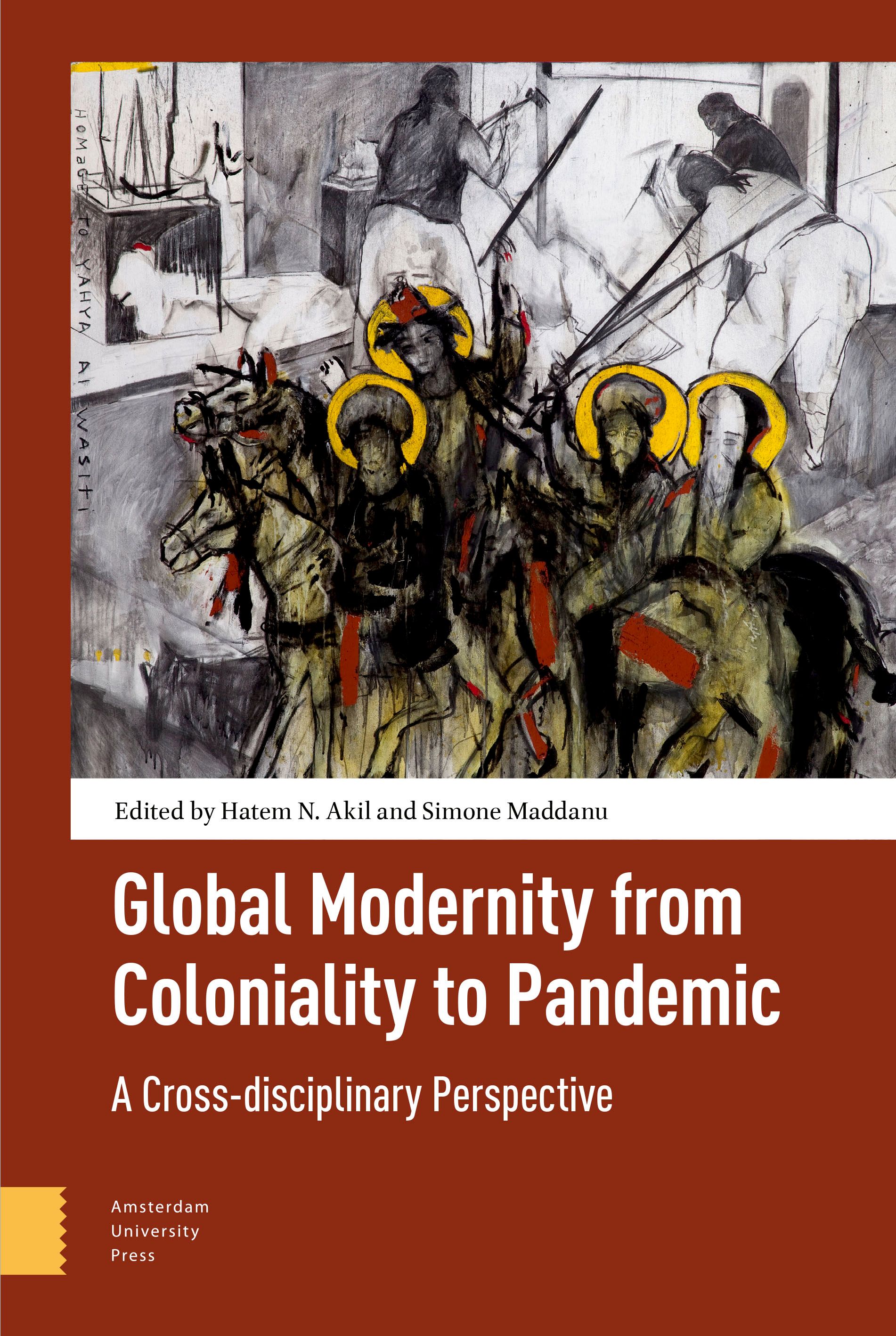
Global Modernity from Coloniality to Pandemic
Global Modernity from Coloniality to Pandemic explores issues related to the global crises of our time: reason, science, and the environment by revisiting the notions of modernity, modernism, and modernization, which can no longer be considered purely Western or strictly secular. The book poses questions about viewing modernity today from the vantage point of traditionally disparate disciplines - engaging scholars from sociology to science, philosophy to robotics, medicine to visual culture, mathematics to cultural theory, biology to environmental studies. Leading sociologist Alain Touraine contributes a new text in which he reflects on the role of women, refugees and migrants, and the future of democracy. In their conclusion, the editors posit a fundamental ethical distinction between modernization and modernity and call for a new understanding of modernity that is globally distributed, informed by the voices of many, and concerned with crises that threaten all of us at the level of the species - a modernity-to-come.
eBook

Best practices of literacy leaders : keys to school improvement
\"Bringing together leading experts, this book presents the principles of effective literacy leadership and describes proven methods for improving instruction, assessment, and schoolwide professional development. The book shows how all school staff--including reading specialists and coaches, administrators, teachers, and special educators--can play an active role in nurturing a culture of collaboration and promoting student achievement. Best practices are identified for creating strong elementary and secondary literacy programs, differentiating instruction, supporting English language learners, utilizing technology, building home-school partnerships, and much more. User-friendly features include case examples, guiding questions, and engagement activities in each chapter\"-- Provided by publisher.
Book

Eco-innovation: insights from a literature review
Eco-innovation is still a young area of research; however it has been an area of increasing concern for policy makers, academics and practitioners. The aim of this paper is to provide an overview of the existing body of literature on eco-innovations, and identify the most relevant publications in the field and the topics of interest. We have carried out a review of previous literature based on a Scopus search and selecting the discipline \"Social Sciences and Humanities\". The search offers us 384 articles. From their analysis, it can be observed that there is a clear increase in the relevance of this issue within academia and several thematic trends arise in eco-innovation research, with drivers of eco-innovation being the most popular. Our main theoretical contribution is the development of a multilevel framework of eco-innovation drivers, with our literature review having a specific focus on systematizing the findings of the studies within this theme.
Journal Article

Genre-based automated writing evaluation for L2 research writing : from design to evaluation and enhancement
\"The craftsmanship of research writing is central to the world of research and academia, but it presents great challenges to novice scholars, especially to L2 writers. This book presents a compelling reinforcement to L2 research writing pedagogy, drawing on a fertile landscape of theoretical and operational frameworks. It offers a model for designing and evaluating a prototype of innovative genre-based automated writing evaluation (AWE) technology, which analyzes research article discourse and generates discipline-specific feedback based on the rhetorical conventions of this genre. Relying on empirical evidence and theoretical rationales, the author discusses the transformation of this prototype into a complete AWE program for L2 research writing. This book will be essential reading for teachers of research writing, researchers of computer-assisted language learning (CALL) and English for academic purposes (EAP), developers of intelligent writing technologies, and any scholars who struggle with the conventions of research writing\"-- Provided by publisher.
Book

Resilience and responsibility: governing uncertainty in a complex world
'Resilience' has risen to prominence across a range of academic disciplines and political discourses. Situating resilience theories in historical context the paper argues that the resilience discourse of complex adaptive systems, for all its utility as a means for conceptualising and managing change, is allied with contemporary governmental discourses that responsibilise risk away from the state and on to individuals and institutions. Further, in arguing that resilience theories originate in two distinct epistemological communities (natural and social science) in its mobilisation as a 'boundary object' resilience naturalises an ontology of 'the system'. Resilience approaches increasingly structure, not only academic, but also government policy discourses, with each influencing the development of the other. It is argued that by mobilising 'the system' as the metaconcept for capturing socio-natural and socio-economic relations resilience theories naturalise and reify two abstractions: firstly, the system itself-enrolling citizens into practices that give it meaning and presence; secondly, the naturalisation of shocks to the system, locating them in a post-political space where the only certainty is uncertainty. With reference to an emerging governmentality through resilience, this paper argues for a critical interrogation of plural resilience theories and wonders at their emancipatory possibilities.
Journal Article

On writtenness : the cultural politics of academic writing
\"The term 'writtenness' is used to describe highlight a socio-academic criterion that is often taken-for-granted. The trope 'well written' is widespread but it is rarely very clearly defined and not adequately described by theory. This book redresses that neglect by contextualizing writtenness as a focal issue in the contemporary context of international higher education. The quality of academic writing is often the source of both practical and ethical dilemmas in the academy, while at the same time the social value and productive role of the writing in the communication of knowledge are underestimated. The book interrogates the cultural power and value of writtenness, while also revealing its relative misrepresentation within academic culture at large. The conceptual relevance of writtenness is accentuated in the current geopolitical context of English language dominance, where it is at the hub of both centripetal and centrifugal forces. On the one hand, there is a widespread uniformity in notions of style and accuracy which academic writing is deemed to embody and represent, while on the other, with English as the lingua franca in different academic and geographic contexts globally, and different varieties of English proliferating, writtenness becomes a site of struggle.\"-- Provided by publisher.
Book

The evolving domain of entrepreneurship research
Research on entrepreneurship has flourished in recent years and is evolving rapidly. This article explores the history of entrepreneurship research, how the research domain has evolved, and its current status as an academic field. The need to concretize these issues stems partly from a general interest in defining the current research domain and partly from the more specific tasks confronting the prize committee of the Global Award for Entrepreneurship Research. Entrepreneurship has developed in many sub-fields within several disciplines—primarily economics, management/business administration, sociology, psychology, economic and cultural anthropology, business history, strategy, marketing, finance, and geography—representing a variety of research traditions, perspectives, and methods. We present an analytical framework that organizes our thinking about the domain of entrepreneurship research by specifying elements, levels of analysis, and the process/context. An overview is provided of where the field stands today and how it is positioned relative to the existing disciplines and new research fields upon which it draws. Areas needed for future progress are highlighted, particularly the need for a rigorous dynamic theory of entrepreneurship that relates entrepreneurial activity to economic growth and human welfare. Moreover, applied work based on more careful design as well as on theoretical models yielding more credible and robust estimates seems also highly warranted.
Journal Article


Exploring learning-oriented assessment processes
This paper proposes a model of learning-oriented assessment to inform assessment theory and practice. The model focuses on three interrelated processes: the assessment tasks which students undertake; students' development of self-evaluative capacities; and student engagement with feedback. These three strands are explored through the analysis of assessment practice in context. The research method involves in-depth classroom observations of five recipients of awards for teaching excellence across multiple disciplines; and semi-structured interviews with these teachers and a sample of their students. Findings highlight assessment tasks promoting thinking and practicing in the discipline; the use of critical reviews to develop student understandings of quality work; and 'same day feedback' to promote timely dialogues with students. The coherence of the model is discussed and some areas for further exploration are suggested. (HRK / Abstract übernommen).
Journal Article