
Catalogue Search | MBRL


Are you sure you want to remove the book from the shelf?

{{itemTitle}}
3,496
result(s) for
"Academici."
Sort by:


A PhD is not enough! : a guide to survival in science
A revised edition of the classic pocket guide to making a life in academia.
eBook

Liberal professions and illiberal politics : Hungary from the Habsburgs to the Holocaust
In this important new historical study, Mária Kovács examines the struggle between liberal and anti-Semitic policies among professional groups--doctors, lawyers, engineers--in Hungary from 1867 to 1945. Kovács's main emphasis is on the interwar period when unemployment, expansion of the welfare system, and competition for state jobs during the Great Depression, combined with crass anti-Semitism on the part of engineers and medical associations, radically altered previously liberal policies of open entry and equal educational opportunity. Liberal Professions and Illiberal Politics analyses to what extent these new policies were dictated by authoritarian governments from above and to what extent they originated within the professions themselves. The story ends with the Holocaust, which sealed the fate of those professionals who had become victims of persecution under the German occupation of Hungary.
eBook

Rhythms of academic life; personal accounts of careers in academia
This invaluable source book offers guidance, support and advice for those contemplating or involved in academic careers. The contributions provide rich, personal, sometimes poignant and often humorous accounts of shared and unique experiences of those in the world of academia.
eBook
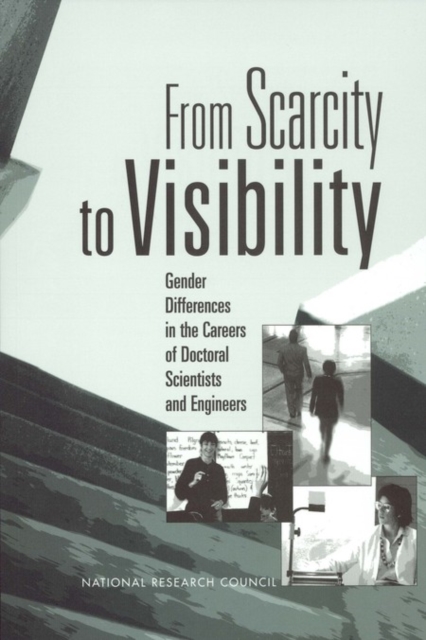
From Scarcity to Visibility
Although women have made important inroads in science and engineering since the early 1970s, their progress in these fields has stalled over the past several years. This study looks at women in science and engineering careers in the 1970s and 1980s, documenting differences in career outcomes between men and women and between women of different races and ethnic backgrounds.
The panel presents what is known about the following questions and explores their policy implications: In what sectors are female Ph.D.s employed? What salary disparities exist between men and women in these fields? How is marital status associated with career attainment? Does it help a career to have a postdoctoral appointment? How well are female scientists and engineers represented in management?
Within the broader context of education and the labor market, the book provides detailed comparisons between men and women Ph.D.s in a number of measures: financial support for education, academic rank achieved, salary, and others. The study covers engineering; the mathematical, physical, life, and social and behavioral sciences; medical school faculty; and recipients of National Institutes of Health grants.
Findings and recommendations in this volume will be of interest to practitioners, faculty, and students in science and engineering as well as education administrators, employers, and researchers in these fields.
eBook

The Public Work of Rhetoric
The Public Work of Rhetoric presents the art of rhetorical techné as a contemporary praxis for civic engagement and social change, which is necessarily inclusive of people inside and outside the academy. In this provocative call to action, editors John M. Ackerman and David J. Coogan, along with seventeen other accomplished contributors, offer case studies and criticism on the rhetorical practices of citizen-scholars pursuing democratic ideals in diverse civic communities—with partnerships across a range of media, institutions, exigencies, and discourses. Challenging conventional research methodologies and the traditional insularity of higher education, these essays argue that civic engagement as a rhetorical act requires critical attention to our notoriously veiled identity in public life, to our uneasy affiliation with democracy as a public virtue, and to the transcendent powers of discourse and ideology. This can be accomplished, the contributors argue, by building on the compatible traditions of materialist rhetoric and community literacy, two vestiges of rhetoric's dual citizenship in the fields of communication and English. This approach expresses a collective desire in rhetoric for more politically responsive scholarship, more visible impact in public life, and more access to the critical spaces between universities and their communities.
eBook

Encadrer aux cycles supérieurs
L’encadrement des étudiants aux cycles supérieurs fait partie des tâches des professeurs universitaires. Le fait d’avoir soi-même réussi une maîtrise ou un doctorat ne prépare cependant pas nécessairement ces derniers à accompagner des étudiants qui entreprennent de telles études. Les directeurs de recherche ont souvent à faire face à des difficultés qui dépassent largement les expériences qu’ils ont eux-mêmes vécues ou pour lesquelles ils ont été formés. Encadrer aux cycles supérieurs: étapes, problèmes et interventions expose ces situations et les contextes qui les provoquent. L’ouvrage décrit les étapes du processus d’accompagnement – du premier contact avec l’étudiant jusqu’au dépôt du mémoire ou de la thèse –, les problèmes liés à chaque étape et les façons de les éviter, de les contourner ou de les résoudre. Des anecdotes et des cas concrets illustrent les propos de l’auteur. L’ouvrage aborde aussi les relations entre le directeur et l’étudiant, prônant des rencontres de travail les plus profitables possible. Il s’agit là d’un sujet jusqu’à maintenant peu discuté de manière explicite parce que la relation d’encadrement est souvent perçue comme étant de nature privée entre le directeur et l’étudiant – dimension qui peut aussi présenter son lot de difficultés. Cet ouvrage sera utile à tous les professeurs universitaires, mais il intéressera aussi les professionnels et les cadres universitaires qui désirent comprendre les difficultés inhérentes au processus de formation et d’encadrement aux cycles supérieurs.
eBook
Building Networks
Despite the frequent isolation of academic work, it is done in the context of complex, multi-layered global, national, regional and local teaching or research networks. Having good networks is key to achieving what you want in academia. This book describes the kinds of networks that you might build across a range of settings, talks about the pros and cons involved and gives practical guidance on networking activities.
eBook
Building Your Academic Career
Building Your Academic Career encourages you to take a proactive approach to getting what you want out of academic work whilst being a good colleague. We discuss the advantages and disadvantages of such a career, the routes in and the various elements that shape current academic working lives. In the second half of the book we deal in considerable detail with how to write a really good CV (r sum ) and how best to approach securing an academic job or promotion.
eBook

Crisis on campus : confronting academic misconduct
This volume presents an overview of the phenomenon and handling of academic misconduct. After a brief historical background, it discusses contemporary circumstances that affect the nature and frequency of academic misconduct. It then details the phases of misconduct discovery and investigation: detection, analysis, assessment, reporting, and institutional handling. The final chapter deals with prevention. The book focuses on concrete cases, showing the complexities and ambiguities in dealing with presumed academic misconduct. The book also provides practical advice to both whistle-blowers and those accused of academic misconduct.
eBook