
Catalogue Search | MBRL


Are you sure you want to remove the book from the shelf?

{{itemTitle}}
132,874
result(s) for
"Achievement test"
Sort by:

The Potential for School-Based Interventions That Target Executive Function to Improve Academic Achievement: A Review
This article systematically reviews what is known empirically about the association between executive function and student achievement in both reading and math and critically assesses the evidence for a causal association between the two. Using meta-analytic techniques, the review finds that there is a moderate unconditional association between executive function and achievement that does not differ by executive function construct, age, or measurement type but finds no compelling evidence that a causal association between the two exists.
Journal Article

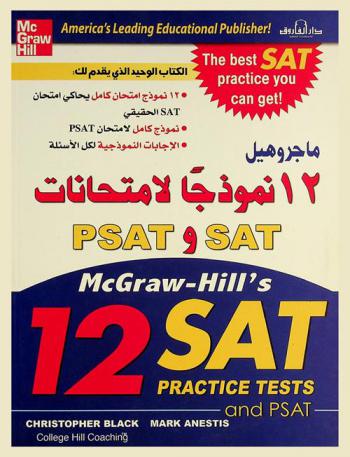
SAT premium study guide 2023
\"ALL NEW Barron's SAT Premium Study Guide includes everything you need to be prepared for exam day with comprehensive review and practice that reflects the most recent SAT! This edition also incudes the most up-to-date information on the new digital exam\"-- Amazon.com.

Taking Stock of 40 Years of Research on Mathematical Learning Disability: Methodological Issues and Future Directions
Although approximately 5–8% of students have a mathematical learning disability (MLD), researchers have yet to develop a consensus operational definition. To examine how MLD has been identified and what mathematics topics have been explored, the authors conducted a systematic review of 165 studies on MLD published between 1974 and 2013. To move the field toward a more precise and shared definition of MLD, the authors argue for standards for methodology and reporting, and they identify a need for research addressing more complex mathematics.
Journal Article

The Relationship Between Sources of Mathematics Self-Efficacy and Mathematics Test and Course Achievement in High School Seniors
In school settings, sources of self-efficacy have the potential to directly and indirectly influence performance. The problem of this study is the direct relationship between sources of self-efficacy and achievement. In connection with this problem, the impact of sources of mathematics self-efficacy on high school senior students’ mathematics test and course achievement was investigated. The study consisted of 257 12th-grade high school students. The findings of the study showed that mathematics course and test performance increased, whereas the scores for mastery experience, social persuasions, vicarious experience, and physiological state increased, too. According to the results of the regression analysis on mathematics course achievement, the mastery experience significantly predicted mathematics course performance. It also explained 56% of the total variance in mathematics achievement. On the contrary, mastery experience, social persuasions, and physiological state significantly predicted mathematics test achievement, as well as explained 27% of the total variance in mathematics test achievement. In conclusion, sources of mathematics self-efficacy have effects on both mathematics test and course achievement.
Journal Article

What's Past Is Prologue: Relations Between Early Mathematics Knowledge and High School Achievement
Although previous research has established the association between early-grade mathematics knowledge and later mathematics achievement, few studies have measured mathematical skills prior to school entry, and few have investigated the predictive power of early gains in mathematics ability. The current paper relates mathematical skills measured at 54 months to adolescent mathematics achievement using multisite longitudinal data. We find that preschool mathematics ability predicts mathematics achievement through age 15, even after accounting for early reading, cognitive skills, and family and child characteristics. Moreover, we find that growth in mathematical ability between age 54 months and first grade is an even stronger predictor of adolescent mathematics achievement. These results demonstrate the importance of prekindergarten mathematics knowledge and early math learning for later achievement.
Journal Article

Different Tests, Different Answers: The Stability of Teacher Value-Added Estimates Across Outcome Measures
Recently, educational researchers and practitioners have turned to value-added models to evaluate teacher performance. Although value-added estimates depend on the assessment used to measure student achievement, the importance of outcome selection has received scant attention in the literature. Using data from a large, urban school district, I examine whether value-added estimates from three separate reading achievement tests provide similar answers about teacher performance. I find moderate-sized rank correlations, ranging from 0.15 to 0.58, between the estimates derived from different tests. Although the tests vary to some degree in content, scaling, and sample of students, these factors do not explain the differences in teacher effects. Instead, test timing and measurement error contribute substantially to the instability of value-added estimates across tests.
Journal Article

Academic Achievement of Deaf and Hard-of-Hearing Students in an ASL/English Bilingual Program
There has been a scarcity of studies exploring the influence of students' American Sign Language (ASL) proficiency on their academic achievement in ASL/English bilingual programs. The aim of this study was to determine the effects of ASL proficiency on reading comprehension skills and academic achievement of 85 deaf or hard-of-hearing signing students. Two subgroups, differing in ASL proficiency, were compared on the Northwest Evaluation Association Measures of Academic Progress and the reading comprehension subtest of the Stanford Achievement Test, 10th edition. Findings suggested that students highly proficient in ASL outperformed their less proficient peers in nationally standardized measures of reading comprehension, English language use, and mathematics. Moreover, a regression model consisting of 5 predictors including variables regarding education, hearing devices, and secondary disabilities as well as ASL proficiency and home language showed that ASL proficiency was the single variable significantly predicting results on all outcome measures. This study calls for a paradigm shift in thinking about deaf education by focusing on characteristics shared among successful deaf signing readers, specifically ASL fluency.
Journal Article
The Test Matters: The Relationship Between Classroom Observation Scores and Teacher Value Added on Multiple Types of Assessment
In this study, we examined how the relationships between one observation protocol, the Protocol for Language Arts Teaching Observation (PLATO), and value-added measures shift when different tests are used to assess student achievement. Using data from the Measures of Effective Teaching Project, we found that PLATO was more strongly related to the Stanford Achievement Test (SAT-9), the alternative assessment used by MET to assess more ambitious outcomes. We also found that the SAT-9 is more instructionally sensitive to the PLATO factor of Cognitive and Disciplinary Demand than the state tests used in MET study. This difference suggests that PLATO factors designed specifically to identify ambitious instructional practices are especially sensitive to which test is used to construct value-added scores.
Journal Article

Applying Objective Diagnostic Criteria to Students in a College Support Program for Learning Disabilities
This study examined whether a large group of postsecondary students participating in a support program for students classified as having learning disabilities (LD) met criteria for five objective diagnostic models for LD: IQ-achievement discrepancy (1.0 SD, 1.5 SD, and >2.0 SD) models, a Diagnostic and Statistical Manual of Mental Disorders (DSM-IV) model, and an academic impairment model. The participants were 336 postsecondary students enrolled in a private liberal arts college who had been previously classified as having LD prior to entering the program. Results showed that the largest proportion of students met the 1.0 SD (48.8%) and the absolute academic impairment (40.2%) criteria. However, 40.5% of the participants were not classified as having LD by any of the five models. Participants exhibited remarkable variability in their aptitude and achievement scores, with mean composite achievement scores ranging from the very low to the average ranges in reading, mathematics, and writing, depending on the achievement test used. The findings of this study and others suggest that little information about a student's academic skills is likely to be conveyed by a diagnosis of LD, leading to great heterogeneity in skill levels within LD support programs.
Journal Article