
Catalogue Search | MBRL


Are you sure you want to remove the book from the shelf?

{{itemTitle}}
35
result(s) for
"Actrices Biographies."
Sort by:

The world of Nancy Kwan : a memoir by Hollywood's Asian superstar
\"When Nancy Kwan burst onto the scene in the early 1960s, Asian characters in film were portrayed by white actors in makeup playing yellowface, and those minor roles were the stuff of cliché: shopkeepers, maids, prostitutes, servants. When#x14;against all odds#x14;Nancy landedthe lead role in the much-anticipated 1960 film The World of Suzie Wong, she became an international superstar and was celebrated for her beauty, grace, authenticity, and spunk: a Chinese Garbo, the Asian Bardot. From Hong Kong to London, Hollywood and beyond, The World of Nancy Kwan charts Nancy#x19;s journey. The obstacles she faced, the prejudices she overcame, and how her success created paths for others.\"-- Provided by publisher.
BOOK

Daughters of Eve : a cultural history of French theater women from the Old Regime to the fin de siècle
This pathbreaking study delineates the distinctive place of actresses, dancers, and singers within the French erotic and political imaginations. Berlanstein argues that the public image of actresses was shaped by the political climate and ruling ideology; thus they were deified in one era and damned in the next.
eBook

Finding me
This is Viola Davis' story, in her own words, and spans her incredible, inspiring life, from her coming-of-age in Rhode Island to her present day. Hers is a story of overcoming, a true hero's journey.
Book

The silent cinema in song, 1896-1929 : an illustrated history and catalog of songs inspired by the movies and stars, with a list of recordings
Musical accompaniment was an important feature of the early moviegoing experience.The quality of a musical score could easily make or break silent films, and the songs sometimes became more popular than the films.
eBook

Wanted Cultured Ladies Only
Wanted Cultured Ladies Only! maps out the early culture of cinema stardom in India from its emergence in the silent era to the decade after Indian independence in the mid-twentieth century. Neepa Majumdar combines readings of specific films and stars with an analysis of the historical and cultural configurations that gave rise to distinctly Indian notions of celebrity._x000B__x000B_In tracking Hollywood's influence on India's conventions of stardom, Majumdar argues that discussions of early cinematic stardom in India must be placed in the context of the general legitimizing discourse of colonial \"improvement\" that marked other civic and cultural spheres as well, and that \"vernacular modernist\" anxieties over the New Woman had limited resonance here. Rather, it was through emphatically nationalist discourses that Indian cinema found its model for modern female identities._x000B__x000B_Beginning with a history of the idea of stardom in India, Majumdar considers questions of spectatorship, gossip, and popularity as they pertain to two popular stars, Sulochana and Fearless Nadia, who occupied the highbrow and lowbrow ends of the spectrum of stardom in the 1930s and evoked very different fan responses. With the breakdown of the studio system in the mid-1940s, new configurations of stardom arose from the establishment of a star-based production system. To examine this \"stardom racket,\" Majumdar analyzes the impact of star monopoly on textual and performance conventions through the half-century-long vocal dominance of playback singer Lata Mangeshkar as well as the 1950s actress Nargis.
eBook

Rival Queens
In eighteenth-century England, actresses were frequently dismissed as mere prostitutes trading on their sexual power rather than their talents. Yet they were, Felicity Nussbaum argues, central to the success of a newly commercial theater. Urban, recently moneyed, and thoroughly engaged with their audiences, celebrated actresses were among the first women to achieve social mobility, cultural authority, and financial independence. In fact, Nussbaum contends, the eighteenth century might well be called the \"age of the actress\" in the British theater, given women's influence on the dramatic repertory and, through it, on the definition of femininity. Treating individual star actresses who helped spark a cult of celebrity-especially Anne Oldfield, Susannah Cibber, Catherine Clive, Margaret Woffington, Frances Abington, and George Anne Bellamy-Rival Queensreveals the way these women animated issues of national identity, property, patronage, and fashion in the context of their dramatic performances. Actresses intentionally heightened their commercial appeal by catapulting the rivalries among themselves to center stage. They also boldly rivaled in importance the actor-managers who have long dominated eighteenth-century theater history and criticism. Felicity Nussbaum combines an emphasis on the celebrated actresses themselves with close analysis of their diverse roles in works by major playwrights, including George Farquhar, Nicholas Rowe, Colley Cibber, Arthur Murphy, David Garrick, Isaac Bickerstaff, and Richard Sheridan. Hers is a comprehensive and original argument about the importance of actresses as the first modern subjects, actively shaping their public identities to make themselves into celebrated properties.
eBook

An Encyclopedic Dictionary of Women in Early American Films 1895-1930
Examine women's contributions to filmin front of the camera and behind it!
An Encyclopedic Dictionary of Women in Early American Films: 1895-1930 is an A-to-Z reference guide (illustrated with over 150 hard-to-find photographs!) that dispels the myth that men dominated the film industry during its formative years. Denise Lowe, author of Women and American Television: An Encyclopedia, presents a rich collection that profiles many of the women who were crucial to the development of cinema as an industryand as an art form. Whether working behind the scenes as producers or publicists, behind the cameras as writers, directors, or editors, or in front of the lens as flappers, vamps, or serial queens, hundreds of women made profound and lasting contributions to the evolution of the motion picture production.
An Encyclopedic Dictionary of Women in Early American Films: 1895-1930 gives you immediate access to the histories of many of the women who pioneered the early days of cinemaon screen and off. The book chronicles the well-known figures of the era, such as Alice Guy, Mary Pickford, and Francis Marion but gives equal billing to those who worked in anonymity as the industry moved from the silent era into the age of sound. Their individual stories of professional success and failure, artistic struggle and strife, and personal triumph and tragedy fill in the plot points missing from the complete saga of Hollywood's beginnings.
Pioneers of the motion picture business found in An Encyclopedic Dictionary of Women in Early American Films include:
Dorothy Arnzer, the first woman to join the Directors Guild of America and the only female director to make a successful transition from silent films to sound
Jane Murfin, playwright and screenwriter who became supervisor of motion pictures at RKO Studios
Gene Gauntier, the actress and scenarist whose adaptation of Ben Hur for the Kalem Film Company led to a la
eBook

Carrying All Before Her
The rise of celebrity stage actresses in the long eighteenth century created a class of women who worked in the public sphere while facing considerable scrutiny about their offstage lives. Such powerful celebrity women used the cultural and affective significance of their reproductive bodies to leverage audience support and interest to advance their careers, and eighteenth-century London patent theatres even capitalized on their pregnancies. Carrying All Before Her uses the reproductive histories of six celebrity women (Susanna Mountfort Verbruggen, Anne Oldfield, Susannah Cibber, George Anne Bellamy, Sarah Siddons, and Dorothy Jordan) to demonstrate that pregnancy affected celebrity identity, impacted audience reception and interpretation of performance, changed company repertory and altered company hierarchy, influenced the development and performance of new plays, and had substantial economic consequences for both women and the companies for which they worked. Deepening the fields of celebrity, theatre, and women's studies, as well as social and medical histories, Phillips reveals an untapped history whose relevance and impact persist today.
eBook

Strange Duets
Autocratic male impresarios increasingly dominated the American stage between 1865 and 1914. Many rose from poor immigrant roots and built their own careers by making huge stars out of “undiscovered,\" Anglo-identified actresses. Reflecting the antics of self-made industrial empire-builders and independent, challenging New Women, these theatrical potentates and their protégées gained a level of wealth and celebrity comparable to that of Hollywood stars today. In her engaging and provocative Strange Duets, Kim Marra spotlights three passionate impresario-actress relationships of exceptional duration that encapsulated the social tensions of the day and strongly influenced the theatre of the twentieth century. Augustin Daly and Ada Rehan, Charles Frohman and Maude Adams, and David Belasco and Mrs. Leslie Carter reigned over “legitimate\" Broadway theatre, the venue of greatest social cachet for the monied classes. Unlike impresarios and actresses in vaudeville and burlesque, they produced full-length spoken drama that involved special rigors of training and rehearsal to sustain a character’s emotional “truth\" as well as a high level of physical athleticism and endurance. Their efforts compelled fascination at a time when most people believed women’s emotions were seated primarily in the reproductive organs and thus were fundamentally embodied and sexual in nature. While the impresario ostensibly exercised full control over his leading lady, showing fashionable audiences that the exciting but unruly New Woman could be both tamed and enjoyed, she acquired a power of her own that could bring him to his knees.Kim Marra combines methods of cultural, gender, and sexuality studies with theatre history to explore the vexed mutual dependency between these status-seeking Svengalis and their alternately willing and resistant leading ladies. She illuminates how their on- and off-stage performances, highly charged in this Darwinian era with “racial\" as well as gender, sexual, and class dynamics, tapped into the contradictory fantasies and aspirations of their audiences. Played out against a backdrop of enormous cultural and institutional transformation, the volatile romance of Daly and Rehan, closeted homosexuality of Frohman and Adams, and carnal expiations of Belasco and Carter produced strange duets indeed.
eBook
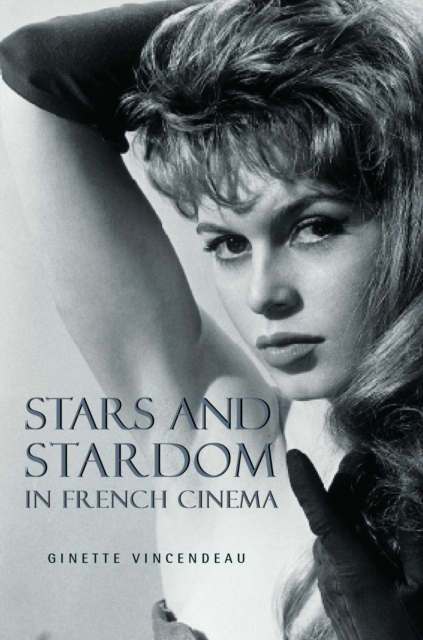
Stars and stardom in French cinema
French cinema is second only to Hollywood in the number of its movie stars who have emerged to achieve international fame.France is, in fact, arguably the only country other than the United States to have an international \"star system.\" Yet these glamorous and charismatic stars differ from their U.S.
eBook