
Catalogue Search | MBRL


Are you sure you want to remove the book from the shelf?

{{itemTitle}}
1,825
result(s) for
"Acupuncture points."
Sort by:

Acupoint tapping : a natural way for prevention and treatment through traditional Chinese medicine
Tap into your meridian and collateral channels for a happier and healthier life. According to Traditional Chinese Medicine, meridians and collateral's are channels that connect internal organs with limbs and drive vital energy and blood throughout the human body. By learning to tap relevant parts of the body, you will be able to clear your meridians and collateral's, invigorate your body and enhance your overall health and spirit. In \"Acupoint Tapping,\" physician Haung Guangmin explains the simple and professional practicing methods that will allow you to incorporate this aspect of TCM into your daily life. With help from Huang, it will only take around half an hour a day to practice and benefit from meridian and collateral exercises. In addition, this book offers techniques against 10 sub-health conditions, such as obesity and depression and 19 chronic diseases, including high blood pressure and the common cold. These tapping exercises can strengthen physique, prevent diseases, reduce illness, and facilitate recovery. Become the guardian of your own health with \"Acupoint Tapping: A Natural Way for Prevention and Treatment through Traditional Chinese Medicine.
Book
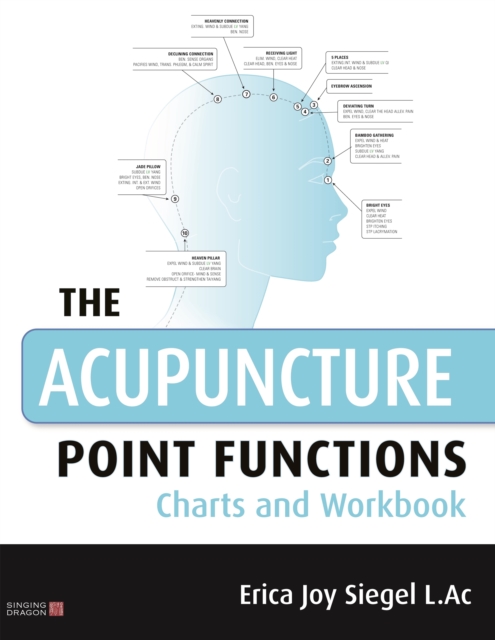
The Acupuncture Point Functions Charts and Workbook
A straightforward learning resource, covering the different acupuncture points in the body and their functions. Perfect for visuals learners, it shows the primary meridians, extraordinary meridians and known extra points, in an easy to understand format with blank charts for students to make their own notes.
eBook

The complete guide of self-massage : a natural way for prevention and treatment through traditional Chinese medicine
Chinese acupressure is an ancient therapy using kneading, rubbing, pressing, and stroking to stimulate different acupoints on the body. It is a great way to relieve pain, soothe the nerves, improve skin condition and even prevent disease!
Book

Effects of acupuncture and moxibustion on heart rate variability in chronic fatigue syndrome patients: Regulating the autonomic nervous system in a clinical randomized controlled trial
This study investigates the effects of various acupuncture techniques, specific acupuncture points, and their combinations on symptom improvement in chronic fatigue syndrome (CFS) patients as well as their influence on heart rate variability (HRV) indicators.
We recruited 35 healthy subjects as a healthy control group (Group A) and 175 patients with CFS, who were randomly divided into a fake acupuncture group (Group B), an acupuncture group targeting the Zusanli (ST36) point (Group C), an acupuncture group targeting the Guanyuan (CV4) point (Group D), a dual-acupoint acupuncture group (Group E), and a moxibustion group (Group F), with 35 patients in each group. Group B received fake acupuncture at both the bilateral Zusanli and Guanyuan points simultaneously. Group C received acupuncture at the bilateral Zusanli points along with fake acupuncture at the Guanyuan point. Group D received acupuncture at the Guanyuan point along with fake acupuncture at the bilateral Zusanli points. Group E received acupuncture at both the bilateral Zusanli and Guanyuan points simultaneously, and Group F received moxibustion at both the bilateral Zusanli and Guanyuan points simultaneously. Each group received a total of 10 treatments, administered every other day. Before treatment, the Qi-deficiency Syndrome Score, CFS Score, and SF36 Score were assessed for all subjects. HRV was measured before treatment, after the first treatment, after the fourth treatment, and at the end of treatment.
The results showed that both acupuncture and moxibustion can effectively alleviate fatigue symptoms in patients suffering from CFS, with combined acupuncture and moxibustion demonstrating greater effectiveness.
Acupuncture excelled in regulating the immediate effects of HRV, while moxibustion excelled in regulating long-term effects. Acupuncture targeting both the Zusanli and Guanyuan points proved more effective than acupuncture targeting a single point, with this difference reflected in the distinct regulatory effects on the sympathetic and parasympathetic nervous systems. The intervention mechanism of Zusanli may involve the parasympathetic nervous system, whereas Guanyuan may operate through the sympathetic nervous system.
Approved by the Medical Ethics Committee of Hubei Provincial Hospital of Traditional Chinese Medicine (Approval number: HBZY2016-C24-01), and registered with the North American Clinical Trials Data Center (Clinical Trials.gov) (05/10/2016) (registration number: NCT02924831).
•Acupuncture has significant therapeutic effect on CFS.•Different acupuncture techniques have varying effects on CFS.•The different effects may be influenced by activation of different autonomic nerve circuits (sympathetic or parasympathetic nerves).•Acupuncture has good immediate effect, while moxibustion has better long-term effect.
Journal Article


Efficacy of compatible acupoints and single acupoint versus sham acupuncture for functional dyspepsia: study protocol for a randomized controlled trial
Background
Acupoint selection is a key factor in the treatment of diseases and has not been well studied. The aim of this trial is to explore the differences in efficacy between compatible acupoints and a single acupoint for patients with functional dyspepsia (FD).
Methods
This randomized controlled trial will be conducted in the First Affiliated Hospital of Changchun University of Chinese Medicine in China. Two hundred and sixteen FD patients will be randomly assigned to the compatible acupoints group, single acupoint group, or sham acupuncture group. This trial will include a 1-week baseline period, a 4-week treatment period, and a 4-week follow-up period. During the 4-week treatment period, patients will receive 20 sessions of acupuncture (weekly cycles of one session per day for 5 consecutive days followed by a 2-day break). The primary outcome will be a change in the Nepean Dyspepsia Life Quality Index from baseline to after the 4-week treatment period. Secondary outcome measures will include the dyspeptic symptom sum score, Overall Treatment Effect questionnaire, and 36-item Short Form survey. Adverse events also will be recorded. Ultraweak photon emission and metabolomics tests will be performed at baseline and at the end of treatment to explore the mechanisms of the differences between compatible acupoints and a single acupoint.
Discussion
The results of this trial will allow us to compare the difference in efficacy between compatible acupoints and a single acupoint. The findings from this trial will be published in peer-reviewed journals.
Trial registration
Acupuncture-Moxibustion Clinical Trial Registry,
AMCTR-IPC-18000176
, registered on 4 March 2019; Chinese Clinical Trial Registry,
ChiCTR1900023983
, registered on 23 June 2019.
Journal Article

The book of tapping : emotional acupressure with EFT
\"A step-by-step guide to the simple acupressure self-care technique of tapping for acute and chronic emotional, psychological, and physical ailments - Effective for emotional conditions such as panic attacks, anxiety, depression, PTSD, grief, anger, jealousy, and phobias, such as stage fright or fear of flying, providing immediate results in many cases - Shows how this method can treat chronic pain, nausea, and headaches; alleviate insomnia and nightmares; encourage the release of painful memories; boost self-confidence; support weight loss; and improve concentration [bullet] Offers the full tapping protocol as well as a shortened version for acute situations [bullet] Illustrates easily accessible points to tap and in what order Tapping, or Emotional Freedom Technique (EFT), is a simple form of acupressure that treats the energetic roots of emotional and physical suffering. By tapping on specific meridian points you can quickly and easily dissolve blockages in the body's energy system, caused by past traumas and suppressed emotions such as grief and anger, and restore the natural flow of energy in your body, the key to optimal health and overall well-being. In this step-by-step guide to EFT, Sophie Merle details the practice of tapping, illustrating the easily accessible points on the face, hands, and torso to tap and in what order. Explaining how to open your energetic system to EFT treatment for fast and long-lasting results, she reveals how the energy psychology practice of tapping can be applied to any area of your life but is particularly effective for emotional and psychological conditions, including panic attacks, anxiety, depression, PTSD, grief, anger, jealousy, and phobias, such as stage fright or fear of flying, providing immediate results in many cases. She also shows how this method can treat chronic pain, nausea, and headaches; alleviate insomnia and nightmares; assist physical healing from illness; encourage the release of painful memories; boost self-confidence; support weight loss; and improve concentration. The author explains how tapping can be done anywhere, offering both the full tapping protocol, which only takes a few minutes, and a short-form version, which takes less than a minute, for acute issues. Including remarkable success stories of EFT in practice, this comprehensive guide to tapping shows how the solution to many of life's problems is at your fingertips\"-- Provided by publisher.
Book

Stimulation of microneedles alleviates pathology of Parkinson’s disease in mice by regulating the CD4+/CD8+ cells from the periphery to the brain
Immune dysfunction is a major cause of neuroinflammation and accelerates the progression of Parkinson's disease (PD). Numerous studies have shown that stimulation of specific acupuncture points (acupoints) can ameliorate PD symptoms. The purpose of this study was to investigate whether attaching microneedles to acupoints would improve PD pathology by recovering immune dysfunction.
The PD mouse model was induced by intrastriatal injection of 6-hydroxydopamine (6-OHDA), and microneedle patches (MPs) or sham patches (SPs) were attached to GB20 and GB34, representative acupoints for treating PD for 14 days.
First, the behavioral experiment showed that motor disorders induced by 6-OHDA were significantly improved by MP. Simultaneously, 6-OHDA-induced dopaminergic neuronal death and brain neuroinflammation decreased. Conversely, SP had no effect on behavioral disorders, neuronal death, or neuroinflammation. Measurement results from flow cytometry of immune cells in the brain and blood revealed a disruption in the CD4+/CD8+ ratio in the 6-OHDA group, which was significantly restored in the MP group. The brain mRNA expression of cytokines was significantly increased in the 6-OHDA group, which was significantly decreased by MP.
Overall, our results suggest that the attachment of MPs to GB20 and GB34 is a new method to effectively improve the pathology of PD by restoring peripheral and brain immune function.
Journal Article

Transcutaneous electric nerve stimulation of acupuncture points improves tolerance in adults undergoing diagnostic upper gastrointestinal endoscopy: a single-center, double-blinded, randomized controlled trial
BackgroundOesophagogastroduodenoscopy (OGDS) is the most common diagnostic procedure for upper gastrointestinal diseases. It often causes discomfort and anxiety, which are only mitigated by systemic sedation. However, sedation poses additional risks of adverse cardiopulmonary events, increased medical costs, and prolonged recovery. Transcutaneous electrical nerve stimulation of acupuncture points (Acu-TENS) is a non-invasive and innovative approach that induces analgesic effect during endoscopy. This trial is the first to be reported in English that explores the potential of Acu-TENS to increase patient tolerance during non-sedated elective diagnostic OGDS.MethodsA double-blinded randomized controlled trial involving 348 subjects was conducted at a tertiary hospital to evaluate the success rate of OGDS with Acu-TENS. Subjects aged 18–75 years scheduled for their first elective diagnostic OGDS were randomized into the intervention (Acu-TENS) and placebo arms. OGDS success was assessed based on subjects’ satisfaction ratings on a Likert scale and procedure’s technical adequacy. Secondary measures included subjects’ willingness to undergo future OGDS under similar conditions, procedure duration, and the endoscopist’s perceived ease of the procedure.ResultsOGDS success rates were significantly higher with Acu-TENS (77.8%) than with the placebo (68.0%; odds ratio [OR] 1.64, 95% confidence interval [CI] 1.01–2.66, p = 0.043). Subjects who received Acu-TENS expressed higher willingness for future OGDS (78.9%) than those who received the placebo (68.6%; OR 1.71, 95% CI 1.04–2.79, p = 0.031). Procedure duration were significantly shorter in the intervention arm (6.0 min) than in the placebo arm (10.0 min; p = 0.002). No adverse effects were reported, and endoscopists perceived similar procedure ease in both arms.ConclusionsAcu-TENS improved OGDS success and enhanced patients’ experiences during non-sedated OGDS. It demonstrated safety with no side effects and reduced the procedure completion time. It could be used as an adjunct in non-sedated diagnostic OGDS.
Journal Article

Auricular acupuncture effectively reduces state anxiety before dental treatment—a randomised controlled trial
Objectives
The objective of this study was to analyse whether auricular acupuncture, acupuncture at the outer ear, could reduce state anxiety before dental treatment.
Methods
This prospective, randomised patient-blinded study with 182 patients compared anxiety before dental treatment following auricular acupuncture at the relaxation-, tranquillizer- and master cerebral points (auricular acupuncture group) versus acupuncture at sham points (finger-, shoulder- and tonsil points; sham group) and a non-intervention control group. Anxiety was assessed using the Spielberger State Trait Anxiety Inventory (German version) before auricular acupuncture and 20 min thereafter, immediately before dental treatment.
Results
Auricular acupuncture reduced state anxiety score more effectively from 54.7 ± 10.8 to 46.9 ± 10.4 (mean ± SD) than sham acupuncture from 51.9 ± 10.2 to 48.4 ± 10.0. In contrast, state anxiety in the control group increased from 51.0 ± 11.7 to 54.0 ± 11.6 (mean increase +3.0; CI +4.7 to +1.2). The decrease in state anxiety in both intervention groups was statistically significant (
p
< 0.001) when compared to the non-intervention control group. After correcting for group differences in baseline state anxiety, the reduction in anxiety was −7.3 score points (CI −9.0 to −5.6) in the auricular acupuncture group and −3.7 score points (CI −5.4 to −1.9) in the sham group (
p
= 0.008).
Conclusion
Auricular acupuncture, a minimally invasive method, effectively reduces state anxiety before dental treatment.
Clinical relevance
Auricular acupuncture could be an option for patients scheduled for dental treatment, who experience an uncomfortable degree of anxiety and request an acute intervention for their anxiety.
Journal Article