
Catalogue Search | MBRL


Are you sure you want to remove the book from the shelf?

{{itemTitle}}
42,200
result(s) for
"Adaptation Studies"
Sort by:

Adapting performance between stage and screen
An introduction to adaptations between theatre and film, considering these as distinct from literary adaptation. Places emphasis on performance and event, including the recent growth of digital theatre with phenomena such as NT Live. Case studies show how adaptations can't be divorced from the historical and cultural moment in which they are produced.
eBook
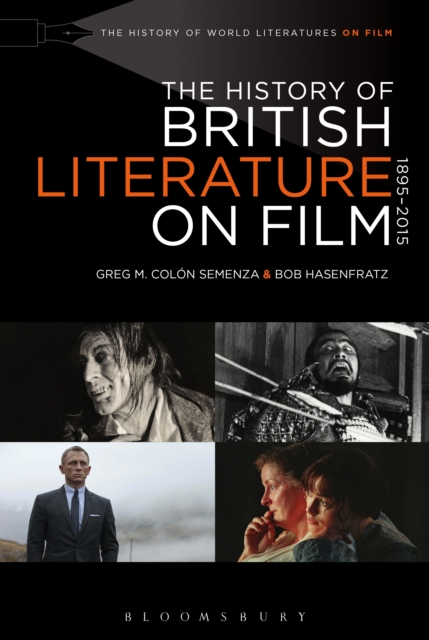
The History of British Literature on Film, 1895–2015
From The Death of Nancy Sykes (1897) to The Hobbit: The Battle of the Five Armies (2014) and beyond, cinematic adaptations of British literature participate in a complex and fascinating history. The History of BritishLiterature on Film, 1895-2015 is the only comprehensive narration of cinema's 100-year-old love affair with British literature. Unlike previous studies of literature and film, which tend to privilege particular authors such as Shakespeare and Jane Austen, or particular texts such as Frankenstein, or particular literary periods such as Medieval, this volume considers the multiple functions of filmed British literature as a cinematic subject in its own right—one reflecting the specific political and aesthetic priorities of different national and historical cinemas. In what ways has the British literary canon authorized and influenced the history and aesthetics of film, and in what ways has filmed British literature both affirmed and challenged the very idea of literary canonicity? Seeking to answer these and other key questions, this indispensable study shows how these adaptations emerged from and continue to shape the social, artistic, and commercial aspects of film history.
eBook
Screening the Novel
Some of the most memorable movies of Hollywood's Golden Age were based on novels that never received the acclaim they deserved.No-one who saw Rod Steiger in The Pawnbroker could forget the actor's wrenching performance but does anyone remember the author of the book on which the film was based?.
eBook
From Film Adaptation to Post-Celluloid Adaptation
The main corpus of film adaptation thus far has focused on films based on canonical literature. From Film Adaptation to Post-Celluloid Adaptation takes the next logical step by discussing the emerging modes of film adaptation from older media to new, mainly focusing on the computer-generated reconstructions of popular narratives and characters along with other forms of convergence such as the Internet. While ‘New Media’ is a broad concept, the book will concentrate on the ways digital technology is being used in the encoding of films and discuss the ways this shift can be debated from a theoretical perspective. Though the discussion is framed through the ‘new media’ lens, the work will not exclude a broader understanding of New Media which refers to video games, official websites and interactivity so as to examine how the visual style of contemporary films is dispersed across, and influenced by, other media. Discussing films like Minority Report, King Kong, 300 and Wanted in relation to Film Adaptation theory, the work aims to challenge and rework the definition of adaptation.
eBook
Adaptation Theory and Criticism
Traditional critics of film adaptation generally assumed a) that the written text is better than the film adaptation because the plot is more intricate and the language richer when pictorial images do not intrude; b) that films are better when particularly faithful to the original; c) that authors do not make good script writers and should not sully their imagination by writing film scripts; d) and often that American films lack the complexity of authored texts because they are sourced out of Hollywood. The ‘faithfulness’ view has by and large disappeared, and intertextuality is now a generally received notion, but the field still lacks studies with a postmodern methodology and lens.Exploring Hollywood feature films as well as small studio productions, Adaptation Theory and Criticism explores the intertextuality of a dozen films through a series of case studies introduced through discussions of postmodern methodology and practice. Providing the reader with informative background on theories of film adaptation as well as carefully articulated postmodern methodology and issues, Gordon Slethaug includes several case studies of major Hollywood productions and small studio films, some of which have been discussed before (Age of Innocence, Gangs of New York, and Do the Right Thing) and some that have received lesser consideration (Six Degrees of Separation, Smoke, Smoke Signals, Broken Flowers, and various Snow White narratives including Enchanted, Mirror Mirror, and Snow White and the Huntsman). Useful for both film and literary studies students, Adaptation Theory and Criticism cogently combines the existing scholarship and uses previous theories to engage readers to think about the current state of American literature and film.
eBook

The Silences of Skåne: Sonic Representations of Space and Place in the Wallander Novels and Films
The depiction of regional surroundings and natural conditions have often been seen as providing a sense of melancholy in Nordic noir, the distinctive form of crime fiction from the Nordic region, but also as a means to reflect the psychology of the characters and the socially critical themes of the narratives. In this regard, the Wallander novels, written by Henning Mankell (1948–2015), and also films and television series based on Mankell’s literature have often been given as prime examples. Thus far, however, sounds have not been taken into consideration in the matter. Sounds are an important factor in creating spatial experience and a sense of place in film, television, and literature. This article takes a comparative look at
films and literature to examine sounds in the representation of Skåne, the main location of
. It finds that characteristic regional sounds – especially silence, considered here a soundscape and a subjective spatial experience – play an important role in the
novels but less so in the films, which leads to notable differences regarding the representation of Skåne and the characterisation of the main protagonist, Kurt Wallander, but also affects the narrative structure of the films.
Journal Article

Resisting climate change vulnerability: feminist and decolonial insights
In climate politics, understanding and contesting the meaning of vulnerability has proved extremely difficult. On the one hand, it is an increasingly formalised term that means something very specific scientifically and methodologically within the climate change institutions. On the other hand, vulnerability is part of a colonial discursive framework of risk. In this article, I show how contestations into the scientific project have not sufficiently worked to address the colonial geographic imaginaries that underlie the discursive framework of vulnerability. I suggest that bringing together the work of critical adaptation studies (CAS) with critical feminist and decolonial scholarship, such as the counternarratives of the Pacific,offers a way to resist the victimising politics of disposability and also rethink vulnerability as a concept of resistance, relationality and reflexivity.
Journal Article

Agatha Christie and Gothic Horror
Agatha Christie's work has been adapted extensively resulting in transformations that are both textual and cultural. While many adaptations are best known for being quaint murder mysteries, there are many adaptations of her work that draw on horror aesthetics. This book will look at how the growth of Agatha Christie adaptations have grown increasingly darker. Of key relevance to this study is the work of Sarah Phelps, whose Witness for the Prosecution, And Then There Were None, Ordeal by Innocence, The ABC Murders and The Pale Horse all are darker than their precedents. Born out of their contemporary screen contexts, they use entrenched literary and filmic codes of Gothic horror as central reference points for audiences. Drawing on adaptation scholarship, where adapters are interpreters as well as creators, this study will look at how Agatha Christie is closer to Gothic horror than what we realise. * Analysis of Agatha Christie adaptations and the horror genre. * First major monograph to explore Sarah Phelps work on Agatha Christie. * Explores the transcultural adaptations of Agatha Christie.
eBook

Contemporary Adaptations of Greek Tragedy
Auteurship and Directorial Visions provides a wide-ranging analysis of the role of the director in shaping adaptations for the stage today. Through its focus on a wide range of international productions by Katie Mitchell, Theodoros Terzopoulos, Peter Sellars, Jan Fabre, Ariane Mnouchkine, Tadashi Suzuki, Yukio Ninagawa, Andrei Serban, Nikos Charalambous, Bryan Doerries and Richard Schechner, among others, it offers readers a detailed study of the ways directors have responded to the original texts, refashioning them for different audiences, contexts and purposes. As such the volume will appeal to readers of theatre and performance studies, classics and adaptation studies, directors and theatre practitioners, and anyone who has ever wondered 'why they did it like that' when watching a stage production of an ancient Greek play. The volume Contemporary Adaptations of Greek Tragedy is divided in three sections: the first section - Global Perspectives - considers the work of a range of major directors from around the world who have provided new readings of Greek Tragedy: Peter Sellars and Athol Fugard in the US, Katie Mitchell in the UK, Theodoros Terzopoulos in Greece and Tadashi Suzuki and Yukio Ninagawa in Japan. Their work on a wide range of plays is analysed, including Electra, Oedipus the King, The Persians, Iphigenia at Aulis, and Ajax. Parts Two and Three – Directing as Dialogue with the Community and Directorial Re-Visions - focus on a range of productions of key plays from the repertoire, including Prometheus Landscape II, Les Atrides, The Trojan Women, The Bacchae, Antigone and The Suppliants, among others. In each, the varying approaches of different directors are analysed, together with a detailed investigation of the mise-en-scene. In considering each stage production, the authors raise issues of authenticity, contemporary resonances, translation, directorial control/auteurship and adaptation.
eBook

From Board Games to Video Games and the World of Avatars: Jumanji: Welcome to the Jungle
In the digital age, the relationship between film and literature demonstrates how different forms of art can collaborate to improve the storytelling experience. Rather than competing, these mediums complement one another, each bringing their own strengths to the storytelling process. This mutual relationship not only enhances the audience's experience but also fosters a greater appreciation for both film and literature (Hutcheon, 2006; Sanders, 2016). The various film adaptations of Chris Van Allsburg’s picturebook Jumanji (1981) are excellent examples of how literature and film can complement and improve one another over time. The first major adaptation of Jumanji was released in 1995 starring Robin Williams and directed by Joe Johnston. Decades later, the story of Jumanji was revitalized with the releases of Jumanji: Welcome to the Jungle (2017) and Jumanji: The Next Level (2019) both directed by Jake Kasdan. These adaptations illustrate the changing nature of storytelling across mediums and how each new iteration introduces new perspectives and engages contemporary audiences in novel ways. Mikhail Bakhtin’s concepts of heteroglossia and dialogic relationship (1981) are great tools for understanding how different voices and cultural contexts interact within and between texts, thereby revealing the dynamic nature of storytelling and interpretation. Thus, this paper aims to investigate how Bakhtin's concepts of heteroglossia and dialogic relationship function in Jake Kasdan's 2017 sequel, focusing on how the film adaptation evolves in response to its contemporary context.
Journal Article