
Catalogue Search | MBRL


Are you sure you want to remove the book from the shelf?

{{itemTitle}}
180
result(s) for
"Adirondack Mountains"
Sort by:


A Wild Idea
A Wild Idea shares the
complete story of the difficult birth of the Adirondack Park Agency
(APA). The Adirondack region of New York's rural North
Country forms the nation's largest State Park, with a territory as
large as Vermont. Planning experts view the APA as a triumph of
sustainability that balances human activity with the preservation
of wild ecosystems. The truth isn't as pretty. The story of the
APA, told here for the first time, is a complex, troubled tale of
political dueling and communities pushed to the brink of
violence.
The North Country's environmental movement started among a small
group of hunters and hikers, rose on a huge wave of public concern
about pollution that crested in the early 1970s, and overcame
multiple obstacles to \"save\" the Adirondacks. Edmondson shows how
the movement's leaders persuaded a powerful Governor to recruit
planners, naturalists, and advisors and assign a task that had
never been attempted before. The team and the politicians who
supported them worked around the clock to draft two visionary
land-use plans and turn them into law. But they also made mistakes,
and their strict regulations were met with determined opposition
from local landowners who insisted that private property is
private.
A Wild Idea is based on in-depth interviews with five
dozen insiders who are central to the story. Their observations
contain many surprising and shocking revelations. This is a rich,
exciting narrative about state power and how it was imposed on
rural residents. It shows how the Adirondacks were \"saved,\" and
also why that campaign sparked a passionate rebellion.
eBook

Charlie Whistler's omnium gatherum : campfire stories and Adirondack adventures
\"Charlie Whistler's omnium gatherum is a spirited compendium of letters, poems, drawings, photographs, and ephemera gathered by generations of the fictional Whistler family during their summers in the Adirondacks. This unique scrapbook is a treasure trove of wisdom and practical knowledge. It is a celebration of family, adventure, and the great outdoors, and an inspiring gift for all ages\"--Page [4] of cover.
Book

A Not Too Greatly Changed Eden
In August 1858, William James Stillman, a painter and founding editor of the acclaimed but short-lived art journalThe Crayon, organized a camping expedition for some of America's preeminent intellectuals to Follensby Pond in the Adirondacks. Dubbed the \"Philosophers' Camp,\" the trip included the Swiss American scientist and Harvard College professor Jean Louis Rodolphe Agassiz, the Republican lawyer and future U.S. attorney general Ebenezer Rockwood Hoar, the Cambridge poet James Russell Lowell, and the transcendental philosopher Ralph Waldo Emerson, who would later pen a poem about the experience. News that these cultured men were living like \"Sacs and Sioux\" in the wilderness appeared in newspapers across the nation and helped fuel a widespread interest in exploring the Adirondacks.
In this book, James Schlett recounts the story of the Philosophers' Camp, from the lives and careers of-and friendships and frictions among-the participants to the extensive preparations for the expedition and the several-day encampment to its lasting legacy. Schlett's account is a sweeping tale that provides vistas of the dramatically changing landscapes of the United States in the second half of the nineteenth century. As he relates, the scholars later formed an Adirondack Club that set out to establish a permanent encampment at nearby Ampersand Pond. Their plans, however, were dashed amid the outbreak of the Civil War and the advancement of civilization into a wilderness that Stillman described as \"a not too greatly changed Eden.\"
But the Adirondacks were indeed changing. When Stillman returned to the site of the Philosophers' Camp in 1884, he found the woods around Follensby had been disfigured by tourists. Development, industrialization, and commercialization had transformed the Adirondack wilderness as they would nearly every other aspect of the American landscape. Such devastation would later inspire conservationists to establish Adirondack Park in 1892. At the close of the book, Schlett looks at the preservation of Follensby Pond, now protected by the Nature Conservancy, and the camp site's potential integration into the Adirondack Forest Preserve.
In August 1858, William James Stillman, a painter and founding editor of the acclaimed but short-lived art journal The Crayon, organized a camping expedition for some of America's preeminent intellectuals to Follensby Pond in the Adirondacks. Dubbed the \"Philosophers' Camp,\" the trip included the Swiss American scientist and Harvard College professor Jean Louis Rodolphe Agassiz, the Republican lawyer and future U.S. attorney general Ebenezer Rockwood Hoar, the Cambridge poet James Russell Lowell, and the transcendental philosopher Ralph Waldo Emerson, who would later pen a poem about the experience. News that these cultured men were living like \"Sacs and Sioux\" in the wilderness appeared in newspapers across the nation and helped fuel a widespread interest in exploring the Adirondacks.In this book, James Schlett recounts the story of the Philosophers' Camp, from the lives and careers of-and friendships and frictions among-the participants to the extensive preparations for the expedition and the several-day encampment to its lasting legacy. Schlett's account is a sweeping tale that provides vistas of the dramatically changing landscapes of the United States in the second half of the nineteenth century. As he relates, the scholars later formed an Adirondack Club that set out to establish a permanent encampment at nearby Ampersand Pond. Their plans, however, were dashed amid the outbreak of the Civil War and the advancement of civilization into a wilderness that Stillman described as \"a not too greatly changed Eden.\" But the Adirondacks were indeed changing.When Stillman returned to the site of the Philosophers' Camp in 1884, he found the woods around Follensby had been disfigured by tourists. Development, industrialization, and commercialization had transformed the Adirondack wilderness as they would nearly every other aspect of the American landscape. Such devastation would later inspire conservationists to establish Adirondack Park in 1892. At the close of the book, Schlett looks at the preservation of Follensby Pond, now protected by the Nature Conservancy, and the camp site's potential integration into the Adirondack Forest Preserve.
eBook

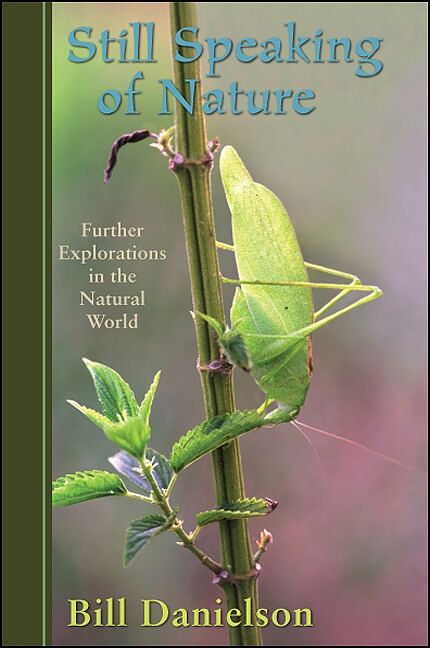
Still Speaking of Nature
Through his popular newspaper column, \"Speaking of Nature,\" and his 2001 book of the same title, professional naturalist Bill Danielson has introduced thousands of readers to the wonders and mystery of the natural world in New England and upstate New York. In Still Speaking of Nature, Danielson continues his observations of the nature, following the rhythm of the seasons in twenty-eight short essays that explore a diverse range of topics, from trilliums and katydids to meadow voles and moose. Taken together, they offer an engaging and accessible introduction to a fascinating world of nature that is often no farther away than our own backyards or neighborhood parks. \"You cannot care for something you don't know about,\" Danielson writes, and whether you're a layperson or an experienced naturalist, his entertaining combination of science and humor will inspire you to explore the natural world and your place in it.
eBook

Rural indigenousness : a history of Iroquoian and Algonquian peoples of the Adirondacks
\"This social history of Algonquian and Iroquoian peoples in the Adirondacks explores Indigenous and settler society contact in an Indigenous homeland where many exchanges occurred. While focusing on the long nineteenth century, the narrative extends before and after, providing a study of continuity and change in this space\"--Provided by publisher.
Book

The extraordinary Adirondack journey of Clarence Petty : wilderness guide, pilot, and conservationist
Author and naturalist Christopher Angus profiles for the first time the adventurous life of Clarence Petty, one of the great pioneer conservationists of the Adirondack Mountain region of New York State.
eBook

Carthage
When a young girl disappears near a community in the Adirondacks, the people of the town of Carthage must face the fact that an Iraq War veteran is the prime suspect.
Book

Constraining the timing and character of crustal melting in the Adirondack Mountains using multi-scale compositional mapping and in-situ monazite geochronology
Migmatites are common in the hinterland of orogenic belts. The timing and mechanism (in situ vs. external, P-T conditions, reactions, etc.) of melting are important for understanding crustal rheology, tectonic history, and orogenic processes. The Adirondack Highlands has been used as an analog for mid/deep crustal continental collisional tectonism. Migmatites are abundant, and previous workers have interpreted melting during several different events, but questions remain about the timing, tectonic setting, and even the number of melting events. We use multiscale compositional mapping combined with in situ geochronology and geochemistry of monazite to constrain the nature, timing, and character of melting reaction(s) in one locality from the eastern Adirondack Highlands. Three gray migmatitic gneisses, studied here, come from close proximity and are very similar in microscopic and macroscopic (outcrop) appearance. Each of the rocks is interpreted to have undergone biotite dehydration melting (i.e., Bt+Pl+Als+Qz=Grt+Kfs+melt). Full-section compositional maps show the location of reactants and products of the melting reaction, especially prograde and retrograde biotite, peritectic K-feldspar, and leucosome, in addition to all monazite and zircon in context. In addition, the maps provide constraints on kinematics during melting and a context for interpretation of accessory phase composition and geochronology. More so than zircon, monazite serves as a monitor of melting and melt loss. The growth of garnet during melting leaves monazite depleted in Y and HREEs while melt loss from the system leaves monazite depleted in U. Results show that in all three localities, partial melting occurred during at ca. 1160-1150 Ma (Shawinigan orogeny), but the samples show high variability in the location and degree of removal of the melt phase, from near complete to segregated into layers to dispersed. All three localities experienced a second high-T event at ca. 1050 Ma, but only the third (non-segregated) sample experienced further melting. Thus, in addition to bulk composition, the fertility for melting is an important function of the previous history and the degree of mobility of earlier melt and fluids. Monazite is also a sensitive monitor of retrogression; garnet breakdown leads to increased Y and HREE in monazite. Results here suggest that all three samples remained at depth between the two melting events but were rapidly exhumed after the second event.
Journal Article