
Catalogue Search | MBRL


Are you sure you want to remove the book from the shelf?

{{itemTitle}}
328
result(s) for
"Adivasis."
Sort by:


The Politics of Belonging in India
Since the 1990s, the Indigenous movement worldwide has become increasingly relevant to research in India, re-shaping the terms of engagement with Adivasi (Indigenous/tribal) peoples and their pasts. This book responds to the growing need for an inter-disciplinary re-assessment of Tribal studies in postcolonial India and defines a new agenda for Adivasi studies. It considers the existing conceptual and historical parameters of Tribal studies, as a means of addressing new approaches to histories of de-colonization and patterns of identity-formation that have become visible since national independence.
Contributors address a number of important concerns, including the meaning of Indigenous studies in the context of globalised academic and political imaginaries, and the possibilities and pitfalls of constructions of indigeneity as both a foundational and a relational concept. A series of short editorial essays provide theoretical clarity to issues of representation, resistance, agency, recognition and marginality. The book is an essential read for students and scholars of Indian Sociology, Anthropology, History, Cultural Studies and Indigenous studies.
eBook

Adivasis and the state : subalternity and citizenship in India's Bhil heartland
\"In Adivasis and the State, Alf Gunvald Nilsen presents a major study of how subalternity is both constituted and contested through state-society relations in the Bhil heartland of western India. The book unravels the historical processes that subordinated Bhil Adivasi communities to the everyday tyranny of the state and investigates how social movements have mobilised to reclaim citizenship. In doing so, the book also reveals how collective action from below transform the meanings of governmental categories, legal frameworks, and universalising vocabularies of democracy. At the core of the book lies a concern with understanding the dialectics of power and resistance that give form and direction to the political economy of democracy and development in contemporary India. Towards this end, Adivasis and the State contributes a sustained and nuanced Gramscian analysis of hegemony in order to interrogate the possibilities and limits of subaltern political engagement with state structures\"-- Provided by publisher.
Book

And red flows the Koina river: Adivasi resistance to the ‘loot’ of their land and resources in eastern India, 1980–2020
This article documents Adivasi resistance to the ‘loot’ of their land and resources since 1980, especially during the Kalinganagar movement in Odisha, roughly between 2004 and 2010, and the Pathalgadi movement in Jharkhand, between 2016 and 2018. Using the lens of trauma and testimony, the article represents a combined effort by Gladson Dungdung, an Adivasi activist, journalist, and writer who has borne witness to events during these years; Felix Padel, an anthropologist; and Vinita Damodaran, a historian. The land grabs are mainly oriented towards mining and metals production, justified in terms of ‘development’, which leaves many dead and destroys landscapes that Adivasis have cared about for countless generations.
Journal Article


Indigenous and Black Confraternities in Colonial Latin America
Employing a transregional and interdisciplinary approach, this volume explores indigenous and black confraternities -or lay Catholic brotherhoods- founded in colonial Spanish America and Brazil between the sixteenth and eighteenth century. It presents a varied group of cases of religious confraternities founded by subaltern subjects, both in rural and urban spaces of colonial Latin America, to understand the dynamics and relations between the peripheral and central areas of colonial society, underlying the ways in which colonialized subjects navigated the colonial domain with forms of social organization and cultural and religious practices. The book analyzes indigenous and black confraternal cultural practices as forms of negotiation and resistance shaped by local devotional identities that also transgressed imperial religious and racial hierarchies. The analysis of these practices explores the intersections between ethnic identity and ritual devotion, as well as how the establishment of black and indigenous religious confraternities carried the potential to subvert colonial discourse.
eBook

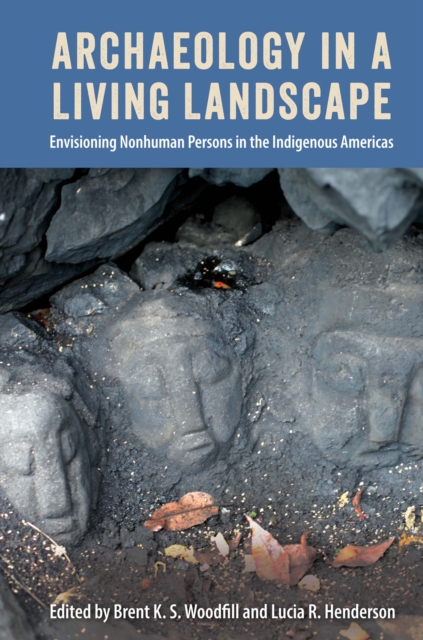
Archaeology in a Living Landscape
Recognizing and incorporating Indigenous knowledge
systems in archaeological studies of the Americas
This book explores the diverse range of other-than-human persons
that inhabited and affected the landscape of the ancient Americas.
These case studies acknowledge what is often dismissed by Western
scholars: that Indigenous communities have long recognized degrees
of personhood in mountains, volcanoes, caves, springs, rivers,
rocks, plants, archaeological sites, trees, and animals and that
this worldview should be taken seriously in archaeological
investigations, community relations, and interpretations.
In Archaeology in a Living Landscape , contributors
examine the role of nonhuman agents in the ancient world, from land
management and tenure to economics, politics, migration,
pilgrimage, trade routes, conquest, ethics, and philosophy.
Chapters describe Tlingit cosmology, lightning beings and magnetism
in the Minnesota River Region, linguistic approaches to animacy in
the United States Southeast, nonhuman persons in the ancient Maya
economy, and Lacandon Maya ritual landscapes. They investigate the
role of quarries in the building of Inka huacas (sacred spaces or
objects), clay procurement and Andean apus (powerful mountains),
Amazonian animism in polychrome ceramics, and the built and unbuilt
landscape of the Mapuche. An epilogue by Dakota elder James Rock
highlights how Western academic discourse often diverges from the
viewpoints of Indigenous subjects.
The contributors to this volume use language accessible to
readers of diverse backgrounds. They focus on the centrality of
nonhuman persons in the lives of Indigenous communities, working to
move away from Western biases to embrace and integrate Indigenous
belief frameworks in their studies. Archaeology in a Living
Landscape highlights the value of Indigenous knowledge systems
not just as archaeological evidence but as a body of theory.
Contributors: Steve J. Langdon | Lisa J. Lucero
| Alexei Vranich | James Rock | Eleanor Harrison-Buck | Lucia R.
Henderson | Nicola Sharratt | Patrick Ryan Williams | Bill Sillar |
Brent K.S. Woodfill | Jacob J. Sauer | Margaret Spivey-Faulkner |
Sigrid Arnott | Dianne Desrosiers | Joshua Feinberg | David Maki |
Carolyn Dean | Alice Balsanelli | Joel W. Palka | A.C. Roosevelt |
Dennis Ogburn
eBook

Between rhetoric and reality: dignified health care for the Soliga Adivasi community in Chamarajanagar district, Karnataka, India
Background
Despite national and regional efforts toward universal health coverage, Adivasi communities like the Soligas in Karnataka in India, continue to face barriers to dignified health care. This analysis explores how human dignity is upheld or neglected within formal, State-regulated health care services. It highlights the health care experiences of Soliga Adivasi communities in the Chamarajanagar district of Karnataka, Southern India, as they navigate institutional formal health services.
Methods
We employed Interpretative Phenomenological Analysis (IPA) to investigate how dignity is compromised in health care within a context where respect, rights, and citizen agency are not actively promoted. Our study included 33 in-depth interviews with care-seeking individuals from Soliga community, their families, and NGO-affiliated health care providers. We also drew on insights from six community meetings, one participatory workshop, and a multi-stakeholder gram panchayat meeting involving elected officials, government representatives, health workers, and community leaders. These activities formed part of a long-term participatory action research initiative with Soliga Adivasi collectives in Chamarajanagar district. The qualitative data was analysed for attributes of dignified care, guided by existing literature and the Indian constitutional framework.
Results
Systemic barriers, including delays, neglect, lack of autonomy and informed consent, disrespect, privacy breaches, culturally insensitive care, and exclusion from health governance spaces, undermined dignified health care for Soliga Adivasi communities. These challenges must be understood within the broader context of structural violence, shaped by displacement linked to forest conservation, inadequate social protection, and adverse social determinants such as poverty, limited education, poor housing, and ongoing human-wildlife conflict in forest regions where Soligas live.
Conclusion
The Soliga Adivasi communities’ health care experiences reveal everyday dignity violations in formal health care facilities, reflecting broader systemic inequities. This study emphasises the need for addressing the deeper social inequities and co-creating a health care context with policies, programmes and practices where the agency, self-respect and autonomy of Adivasi communities are valued and preserved through dignity-oriented health care service delivery frameworks and practice.
Journal Article

The Colours of the Empire
The Portuguese Colonial Empire established its base in Africa in the fifteenth century and would not be dissolved until 1975. This book investigates how the different populations under Portuguese rule were represented within the context of the Colonial Empire by examining the relationship between these representations and the meanings attached to the notion of 'race'. Colour, for example, an apparently objective criterion of classification, became a synonym or near-synonym for 'race', a more abstract notion for which attempts were made to establish scientific credibility. Through her analysis of government documents, colonial propaganda materials and interviews, the author employs an anthropological perspective to examine how the existence of racist theories, originating in the eighteenth and nineteenth centuries, went on to inform the policy of the Estado Novo (Second Republic, 1933-1974) and the production of academic literature on 'race' in Portugal. This study provides insight into the relationship between the racist formulations disseminated in Portugal and the racist theories produced from the eighteenth century onward in Europe and beyond.
eBook