
Catalogue Search | MBRL


Are you sure you want to remove the book from the shelf?

{{itemTitle}}
37,571
result(s) for
"Adolescent Pregnancy"
Sort by:

A narrative review of the literature on unintended adolescent pregnancies
Every year, more than two million girls below the age of 15 become pregnant in low- and middle-income countries, and these pregnancies are more prevalent in sub-Saharan Africa, increasing maternal mortality and morbidity. Therefore, the objective of this narrative review of the literature was to present a detailed understanding of unintended adolescent pregnancies and explore the factors associated with these pregnancies, their consequences, and any gaps identified in the extant literature. The review included 19 articles accessed and retrieved from a variety of databases, namely: PubMed, ProQuest, Scopus, CINAHL, Western Libraries Catalogue, and Google Scholar. This review notes that adolescent pregnancies are primarily perceived to be social problems related to misconduct and delinquency, and across cultures, adolescent pregnancies are interpreted differently and given various meanings. The results of the review indicate that most unintended adolescent pregnancies are attributable to caused by a lack of sexual reproductive knowledge, and the effects of cultural factors such as limitations on open discussions between parents and children. Among the consequences of adolescent pregnancy included emotional trauma, social embarrassment, school dropout, and poverty. This narrative review highlights the need of exploring the issue of unintended adolescent pregnancies through a more comprehensive, multi-dimensional, and local perspective. By exploring the cultural, social, and political dimensions at the local context level, such approach can foster meaningful social and political changes, advocacy, and emancipation.
Chaque année, plus de deux millions de filles de moins de 15 ans tombent enceintes dans les pays à revenu faible ou intermédiaire. Ces grossesses sont plus fréquentes en Afrique subsaharienne, augmentant la mortalité et la morbidité maternelles. Ainsi, l'objectif de cette revue narrative de la littérature était de présenter une compréhension détaillée des grossesses non désirées chez les adolescentes et d'explorer les facteurs associés à ces grossesses, leurs conséquences et les lacunes identifiées dans la littérature existante. La revue comprenait 19 articles consultés et extraits de diverses bases de données, à savoir: PubMed, ProQuest, Scopus, CINAHL, Western Libraries Catalogue et Google Scholar. Cette étude met en évidence le fait que, dans notre société, les grossesses chez les adolescentes sont généralement considérées comme des problèmes sociaux associés à l’inconduite et à la délinquance. Elle démontre également que la signification et l’interprétation de ces mêmes grossesses peuvent varier considérablement selon la culture. Les résultats de cette étude indiquent que la plupart des grossesses non désirées chez les adolescentes sont imputables à un manque de connaissances en matière de sexualité et de reproduction et aux effets de facteurs culturels tels que les limitations aux discussions ouvertes entre parents et enfants. Parmi les conséquences des grossesses chez les adolescentes figurent les traumatismes émotionnels, la gêne sociale, le décrochage scolaire et la pauvreté. Cette revue de la littérature souligne l’importance de considérer le problème des grossesses non désirées chez les adolescentes sous un angle plus large, multidimensionnel et local. En explorant les aspects culturels, sociaux et politiques au niveau local, une telle approche peut engendrer des changements sociaux et politiques significatifs, la promotion des droits de l’homme et l’émancipation.
Journal Article

Public policies and their association with adolescent pregnancy in Southern Peru
This study analyzed the association between public policies on adolescent pregnancy in a healthcare network in southern Peru, considering their alignment with Sustainable Development Goals (SDGs) 3, 4, and 5, which focus on health, education, and gender equality. The research was basic in nature, with a correlational quantitative approach and a non-experimental cross-sectional design. A structured survey with closed-ended Likert-scale questions was administered to 80 obstetrics professionals, selected through non-probabilistic convenience sampling. Instrument validity was established through expert judgment, and reliability was evaluated using Cronbach’s Alpha coefficient, obtaining a value of 0.83, which indicated high internal consistency. The results obtained via ordinal logistic regression revealed that public policies were significantly associated with adolescent pregnancy (
p
= 0.000), with a Nagelkerke determination coefficient of 0.737, indicating that approximately 73.7% of the variance in adolescent pregnancy was associated with the level of policy implementation. It was concluded that public policies were linked to lower perceived levels of adolescent pregnancy in the healthcare network under study, recommending the optimization of sexual and reproductive health strategies to strengthen their implementation.
Journal Article

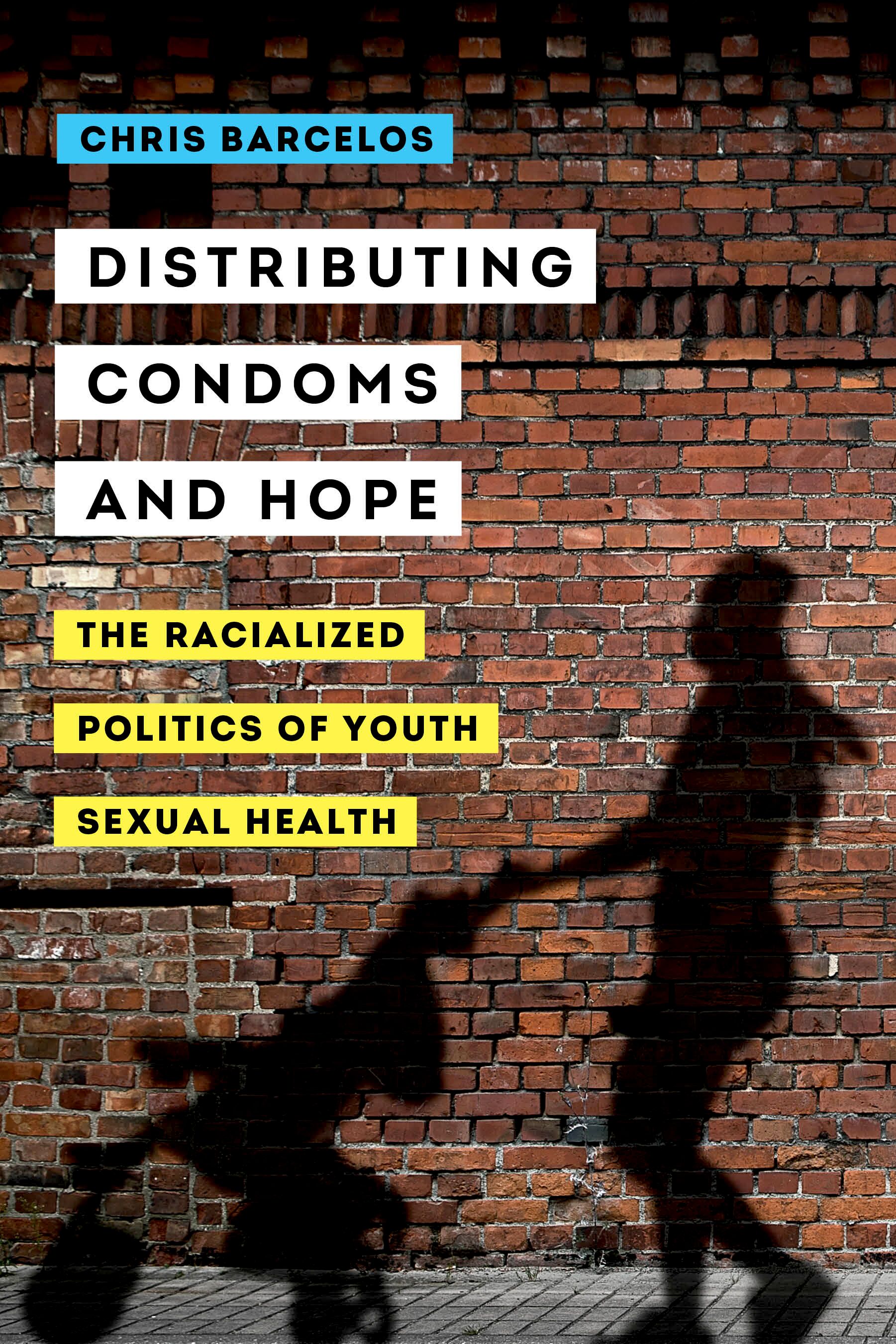
Distributing Condoms and Hope
Distributing Condoms and Hope is a feminist ethnographic account of how youth sexual health programs in the raciallyand economically stratified city of \"Millerston\" reproduce harm in the marginalized communities they are meant to serve. Chris A. Barcelos makes space for the stories of young mothers, who often recognize the narrow ways that public health professionals respond to pregnancies. Barceloss findings show that teachers, social workers, and nurses ignore systemic issues of race, class, and gender and instead advocate for individual-level solutions such as distributing condoms and promoting \"hope.\" Through a lens of reproductive justice, Distributing Condoms and Hope imagines a different approach to serving marginalized youth-a support system that neither uses their lives as a basis for disciplinary public policies nor romanticizes their struggles.
eBook

Trends and factors related to adolescent pregnancies: an incidence trend and conditional inference trees analysis of northern Nicaragua demographic surveillance data
Background
We aimed to identify the 2001–2013 incidence trend, and characteristics associated with adolescent pregnancies reported by 20–24-year-old women.
Methods
A retrospective analysis of the Cuatro Santos Northern Nicaragua Health and Demographic Surveillance 2004–2014 data on women aged 15–19 and 20–24. To calculate adolescent birth and pregnancy rates, we used the first live birth at ages 10–14 and 15–19 years reported by women aged 15–19 and 20–24 years, respectively, along with estimates of annual incidence rates reported by women aged 20–24 years. We conducted conditional inference tree analyses using 52 variables to identify characteristics associated with adolescent pregnancies.
Results
The number of first live births reported by women aged 20–24 years was 361 during the study period. Adolescent pregnancies and live births decreased from 2004 to 2009 and thereafter increased up to 2014. The adolescent pregnancy incidence (persons-years) trend dropped from 2001 (75.1 per 1000) to 2007 (27.2 per 1000), followed by a steep upward trend from 2007 to 2008 (19.1 per 1000) that increased in 2013 (26.5 per 1000). Associated factors with adolescent pregnancy were living in low-education households, where most adults in the household were working, and high proportion of adolescent pregnancies in the local community. Wealth was not linked to teenage pregnancies.
Conclusions
Interventions to prevent adolescent pregnancy are imperative and must bear into account the context that influences the culture of early motherhood and lead to socioeconomic and health gains in resource-poor settings.
Journal Article

Unfit subjects
Wanda Pillow presents a critical analysis of federal law and polciy towards pregnant teens, representations of teen pregnancy in popular culture and educational policy assesses how schools provide educational opportunities for school aged mothers. Through in- depth analysis of specific policies and programmes, both past and present, thsi book traces America's successes and failures in educating pregnant teens. Unfit Subjects uses feminist, race and poststructural theories to inform a satisfactory educational policy.
eBook

'Adolescence', Pregnancy and Abortion
Winner of the Rhodes University Vice-Chancellor's Book Award 2012!
Winner of the 2011 Distinguished Publication Award of the Association for Women in Psychology!
Why, despite evidence to the contrary, does the narrative of the negative consequences of teenage pregnancy, abortion and childbearing persist? This book argues that the negativity surrounding early reproduction is underpinned by a particular understanding of adolescence. It traces the invention of \"adolescence\" and the imaginary wall that the notion constructs between young people and adults. Macleod examines the entrenched status of \"adolescence\" within a colonialist discourse that equates development of the individual with the development of civilisation, and the consequent threat of degeneration that \"adolescence\" implies.
Many important issues are explored, such as the invention of teenage pregnancy and abortion as a social problem; issues of race, culture and tradition in relation to teenage pregnancy; and health service provider practices, specifically in relation to managing risk. In the final chapter, an argument is made for a shift from the signifier \"teenage pregnancy\" to \"unwanted pregnancy\".
Using data gathered from studies worldwide, this book highlights central issues in the global debate concerning teenage pregnancy. It is ideal for academics, and students of health psychology, women's studies, nursing and sociology, as well as practitioners in the fields of youth and social work, medicine and counselling.
eBook
Determinants of adolescent pregnancy in sub-Saharan Africa: a systematic review
Background
Adolescent pregnancy has been persistently high in sub-Saharan Africa. The objective of this review is to identify factors influencing adolescent pregnancies in sub-Saharan Africa in order to design appropriate intervention program.
Methods
A search in MEDLINE, Scopus, Web of science, and Google Scholar databases with the following keywords: determinants, factors, reasons, sociocultural factors, adolescent pregnancy, unintended pregnancies, and sub- Saharan Africa. Qualitative and cross-sectional studies intended to assess factors influencing adolescent pregnancies as the primary outcome variable in sub- Saharan Africa were included. Our search was limited to, articles published from the year 2000 to 2017 in English. Twenty-four (24) original articles met the inclusion criteria.
Results
The study identified
Sociocultural, environmental and Economic factors
(Peer influence, unwanted sexual advances from adult males, coercive sexual relations, unequal gender power relations, poverty, religion, early marriage, lack of parental counseling and guidance, parental neglect, absence of affordable or free education, lack of comprehensive sexuality education, non-use of contraceptives, male’s responsibility to buy condoms, early sexual debut and inappropriate forms of recreation).
Individual factors
(excessive use of alcohol, substance abuse, educational status, low self-esteem, and inability to resist sexual temptation, curiosity, and cell phone usage).
Health service-related factors
(cost of contraceptives, Inadequate and unskilled health workers, long waiting time and lack of privacy at clinics, lack of comprehensive sexuality education, misconceptions about contraceptives, and non-friendly adolescent reproductive services,) as influencing adolescent pregnancies in Sub-Saharan Africa
Conclusion
High levels of adolescent pregnancies in Sub-Saharan Africa is attributable to multiple factors. Our study, however, categorized these factors into three major themes; sociocultural and economic, individual, and health service related factors as influencing adolescent pregnancies. Community sensitization, comprehensive sexuality education and ensuring girls enroll and stay in schools could reduce adolescent pregnancy rates. Also, provision of adolescent-friendly health services in schools and healthcare centers and initiating adolescent empowerment programs could have a positive impact.
Journal Article

Adolescent Pregnancy Outcomes and Risk Factors
One of the major social and public health problems in the world is adolescent pregnancy. Adolescent pregnancy is strongly associated to less favorable results for both the mother and the newborn. We conducted this research to ascertain the impact of teenage age on neonatal outcomes and also observed the lifestyles of pregnant teenage girls. We conducted a study of 2434 mothers aged ≤19 years (n = 294) or 20–34 years (n = 2140) who gave birth in 2019–2020 at the Department of Gynaecology and Obstetrics of Louis Pasteur University Hospital in Košice. The data on mothers and newborn infants have been reported from the reports on mothers at childbirth. Women between the ages of 20 and 34 served as the reference group. The teenage mothers were more likely to become pregnant if they were unmarried (OR = 14.2; 95% CI = 9.3–21.6; p < 0.001) and had a basic education or lack of education (OR = 16.8; 95% CI = 11.5–24.6; p < 0.001). Additionally, they were more likely to smoke when pregnant (OR = 5.0; 95% CI = 3.8–6.6; p < 0.001). Low birth weight was more common in newborns born to adolescent mothers than in those born to adult mothers (p < 0.001). Our findings showed that infants of teenage mothers often had lower birth weights (−332.6 g, p < 0.001). Adolescent mothers were associated with lower Apgar scores at the first minute (p = 0.003). As compared with the control group, pregnant teenage girls had a greater prevalence of preterm deliveries in our research (p = 0.004). This study finds significant age-related disparities in neonatal outcomes between mothers. These results might be used to identify vulnerable groups who need special assistance and actions to reduce the probability of negative outcomes for such groups.
Journal Article
Prevalence and determinants of adolescent pregnancy in Africa: a systematic review and Meta-analysis
Background
Adolescence is the period between 10 and 19 years with peculiar physical, social, psychological and reproductive health characteristics. Rates of adolescent pregnancy are increasing in developing countries, with higher occurrences of adverse maternal and perinatal outcomes. The few studies conducted on adolescent pregnancy in Africa present inconsistent and inconclusive findings on the distribution of the problems. Also, there was no meta-analysis study conducted in this area in Africa. Therefore, this systematic review and meta-analysis were conducted to estimate the prevalence and sociodemographic determinant factors of adolescent pregnancy using the available published and unpublished studies carried out in African countries. Also, subgroup analysis was conducted by different demographic, geopolitical and administrative regions.
Methods
This study used a systematic review and meta-analysis of published and unpublished studies in Africa. Preferred Reporting Items for Systematic Reviews and Meta-Analyses (PRISMA) guideline was strictly followed. All studies in MEDLINE, PubMed, Cochrane Library, EMBASE, Google Scholar, CINAHL, and African Journals Online databases were searched using relevant search terms. Data were extracted using the Joanna Briggs Institute tool for prevalence studies. STATA 14 software was used to perform the meta-analysis. The heterogeneity and publication bias was assessed using the
I
2
statistics and Egger’s test, respectively. Forest plots were used to present the pooled prevalence and odds ratio (OR) with 95% confidence interval (CI) of meta-analysis using the random effect model.
Result
This review included 52 studies, 254,350 study participants. A total of 24 countries from East, West, Central, North and Southern African sub-regions were included. The overall pooled prevalence of adolescent pregnancy in Africa was 18.8% (95%CI: 16.7, 20.9) and 19.3% (95%CI, 16.9, 21.6) in the Sub-Saharan African region. The prevalence was highest in East Africa (21.5%) and lowest in Northern Africa (9.2%). Factors associated with adolescent pregnancy include rural residence (OR: 2.04), ever married (OR: 20.67), not attending school (OR: 2.49), no maternal education (OR: 1.88), no father’s education (OR: 1.65), and lack of parent to adolescent communication on sexual and reproductive health (SRH) issues (OR: 2.88).
Conclusions
Overall, nearly one-fifth of adolescents become pregnant in Africa. Several sociodemographic factors like residence, marital status, educational status of adolescents, their mother’s and father’s, and parent to adolescent SRH communication were associated with adolescent pregnancy. Interventions that target these factors are important in reducing adolescent pregnancy.
Journal Article