
Catalogue Search | MBRL


Are you sure you want to remove the book from the shelf?

{{itemTitle}}
26
result(s) for
"Adulthood Congresses."
Sort by:

Elusive adulthoods : the anthropology of new maturities
Over the past decade, complaints about an inability to achieve adulthood have rung out around the world. Young people across the globe, burdened with debt and unsatisfactory job prospects, are struggling to establish households, marry, and, perhaps most significantly, \"feel\" grown up. For them, achievement of adulthood has become increasingly elusive. Elusive Adulthoods poses the question \"What is adulthood?\" and examines how the field of anthropology has come to overlook this meaningful life transition. Through diverse case studies, contributors explore a variety of means by which adulthood can be recognized, such as negotiated relationships with others and as a form of upward class mobility. Contributors also grapple with the difficulties that come from a sense of having missed full adulthood - perhaps due to rapid social change or reluctance to embrace the necessary subordination to job and family. In each case, changing political and economic factors form the background for generational experiences and understandings of what it means to reach adulthood as globalization dictates changes to traditional rites of passage. -- from back cover.
Book

Investing in the Health and Well-Being of Young Adults
Young adulthood - ages approximately 18 to 26 - is a critical period of development with long-lasting implications for a person's economic security, health and well-being. Young adults are key contributors to the nation's workforce and military services and, since many are parents, to the healthy development of the next generation. Although 'millennials' have received attention in the popular media in recent years, young adults are too rarely treated as a distinct population in policy, programs, and research. Instead, they are often grouped with adolescents or, more often, with all adults. Currently, the nation is experiencing economic restructuring, widening inequality, a rapidly rising ratio of older adults, and an increasingly diverse population. The possible transformative effects of these features make focus on young adults especially important. A systematic approach to understanding and responding to the unique circumstances and needs of today's young adults can help to pave the way to a more productive and equitable tomorrow for young adults in particular and our society at large.
Investing in The Health and Well-Being of Young Adults describes what is meant by the term young adulthood, who young adults are, what they are doing, and what they need. This study recommends actions that nonprofit programs and federal, state, and local agencies can take to help young adults make a successful transition from adolescence to adulthood. According to this report, young adults should be considered as a separate group from adolescents and older adults. Investing in The Health and Well-Being of Young Adults makes the case that increased efforts to improve high school and college graduate rates and education and workforce development systems that are more closely tied to high-demand economic sectors will help this age group achieve greater opportunity and success. The report also discusses the health status of young adults and makes recommendations to develop evidence-based practices for young adults for medical and behavioral health, including preventions.
What happens during the young adult years has profound implications for the rest of the life course, and the stability and progress of society at large depends on how any cohort of young adults fares as a whole. Investing in The Health and Well-Being of Young Adults will provide a roadmap to improving outcomes for this age group as they transition from adolescence to adulthood.
eBook

Fetal programming of CVD and renal disease: animal models and mechanistic considerations
The developmental origins of health and disease hypothesis postulates that exposure to a less than optimal maternal environment during fetal development programmes physiological function, and determines risk of disease in adult life. Much evidence of such programming comes from retrospective epidemiological cohorts, which demonstrate associations between birth anthropometry and non-communicable diseases of adulthood. The assertion that variation in maternal nutrition drives these associations is supported by studies using animal models, which demonstrate that maternal under- or over-nutrition during pregnancy can programme offspring development. Typically, the offspring of animals that are undernourished in pregnancy exhibit a relatively narrow range of physiological phenotypes that includes higher blood pressure, glucose intolerance, renal insufficiency and increased adiposity. The observation that common phenotypes arise from very diverse maternal nutritional insults has led to the proposal that programming is driven by a small number of mechanistic processes. The remodelling of tissues during development as a consequence of maternal nutritional status being signalled by endocrine imbalance or key nutrients limiting processes in the fetus may lead to organs having irreversibly altered structures that may limit their function with ageing. It has been proposed that the maternal diet may impact upon epigenetic marks that determine gene expression in fetal tissues, and this may be an important mechanism connecting maternal nutrient intakes to long-term programming of offspring phenotype. The objective for this review is to provide an overview of the mechanistic basis of fetal programming, demonstrating the critical role of animal models as tools for the investigation of programming phenomena.
Journal Article

The Social and Political Implications of Demographic Change in Post-Apartheid South Africa
The cohort of young people born between the early 1980s and early 1990s consitute a demographic bulge in the South African population. The sheer size of this cohort renders it especially important in terms of the changing political, economic, and social life of the country. The cohort grew up for the most part after apartheid had ended, entered the labor market at a time of high unemployment, is having children as marriage is in decline, and reached voting age just as the African National Congress's (ANC's) moral stature began to decline. All these factors might be expected to result in distinctive disaffection and a propensity for dissent. In terms of their attitudes and behavior, however, this cohort looks much like older (or immediately preceding) cohorts of South Africans. Where this cohort is likely to leave its mark is in entrenching some of the social, economic, and political changes that, until recently, might have appeared transient.
Journal Article

Joining Society
Joining Society asks precise questions: To what are the young socialized? Which skills, modes of thinking or action are required from them and what are their developmental value? Socialization tends to be viewed within the confines of a particular geographical or cultural situation. The multi-national list of contributors brings an international perspective to the problem of socialization to work and to adult life, while at the same time emphasizing the common issues that face youth around the world. Some of the topics addressed are the rules and roles involved in socialization, attaining personal agency through collective activity, use of new technologies, and the role of intergenerational relationships. This book sheds new light on the processes through which society may hope to intervene in positive ways with today's youth.
eBook
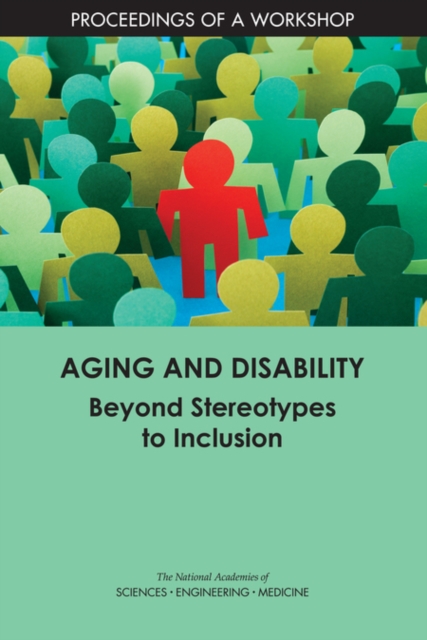
Aging and Disability
Many different groups of people are subject to stereotypes. Positive stereotypes (e.g., \"older and wiser\") may provide a benefit to the relevant groups. However, negative stereotypes of aging and of disability continue to persist and, in some cases, remain socially acceptable. Research has shown that when exposed to negative images of aging, older persons demonstrate poor physical and cognitive performance and function, while those who are exposed to positive images of aging (or who have positive self-perceptions of aging) demonstrate better performance and function. Furthermore, an individual's expectations about and perceptions of aging can predict future health outcomes. To better understand how stereotypes affect older adults and individuals with disabilities, the National Academies of Sciences, Engineering, and Medicine, with support from AARP, convened a public workshop on October 10, 2017. This publication summarizes the presentations and discussions from the workshop.
eBook

Assessing the Impact of Severe Economic Recession on the Elderly
The economic crisis that began in 2008 has had a significant impact on the well-being of certain segments of the population and its disruptive effects can be expected to last well into the future. The National Institute on Aging (NIA), which is concerned with this issue as it affects the older population in the United States, asked the National Research Council to review existing and ongoing research and to delineate the nature and dimensions of potential scientific inquiry in this area.
The Committee on Population thus established the Steering Committee on the Challenges of Assessing the Impact of Severe Economic Recession the Elderly to convene a meeting of experts to discuss these issues. The primary purpose of the workshop was to help NIA gain insight into the kinds of questions that it should be asking, the research that it should be supporting, and the data that it should be collecting. Attendees included invited experts in the fields of economics, sociology, and epidemiology; staff from NIA and the Social Security Administration (SSA); and staff from the National Academies.
This report highlights the major issues that were raised in the workshop presentations and discussion.
eBook

Improving Data on America's Aging Population
The Committee on National Statistics and the Committee on Population, at the request of the NIA, convened a workshop in March 1996 to discuss data on the aging population that address the emerging and important social, economic, and health conditions of the older population. The purposes of the workshop were to identify how the population at older ages in the next few decades will differ from the older population today, to understand the underlying causes of those changes, to anticipate future problems and policy issues, and to suggest future needs for data for research in these areas. The scope of the workshop was broader than that of the 1988 CNSTAT report, including not only data on health and long-term care, but also actuarial, economic, demographic, housing, and epidemiological data needs for informing public policy.
eBook
The Evidence for Violence Prevention Across the Lifespan and Around the World
The Evidence for Violence Prevention Across the Lifespan and Around the World is the summary of a workshop convened in January 2013 by the Institute of Medicine's Forum on Global Violence Prevention to explore value and application of the evidence for violence prevention across the lifespan and around the world. As part of the Forum's mandate is to engage in multisectoral, multidirectional dialogue that explores crosscutting approaches to violence prevention, this workshop examined how existing evidence for violence prevention can continue to be expanded, disseminated, and implemented in ways that further the ultimate aims of improved individual well-being and safer communities. This report examines violence prevention interventions that have been proven to reduce different types of violence (e.g., child and elder abuse, intimate partner and sexual violence, youth and collective violence, and self-directed violence), identifies the common approaches most lacking in evidentiary support, and discusses ways that proven effective interventions can be integrated or otherwise linked with other prevention programs.
eBook
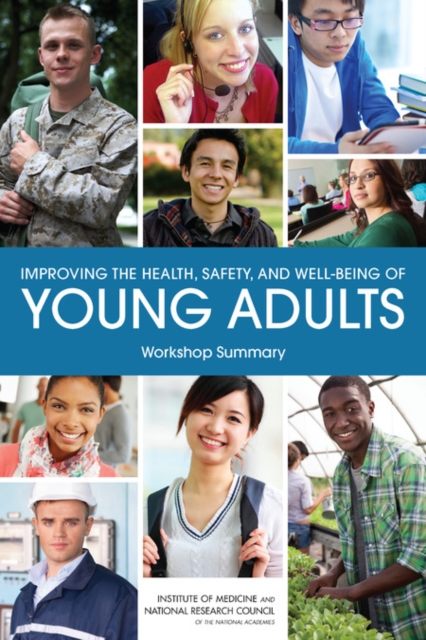
Improving the Health, Safety, and Well-Being of Young Adults
Young adults are at a significant and pivotal time of life.They may seek higher education, launch their work lives, develop personal relationships and healthy habits, and pursue other endeavors that help set them on healthy and productive pathways.However, the transition to adulthood also can be a time of increased vulnerability and risk.
eBook