
Catalogue Search | MBRL


Are you sure you want to remove the book from the shelf?

{{itemTitle}}
35,144
result(s) for
"Advertising, Magazine"
Sort by:


Body Panic
p strongDworkin and Wachs analyze 10 years of health and fitness magazines to uncover how bodies are made in popular culture/strong Are you ripped? Do you need to work on your abs? Do you know your ideal body weight? Your body fat index? Increasingly, Americans are being sold on a fitness ideal—not just thin but toned, not just muscular but cut—that is harder and harder to reach. In strongBody Panic/strong, Shari L. Dworkin and Faye Linda Wachs ask why. How did these particular body types come to be “fit”? And how is it that having an unfit, or “bad,” body gets conflated with being an unfit, or “bad,” citizen? Dworkin and Wachs head to the newsstand for this study, examining ten years worth of men’s and women’s health and fitness magazines to determine the ways in which bodies are “made” in today’s culture. They dissect the images, the workouts, and the ideology being sold, as well as the contemporary links among health, morality, citizenship, and identity that can be read on these pages. While women and body image are often studied together, strongBody Panic/strong considers both women’s and men’s bodies side-by-side and over time in order to offer a more in-depth understanding of this pervasive cultural trend./p
eBook


All-Out for Victory
Following the attack on Pearl Harbor and the entry of the United States into World War II, many commercial advertisers and their Madison Avenue ad agencies instantly switched from selling products and services to selling the home front on ways to support the war. Ads by major manufacturers showcased how their factories had turned to war production, demonstrating their participation in the war and helping people understand, for instance, that they couldn't buy a new washing machine because the company was making munitions. Other ads helped civilians cope with wartime rationing and shortages by offering advice on how to make leftovers tasty, make shoes last, and keep a car in good working order. Ads also encouraged Victory Gardens, scrap collecting, giving blood, and (most important) buying War Bonds. In this book, Jones examines hundreds of ads from ten large-circulation news and general-interest magazines of the period. He discusses motivational war ads, ads about industrial and agricultural support of the war, ads directed at uplifting the morale of civilians and GIs, and ads promoting home front efficiency, conservation, and volunteerism. Jones also includes ads praising women in war work and the armed forces and ads aimed at recruiting more women. Taken together, war ads in national magazines did their part to create the most efficient home front possible in order to support the war effort.
eBook

Information cues and emotional appeals in magazine advertisements
Introduction: The aim of this study is to reveal how advertising messages were constructed in Turkish magazines, in addition to revealing the state of Turkish magazines in the span of seven years. Methodology: A content analysis has been conducted to reveal the usage levels of information cues and emotional appeals on 876 advertisements published in Turkish magazines in February 2018, 2021, and 2024. Results: Magazines carry a lower number of ads compared to 2018, with some exceptions. Information cues are present in all ads, while emotional appeals are found in 35,3%. There is a statistically significant difference in Price/Value, Quality, Availability, Independent Research, Company Research and New Ideas cues and humor appeal across the years. The most used emotional appeal is the warmth appeal (23,9%), and it is followed by nostalgia (5,8%), eroticism (5,3%), humor (2,5%) and fear (1,9%). Discussion and conclusions: Print magazines are facing challenges in an increasingly digital environment. In addition, the effects of the pandemic are evident in the advertisements published in 2021, according to our findings. However, not all magazines are the same. Some of the magazines have a higher ad-to-total page number ratio compared to 2018. Another factor affecting magazine advertising and advertisers in general is the economic challenges. These are reflected in the use of cues and appeals. Among the emotional appeals, warmth may be relatively low-risk compared to the rest, and this may explain their lower percentages. Introducción: El objetivo de este estudio es revelar cómo se construyeron los mensajes publicitarios en las revistas turcas, además de revelar el estado de las revistas turcas en el lapso de siete años. Metodología: Se realizó un análisis de contenido para revelar los niveles de uso de señales informativas y apelaciones emocionales en 876 anuncios publicados en revistas turcas en febrero de 2018, 2021 y 2024. Resultados: Las revistas tienen un menor número de anuncios en comparación con 2018, con algunas excepciones. Las señales informativas están presentes en todos los anuncios, mientras que las apelaciones emocionales se encuentran en el 35,3%. Existe una diferencia estadísticamente significativa en las señales de Precio/Valor, Calidad, Disponibilidad, Investigación Independiente, Investigación de la Empresa y Nuevas Ideas y el atractivo del humor a lo largo de los años. El atractivo emocional más utilizado es el atractivo de la calidez (23,9%), seguido de la nostalgia (5,8%), el erotismo (5,3%), el humor (2,5%) y el miedo (1,9%). Discusión y conclusiones: Las revistas impresas se enfrentan a retos en un entorno cada vez más digital. Además, los efectos de la pandemia son evidentes en los anuncios publicados en 2021, según nuestros hallazgos. Sin embargo, no todas las revistas son iguales. Algunas de las revistas tienen una mayor relación entre anuncios y páginas totales en comparación con 2018. Otro factor que afecta a la publicidad en revistas y a los anunciantes en general son los desafíos económicos. Estos se reflejan en el uso de señales y apelaciones. Entre las apelaciones emocionales, la calidez puede tener un riesgo relativamente bajo en comparación con el resto, y esto puede explicar sus porcentajes más bajos.
Journal Article

Magazine Reading Experience and Advertising Engagement
Guided by the uses and gratifications theory, this study examines the structural relationships between a number of magazine reader experience factors and advertising engagement. The results from a survey of 507 female college students in South Korea suggest that personal experience, a second-order factor consisting of information, personal identification, and entertainment experiences, significantly influences advertising engagement, whereas the other factor, social experience, has no effect on advertising engagement. Theoretical and managerial implications are discussed. (Author abstract)
Journal Article
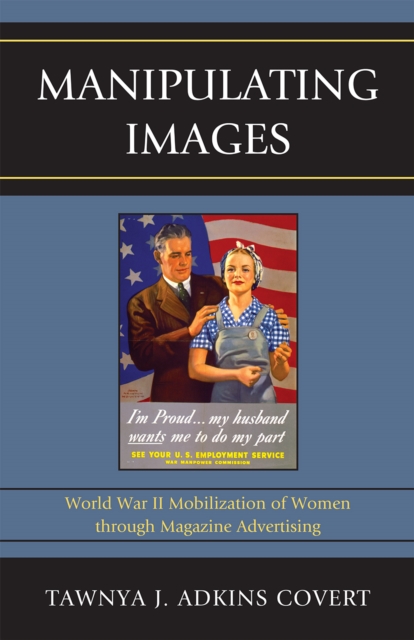
Manipulating images
Manipulating Images: World War II Mobilization of Women through Magazine Advertising explores gendered and class-based representations of American women in women's magazine advertisements published during the period surrounding the Second World War. Focusing on the interrelationships among political, economic, and social forces in the construction of prevailing cultural images and gender roles for women in society, the book examines both the process of creating and the resulting content of wartime mobilization messages found in magazine advertising aimed at American women. The unique circumstances of the Second World War provide a window where the continuous, but normally implicit interactions among the social forces which construct class-differentiated gendered expectations for women in society are revealed, recorded, and made accessible for study. During this period, the federal government altered the prevailing media representations of women and women's roles in response to widespread labor shortages stemming from the movement of male workers into the armed forces and increased demand for military and consumer goods. The advertising industry, business leaders, and media representatives cooperated with the federal government in the creation of labor mobilization and other wartime campaigns. Two types of data are examined to assess the changing nature of the relationships among government, business, and media and the resulting media images and messages regarding women's roles. First, the study explores archived government documents that illuminate the relationships among government, business, and media as they responded to the needs and conditions of war. Second, this book examines advertisements published in women's magazines before, during, and following the Second World War.
eBook

Targeted Advertising in Magazine Markets and the Advent of the Internet
This paper examines how the ability of traditional media firms to engage in targeted advertising has changed with the advent of the Internet. We find that the premium for reaching a homogeneous audience increases for magazines that have a companion website, as well as for those whose readers are more likely to be online. This indicates a complementarity between offline and online channels with respect to targeted advertising. We hypothesize that this result is driven by multihoming consumers who enhance the value of targeted advertising, in contrast to the usual assumption that multiple advertising messages are redundant.
This paper was accepted by Pradeep Chintagunta, marketing.
Journal Article

INDIRECT PERSUASION IN ADVERTISING: How Consumers Process Metaphors Presented in Pictures and Words
Indirect persuasion attempts are common in magazine advertisements. Although the use of an indirect claim presumably offers some advantage to an advertiser, as yet, little is known about how consumers process different types of indirect claims. We develop the proposition that when consumers are presented with an indirect metaphorical claim, they become more receptive to multiple positive inferences about the advertised brand. In addition, when the indirect metaphorical claim takes the form of a picture, consumers are more likely to spontaneously generate such positive inferences at the time of ad exposure. These ideas are supported in an experiment using response latency data. Because many of the inferences examined in this study could be considered misleading if claimed directly, the paper concludes with a discussion of the public policy implications of the findings.
Journal Article
Breaking Through the Clutter: Benefits of Advertisement Originality and Familiarity for Brand Attention and Memory
Rising levels of advertising competition have made it increasingly difficult to attract and hold consumers' attention and to establish strong memory traces for the advertised brand. A common communication strategy to break through this competitive clutter is to increase ad originality. However, ad originality may have detrimental effects when consumers pay more attention to the ad at the expense of the advertised brand. Moreover, the positive effects of originality may quickly wane when the ad becomes familiar. Surprisingly, no research to date has examined such brand attention and memory effects of ad originality and familiarity. The current study aims to fill this void. We use a stochastic model of the influence that ad originality and familiarity have on consumers' eye fixations to the key elements of advertisementsbrand, text, and pictorialand how the information extracted during eye fixations promotes memory for the advertised brand. The model explicitly accounts for heterogeneity due to consumers and advertisements. Infrared eye tracking was applied to collect eye fixation data from 119 consumers who paged through two general-audience magazines containing 58 full-page advertisements. Memory for the advertised brands was assessed with an indirect memory task. The model was estimated using Markov Chain Monte Carlo (MCMC) methods. In support of our hypotheses, original advertisements drew more attention to the advertised brand. More importantly however, advertisements that were both original and familiar attracted the largest amount of attention to the advertised brand, which improved subsequent brand memory. In addition, original and familiar ads were found to promote brand memory directly. Implications of these findings for communication and media planning strategy are discussed.
Journal Article