
Catalogue Search | MBRL


Are you sure you want to remove the book from the shelf?

{{itemTitle}}
304
result(s) for
"Advertising, Magazine United States."
Sort by:


Body Panic
p strongDworkin and Wachs analyze 10 years of health and fitness magazines to uncover how bodies are made in popular culture/strong Are you ripped? Do you need to work on your abs? Do you know your ideal body weight? Your body fat index? Increasingly, Americans are being sold on a fitness ideal—not just thin but toned, not just muscular but cut—that is harder and harder to reach. In strongBody Panic/strong, Shari L. Dworkin and Faye Linda Wachs ask why. How did these particular body types come to be “fit”? And how is it that having an unfit, or “bad,” body gets conflated with being an unfit, or “bad,” citizen? Dworkin and Wachs head to the newsstand for this study, examining ten years worth of men’s and women’s health and fitness magazines to determine the ways in which bodies are “made” in today’s culture. They dissect the images, the workouts, and the ideology being sold, as well as the contemporary links among health, morality, citizenship, and identity that can be read on these pages. While women and body image are often studied together, strongBody Panic/strong considers both women’s and men’s bodies side-by-side and over time in order to offer a more in-depth understanding of this pervasive cultural trend./p
eBook


All-Out for Victory
Following the attack on Pearl Harbor and the entry of the United States into World War II, many commercial advertisers and their Madison Avenue ad agencies instantly switched from selling products and services to selling the home front on ways to support the war. Ads by major manufacturers showcased how their factories had turned to war production, demonstrating their participation in the war and helping people understand, for instance, that they couldn't buy a new washing machine because the company was making munitions. Other ads helped civilians cope with wartime rationing and shortages by offering advice on how to make leftovers tasty, make shoes last, and keep a car in good working order. Ads also encouraged Victory Gardens, scrap collecting, giving blood, and (most important) buying War Bonds. In this book, Jones examines hundreds of ads from ten large-circulation news and general-interest magazines of the period. He discusses motivational war ads, ads about industrial and agricultural support of the war, ads directed at uplifting the morale of civilians and GIs, and ads promoting home front efficiency, conservation, and volunteerism. Jones also includes ads praising women in war work and the armed forces and ads aimed at recruiting more women. Taken together, war ads in national magazines did their part to create the most efficient home front possible in order to support the war effort.
eBook

The Adman in the parlor : magazines and the gendering of consumer culture, 1880s to 1910s
This book explores a reader's interactions with advertising during a period when not only consumption but advertising itself became established as a pleasure. The book argues that participation in advertising, rather than top-down dictation by advertisers, made advertising a central part of American culture. It tracks new forms of fictional realism that contained brand name references, courtship stories, and other fictional forms. As magazines became dependant on advertising rather than sales for their revenues, women's magazines led the way in making consumers of readers through the interplay of fiction, editorials, and advertising. The book takes the bicycle as a case study. At once invisible, familiar, and intrusive, advertising both shaped fiction of the period and was shaped by it. The book unearths the lively conversations among writers and advertisers about the new prevalence of advertising for mass-produced nationally distributed products.
eBook
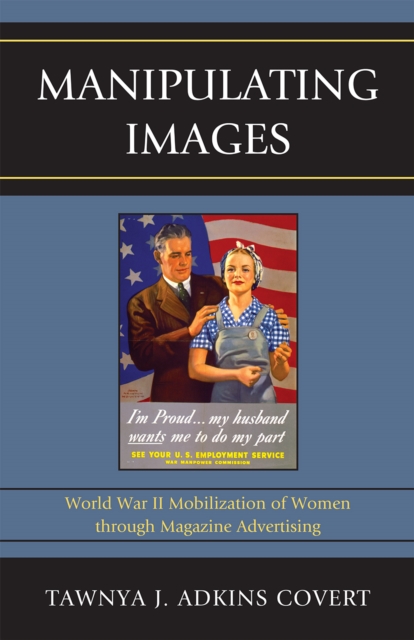
Manipulating images
Manipulating Images: World War II Mobilization of Women through Magazine Advertising explores gendered and class-based representations of American women in women's magazine advertisements published during the period surrounding the Second World War. Focusing on the interrelationships among political, economic, and social forces in the construction of prevailing cultural images and gender roles for women in society, the book examines both the process of creating and the resulting content of wartime mobilization messages found in magazine advertising aimed at American women. The unique circumstances of the Second World War provide a window where the continuous, but normally implicit interactions among the social forces which construct class-differentiated gendered expectations for women in society are revealed, recorded, and made accessible for study. During this period, the federal government altered the prevailing media representations of women and women's roles in response to widespread labor shortages stemming from the movement of male workers into the armed forces and increased demand for military and consumer goods. The advertising industry, business leaders, and media representatives cooperated with the federal government in the creation of labor mobilization and other wartime campaigns. Two types of data are examined to assess the changing nature of the relationships among government, business, and media and the resulting media images and messages regarding women's roles. First, the study explores archived government documents that illuminate the relationships among government, business, and media as they responded to the needs and conditions of war. Second, this book examines advertisements published in women's magazines before, during, and following the Second World War.
eBook

IQOS print magazine advertising characteristics and reach before and after FDA authorisation as a modified risk tobacco product
IntroductionIQOS is a heated tobacco product that was authorised as a modified risk tobacco product (MRTP) in July 2020. While it was removed from the US market in 2021 for legal reasons, as the first tobacco product to receive an ‘exposure modification’ MRTP order, surveillance of IQOS marketing is needed to inform regulation and policy for future MRTPs. The purpose of this study is to expand the current research on IQOS advertising in the USA by examining content and readership characteristics of IQOS ads in print magazines before and after US Food and Drug Administration MRTP authorisation.MethodsWe merged content analysis data with Kantar Media data on magazine placement and expenditures. Magazine readership data were obtained from MRI-Simmons. We compared data from pre-MRTP authorisation with data post-MRTP authorisation. This study was conducted in 2021.ResultsThere was one unique ad and there were 13 observations pre-MRTP, and eight unique ads and 132 observations post-MRTP. Compared with pre-MRTP ads, more post-MRTP ads featured Marlboro HeatSticks, including Amber HeatSticks, and featured people. All ads contained a warning label—most warning labels were cigarette specific. IQOS ads were featured in magazines that are especially popular among women.ConclusionsAfter receiving MRTP authorisation, IQOS increased ad expenditures in print magazines with a readership comprised of primarily women. If IQOS returns to the US market, it will be important for tobacco control to monitor their advertisement content, placement, and expenditures.
Journal Article

Visualizing Black Telephone Users: Technological Whiteness and Racial Exclusion in Bell System Advertising
This study considers the broad implications of white technological modernity as a mode of symbolic and systemic exclusion. The visual absence of Black telephone users in mass-market advertising—and the struggle to make them visible—underscores the exclusionary power of technological whiteness and its lasting effects on conceptions of Black technology users, communities, and innovation. In the first half of the twentieth century, American Telephone and Telegraph (AT&T) tirelessly promoted its national telephone network as a model of technological progress and universal service, but this vision did not include African Americans. This article examines the historical exclusion of African Americans in Bell System advertising and the emergence of Black telephone users in advertising imagery during the 1950s and 1960s, drawing attention to the civil rights work of Ramon S. Scruggs, the first African American to rise to Bell System upper management.
Journal Article

A Cross-Sectional Prevalence Study of Ethnically Targeted and General Audience Outdoor Obesity-Related Advertising
Context: Commercial marketing is a critical but understudied element of the sociocultural environment influencing Americans' food and beverage preferences and purchases. This marketing also likely influences the utilization of goods and services related to physical activity and sedentary behavior. A growing literature documents the targeting of racial/ethnic and income groups in commercial advertisements in magazines, on billboards, and on television that may contribute to sociodemographic disparities in obesity and chronic disease risk and protective behaviors. This article examines whether African Americans, Latinos, and people living in low-income neighborhoods are disproportionately exposed to advertisements for high-calorie, low nutrient-dense foods and beverages and for sedentary entertainment and transportation and are relatively underexposed to advertising for nutritious foods and beverages and goods and services promoting physical activities. Methods: Outdoor advertising density and content were compared in zip code areas selected to offer contrasts by area income and ethnicity in four cities: Los Angeles, Austin, New York City, and Philadelphia. Findings: Large variations were observed in the amount, type, and value of advertising in the selected zip code areas. Living in an upper-income neighborhood, regardless of its residents' predominant ethnicity, is generally protective against exposure to most types of obesity-promoting outdoor advertising (food, fast food, sugary beverages, sedentary entertainment, and transportation). The density of advertising varied by zip code area race/ethnicity, with African American zip code areas having the highest advertising densities, Latino zip code areas having slightly lower densities, and white zip code areas having the lowest densities. Conclusions: The potential health and economic implications of differential exposure to obesity-related advertising are substantial. Although substantive legal questions remain about the government's ability to regulate advertising, the success of limiting tobacco advertising offers lessons for reducing the marketing contribution to the obesigenicity of urban environments.
Journal Article

Circumventing the WHO Code? An observational study
Background This study compares the formula milk advertisements that appeared in parenting magazines published in two countries that have enacted measures to restrict the advertising of infant formula products in response to the international code with two that have not. Methods Content analysis was used to compare the type and frequency of formula milk advertisements that appeared in parenting magazines collected from the USA, Canada, the UK and Australia during 2007, and to examine whether there was a relationship between these frequencies and advertising regulations. Findings Advertisements that promoted formula products or brands occurred in all of the magazines sampled but the type of product advertised differed. Follow-on formula advertisements occurred more frequently in titles from the UK, where infant formula advertising is prohibited (RR 3.82, 95% CI 2.65 to 5.50, p<0.0001) than they did in titles from the USA/Canada where infant and/or follow-on formula advertising is permitted. Toddler milk advertisements appeared more frequently in titles from Australia, where infant and follow-on formula advertising is prohibited, than they did in titles from countries where direct-to-consumer infant and/or follow-on formula advertising is permitted. Rate ratios were as follows: UK only 0.03 (95% CI 0.01 to 0.11, p<0.0001); USA/Canada only 0.02 (95% CI 0.01 to 0.06, p<0.0001). Interpretation Bans on the advertising of infant formula products do not prevent companies from advertising (follow-on or toddler formula). These products are presented in ways that encourage consumers to associate the claims made in them with a group of products (a product line) that includes infant formula.
Journal Article