
Catalogue Search | MBRL


Are you sure you want to remove the book from the shelf?

{{itemTitle}}
90,163
result(s) for
"Advertising Food."
Sort by:
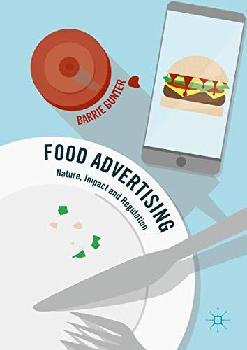
Food advertising : nature, impact and regulation
\"This book provides an up-to-date and comprehensive review and critique of the scientific evidence concerning the prevalence, nature and potential effects of food advertising and other forms of marketing on children. There is growing international concern about the prevalence of childhood obesity and associated health problems. Poor quality diet and nutrition has been blamed. The food and soft drinks industries have been targeted in this context for their promotions of foods and drinks that are high in salt, sugar and fat content. Many of the most widely promoted and consumed food brands fail to meet recommended nutritional standards. What is the evidence for the effects of food promotions on children's food preferences, diets and health? This book draws on evidence from around the world, reviewing the major studies before presenting a fresh assessment of the state of play. It considers also the issue of food regulation and advertising codes of practices, the need for better and relevant consumer education and socialisation about advertising and nutrition.\"-- Back cover.
Book

Food Is Love
Modern advertising has changed dramatically since the early twentieth century, but when it comes to food, Katherine Parkin writes, the message has remained consistent. Advertisers have historically promoted food in distinctly gendered terms, returning repeatedly to themes that associated shopping and cooking with women. Foremost among them was that, regardless of the actual work involved, women should serve food to demonstrate love for their families. In identifying shopping and cooking as an expression of love, ads helped to both establish and reinforce the belief that kitchen work was women's work, even as women's participation in the labor force dramatically increased. Alternately flattering her skills as a homemaker and preying on her insecurities, advertisers suggested that using their products would give a woman irresistible sexual allure, a happy marriage, and healthy children. Ads also promised that by buying and making the right foods, a woman could help her family achieve social status, maintain its racial or ethnic identity, and assimilate into the American mainstream. Advertisers clung tenaciously to this paradigm throughout great upheavals in the patterns of American work, diet, and gender roles. To discover why,Food Is Lovedraws on thousands of ads that appeared in the most popular magazines of the twentieth and early twenty-first centuries, including theLadies' Home Journal, Good Housekeeping, Ebony, and the Saturday Evening Post. The book also cites the records of one of the nation's preeminent advertising firms, as well as the motivational research advertisers utilized to reach their customers.
eBook

\Happy eating\ and food addiction in American advertising
\"This book identifies food addiction behaviors and characteristics in historical and current food advertisements for ultra-processed foods. By using thematic analysis, the concept of \"happy eating\" is introduced and explored in relation to food advertisements for unhealthy food\"-- Provided by publisher.
Book

Consumer wisdom: a mindful connection between healthy food advertising and obesity prevention
Purpose
This study aims to investigate the effect of healthy food advertising (HFA) in preventing obesity (measured using the healthy eating attitude and perceived self-regulatory success) through the meta-cognitive role of consumer wisdom (CW). The meta-cognitive role of CW to better promote healthy eating attitude and behavior is relevant and underexplored.
Design/methodology/approach
Data were collected from 310 young consumers through an online survey. Reliability and validity were established using confirmatory factor analysis, and hypotheses were analyzed through structural equation modeling using MPlus V8.3.
Findings
The results reveal that HFA has a positive influence on all dimensions of CW: responsibility, purpose, perspective, reasoning and sustainability. All dimensions but one augment a positive healthy eating attitude, but only responsibility and sustainability enhance consumers’ self-regulatory success. The findings show that HFA does not directly prevent obesity, but CW mediates the relationship between that advertising and obesity prevention. These findings show that CW establishes a mindful connection between HFA and obesity control.
Research limitations/implications
This research extends the theory of CW in the context of healthful eating and contributes significantly to the advertising, hospitality and obesity literature.
Practical implications
This study also has implications for multiple stakeholders, including consumers, restaurant operators, hospitality managers, brand managers, the government and society in general.
Originality/value
To the best of the authors’ knowledge, this study marks the first attempt to investigate the role of CW in preventing obesity. It is also the first study to examine the relationships of HFA with CW and a healthful attitude toward eating.
Journal Article


The extent and nature of food promotion directed to children in Australian supermarkets
The aim of this study was to describe the nature and amount of sales promotion use on food packaging in selected Australian supermarkets, specifically those directed at children through the use of premium offers, such as giveaways and competitions, and cartoon and movie character promotions. The study also examined the promotion of healthy versus unhealthy foods. Nine supermarkets located across the metropolitan area of Sydney, Australia were surveyed to assess the extent and nature of food promotion directed at children. The number and types of promotions were measured within seven food categories: sweet biscuits, snack foods, confectionery, chips/savoury snacks, cereals, dairy snacks and ice cream. Any foods that utilized promotional tactics were categorized as either healthy or unhealthy, according to set criteria. The study found that within the seven food categories between 9 and 35% of food products used promotional tactics. The use of television, movie celebrities and cartoon characters for promotion was most common, making up 75% of all promotions. Giveaways accounted for 13% of all promotions. When used, giveaways were commonly used in conjunction with another promotional method. Data from this study also confirmed that 82% of all food promotions were for unhealthy foods and only 18% were used to promote healthy foods. However, for dairy snacks and ice cream the majority of promotions, 99 and 65%, respectively, were healthier choices. This was the first study to describe the extent and nature of food promotions used in supermarkets. The promotion of unhealthy foods in supermarkets is common and is one of the many factors contributing to today's obesity promoting environment. Further research is required to determine the impact of food promotions on children's dietary intake, and to determine the most effective ways to restrict the promotion of unhealthy foods.
Journal Article

Spoiled : the myth of milk as a superfood
\"Can any other food product be as staggeringly difficult and expensive as milk to get from source (in this case, a cow) to destination (milk glass on table) in something loosely approximating its original condition? Cow and goat milk was consumed only in fermented form for centuries (e.g., cheese, yogurt) until modern times. The rise of fresh milk drinking is unnecessary, expensive, bad for the environment, and nonsensical, and has grown into a huge industry only because in the early 20th century advertising campaigns convinced doctors and the rest of us that milk was an essential food. Mendelson's book is a history of the food she describes as \"drinking-milk,\" referring to dairy animals' milk that is consumed in fluid form rather than as some kind of fermented sour milk or cheese. Contrary to popular belief, it never figured prominently in human diets until very recently. Mendelson argues that milk's rise to the status of nutritional mainstay - the first scientifically anointed superfood of the modern industrialized world - was one of the great flukes of food history. The founders of Western medicine had no way of understanding the genetic anomaly that allowed them, unlike most of the world's peoples, to digest lactose from babyhood to old age. In other words, today's mega-industry stemmed from a lack of scientific perspective. Mendelson further argues that in the case of drinking-milk's merits or demerits, early modern medical authorities' unquestioning faith in their own advanced knowledge lured them into misguided teachings destined to form the flawed basis of a huge - and soon troubled - industry that is now on the thin edge of unsustainability. From the Enlightenment era on, the seeds of many future dairy-industry crises lurked in an unavoidable bit of historical mistiming: Medical authorities arrived at a supposedly up-to-the-minute belief that \"sweet\" (unfermented, and thus full-lactose) drinking-milk was purer and more healthful than sour milk, well before crucial scientific advances that might have triggered some doubts. The purpose of this book is not to portray drinking-milk from dairy animals as a dangerous poison but to explain how milk is produced, and to debunk the idea that milk in unfermented fluid form is a food of unique virtues whose use goes back to remote prehistory. Along the way, she provides an interesting look at the history of the raw-versus-pasteurized milk debate, and how it has developed into not only a public health debate but also a 'personal choice' question adopted by those on opposite sides of the political spectrum\"-- Provided by publisher.
Book

Food politics
We all witness, in advertising and on supermarket shelves, the fierce competition for our food dollars. In this engrossing exposé, Marion Nestle goes behind the scenes to reveal how the competition really works and how it affects our health. The abundance of food in the United States--enough calories to meet the needs of every man, woman, and child twice over--has a downside. Our over-efficient food industry must do everything possible to persuade people to eat more--more food, more often, and in larger portions--no matter what it does to waistlines or well-being. Like manufacturing cigarettes or building weapons, making food is big business. Food companies in 2000 generated nearly
eBook

Covert cows and Chick-fil-A : how faith, cows, and chicken built an iconic brand
\"The chief marketing officer for Chick-fil-A tells the inside story of how the company turned prevailing theories of fast-food marketing upside down and built one of the most successful and beloved brands in America\"-- Provided by publisher.
Book

Evaluating the impact of Chile’s marketing regulation of unhealthy foods and beverages: pre-school and adolescent children’s changes in exposure to food advertising on television
To evaluate the effects of Chile's 2016 regulation restricting child-directed marketing of products high in energy, saturated fats, sodium and sugars on reducing children's exposure to 'high-in' television food advertising.
Television use by pre-schoolers and adolescents was assessed via surveys in the months prior to implementation and a year after implementation. Hours and channels of television use were linked with the amount of high-in food advertising observed in corresponding content analyses of food advertisements (ads) from popular broadcast and cable channels to estimate changes in exposure to food ads from these channels.
Middle-lower and lower-income neighbourhoods in Santiago, Chile.
Pre-schoolers (n 879; mothers reporting) and adolescents (n 753; self-reporting).
Pre-schoolers' and adolescents' exposure to high-in food advertising in total decreased significantly by an average of 44 and 58 %, respectively. Exposure to high-in food advertising with child-directed appeals, such as cartoon characters, decreased by 35 and 52 % for pre-schoolers and adolescents, respectively. Decreases were more pronounced for children who viewed more television. Products high in sugars were the most prevalent among the high-in ads seen by children after implementation.
Following Chile's 2016 child-directed marketing regulation, children's exposure to high-in food advertising on popular broadcast and cable television decreased significantly but was not eliminated from their viewing. Later stages of the regulation are expected to eliminate the majority of children's exposure to high-in food advertising from television.
Journal Article