
Catalogue Search | MBRL


Are you sure you want to remove the book from the shelf?

{{itemTitle}}
842
result(s) for
"Aesthetics, Japanese"
Sort by:

Quaint, exquisite : Victorian aesthetics and the idea of Japan
From the opening of trade with Britain in the 1850s, Japan occupied a unique and contradictory place in the Victorian imagination, regarded as both a rival empire and a cradle of exquisite beauty. Quaint, Exquisite explores the enduring impact of this dramatic encounter, showing how the rise of Japan led to a major transformation of Western aesthetics at the dawn of globalization. Drawing on philosophy, psychoanalysis, queer theory, textual criticism, and a wealth of in-depth archival research, Grace Lavery provides a radical new genealogy of aesthetic experience in modernity. She argues that the global popularity of Japanese art in the late nineteenth century reflected an imagined universal standard of taste that Kant described as the \"subjective universal\" condition of aesthetic judgment. The book features illuminating cultural histories of Gilbert and Sullivan's Mikado, English derivations of the haiku, and retellings of the Madame Butterfly story, and sheds critical light on lesser-known figures such as Winnifred Eaton, an Anglo-Chinese novelist who wrote under the Japanese pseudonym Onoto Watanna, and Mikimoto Ryuzo, a Japanese enthusiast of the Victorian art critic John Ruskin. Lavery also explains the importance and symbolic power of such material objects as W. B. Yeats's prized katana sword and the \"Japanese vellum\" luxury editions of Oscar Wilde. Quaint, Exquisite provides essential insights into the modern understanding of beauty as a vehicle for both intimacy and violence, and the lasting influence of Japanese forms today on writers and artists such as Quentin Tarantino.
Book
Tragic beauty in Whitehead and Japanese aesthetics
The present volume endeavors to make a contribution to contemporary Whitehead studies by clarifying his axiological process metaphysics, including his theory of values, concept of aesthetic experience, and doctrine of beauty, along with his philosophy of art, literature and poetry.
eBook


The Anime Paradox
Founded on richly stylized expression, Anime has developed into an art with a high degree of sophistication that is comparable to that of the traditional theatrical forms of Noh, Bunraku, and Kabuki. By analyzing Anime through the lens of traditional Japanese theater, the patterns and practices in Anime can be mapped out. In The Anime Paradox, Stevie Suan utilizes this framework to reveal Anime's distinct form, examining and delineating the particular formal qualities of Anime's structure, conventions, aesthetics, and modes of viewing. However, the comparison works both ways-just as Japanese theater can give us analytical insights into Anime, Anime can enrich our understanding of Japanese classical theater.
eBook

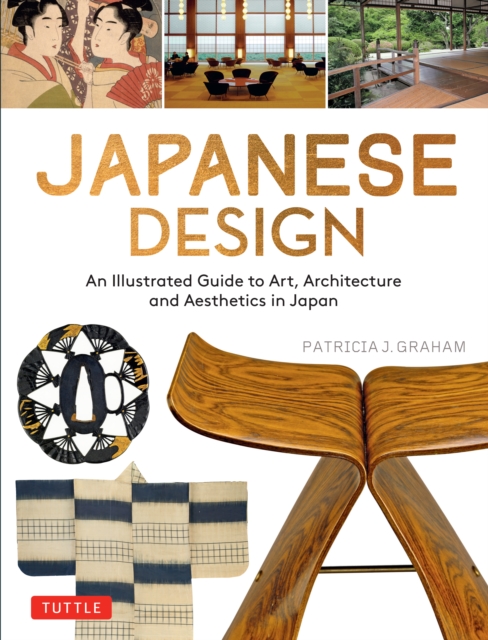
Japanese design : art, aesthetics & culture
This Japanese design book presents the arts, aesthetics and culture of Japan with over 160 stunning color photos and extensive historical and cultural commentary . The Japanese sensibility often possesses an intuitive, emotional appeal, whether it's a silk kimono, a carefully raked garden path, an architectural marvel, a teapot, or a contemporary work of art. This allure has come to permeate the entire culture of Japan-it is manifest in the most mundane utensil and snack food packaging, as well as in Japanese architecture and fine art. In Japanese Design, Asian art expert and author Patricia J. Graham explains how Japanese aesthetics based in fine craftsmanship and simplicity developed. Her unusual, full-color presentation reveals this design aesthetic in an absorbing way. Focusing on ten elements of Japanese design, Graham explores how visual qualities, the cultural parameters and the Japanese religious traditions of Buddhism and Shinto have impacted the appearance of its arts. Japanese Design is a handbook for the millions of us who have felt the special allure of Japanese art, culture and crafts. Art and design fans and professionals have been clamoring for this-a book that fills the need for an intelligent, culture-rich overview of what Japanese design is and means.
eBook

The Zen Arts
The tea ceremony and the martial arts are intimately linked in the popular and historical imagination with Zen Buddhism, and Japanese culture. They are commonly interpreted as religio-aesthetic pursuits which express core spiritual values through bodily gesture and the creation of highly valued objects. Ideally, the experience of practising the Zen arts culminates in enlightenment.This book challenges that long-held view and proposes that the Zen arts should be understood as part of a literary and visual history of representing Japanese culture through the arts. Cox argues that these texts and images emerged fully as systems for representing the arts during the modern period, produced within Japan as a form of cultural nationalism and outside Japan as part of an orientalist discourse.Practitioners' experiences are in fact rarely referred to in terms of Zen or art, but instead are spatially and socially grounded. Combining anthropological description with historical criticism, Cox shows that the Zen arts are best understood in terms of a dynamic relationship between an aesthetic discourse on art and culture and the social and embodied experiences of those who participate in them.
eBook


Deconstructing Japanese Romance Films through the Lens of Wabi-sabi, Mono no aware, Yūgen, and Kawaii (1990-2010)
This study takes a close look at Japanese romance films made between 1990 and 2010, examining them through both traditional and modern Japanese aesthetic ideas such as Wabi-sabi, Mono no aware, Yūgen, and Kawaii. By connecting this age-old aesthetics with today's pop culture, the research reveals how these varied principles create a distinctive cinematic language. By analysing films like Love Letter and Sky of Love, this study highlights the dynamic interaction between ancient philosophies and modern storytelling methods, showing how Japanese aesthetics have deepened and evolved in today's cinema. The study offers fresh insights into the cultural and artistic importance of Japanese romance films, providing a deeper understanding of their emotional impact and lasting charm.
Journal Article