
Catalogue Search | MBRL


Are you sure you want to remove the book from the shelf?

{{itemTitle}}
119
result(s) for
"Affluent consumers."
Sort by:

Luxury and pleasure in eighteenth-century Britain
This book explores the invention, making, and buying of new, semi-luxury, and fashionable consumer goods during the 18th century. It follows these goods, from china tea ware to all sorts of metal ornaments such as candlesticks, cutlery, buckles, and buttons, as they were made and shopped for, then displayed in the private domestic settings of Britain's urban middling classes. It tells the stories and analyses the developments that led from a global trade in Eastern luxuries beginning in the sixteenth century to the new global trade in British-made consumer goods by the end of the 18th century. These new products, regarded as luxuries by the rapidly growing urban and middling-class people of the 18th century, played an important part in helping to proclaim personal identities and guide social interaction. Customers enjoyed shopping for them; they took pleasure in their beauty, ingenuity or convenience. All manner of new products appeared in shop windows; sophisticated mixed-media advertising seduced customers and created new desires. This unparalleled ‘product revolution’ provoked philosophers and pundits to proclaim a ‘new luxury’, one that reached out to the middling and trading classes, unlike the elite and corrupt luxury of old. This book is built on a fresh empirical base drawn directly from customs accounts, advertising material, company papers, and contemporary correspondence. The book traces how this new consumer society of the 18th century and the products first traded, then invented to satisfy it, stimulated industrialisation itself.
eBook

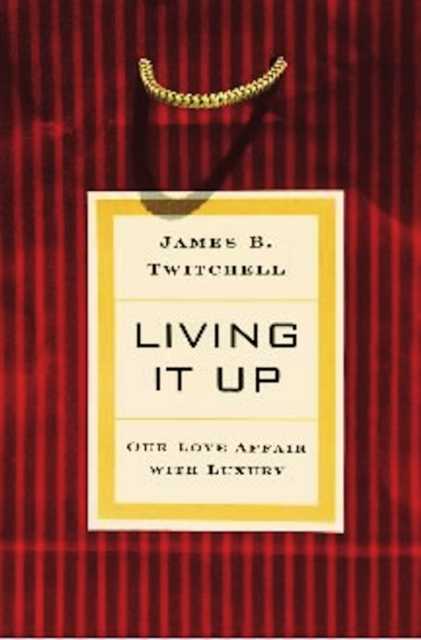
Living it up: our love affair with luxury
Luxury spending in the United States has been growing four times faster than overall spending. This necessary consumption of the unnecessary is cutting across all but the lowest layers of society: J.C. Penney is offering day spa treatments; Kmart sells cashmere bedspreads. There are so many products claiming luxury status today, that the credibility of the category itself is strained; \"pashmina\" had to be \"invented\" to top mere cashmere. What is luxury? How is it manufactured on the factory floor and especially in the minds of consumers? Who cares about it and who buys it? And how concerned should we be that it seems to be taking a larger and larger percentage of our disposable income and our imagination? Trolling the luxury malls of America, making his way toward the Mecca of Las Vegas, James B. Twitchell comes to some remarkable conclusions. The democratization of luxury, according to Twitchell, has been the single most important marketing phenomenon of our times. In the pages of Living It Up, he commits the academic heresy of respecting popular luxury consumption as a force that has united the country and the globe in a way that no war, no movement, no ideology ever has.;What's more, he claims, the shopping experience for Americans today has its roots in the spiritual, the religious, and the transcendent. Deft and subtle writing, audacious ideas, and a fine sense of humor inform this entertaining and insightful book. Theoretically grounded and popularly styled, Living It Up will attract controversy as well as a broad, appreciative audience.
eBook
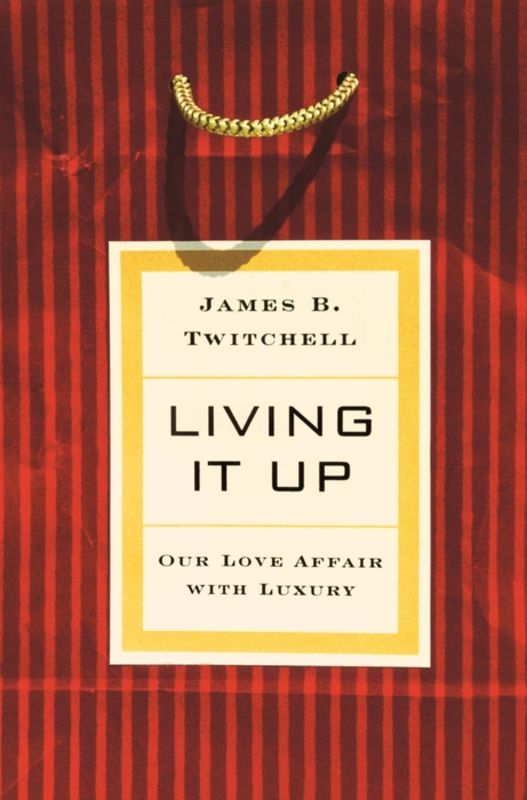
Living It Up
Economic downturns and terrorist attacks notwithstanding, America's love affair with luxury continues unabated. Over the last several years, luxury spending in the United States has been growing four times faster than overall spending. It has been characterized by political leaders as vital to the health of the American economy as a whole, even as an act of patriotism. Accordingly, indices of consumer confidence and purchasing seem unaffected by recession. This necessary consumption of unnecessary items and services is going on at all but the lowest layers of society: J.C. Penney now offers day spa treatments; Kmart sells cashmere bedspreads. So many products are claiming luxury status today that the credibility of the category itself is strained: for example, the name \"pashmina\" had to be invented to top mere cashmere. We see luxury everywhere: in storefronts, advertisements, even in the workings of our imaginations. But what is it? How is it manufactured on the factory floor and in the minds of consumers? Who cares about it and who buys it? And how concerned should we be that luxuries are commanding a larger and larger percentage of both our disposable income and our aspirations? Trolling the upscale malls of America, making his way toward the Mecca of Las Vegas, James B. Twitchell comes to some remarkable conclusions. The democratization of luxury, he contends, has been the single most important marketing phenomenon of our times. In the pages of Living It Up, Twitchell commits the academic heresy of paying respect to popular luxury consumption as a force that has united the country and the globe in a way that no war, movement, or ideology ever has. What's more, he claims, the shopping experience for Americans today has its roots in the spiritual, the religious, and the transcendent.
eBook


Luxury and pleasure in eighteenth-century Britain
The fine mahogany secretaire with its secret drawers, the lacquered tea table, Chinese and Japanese porcelain tea ware. These fine luxury goods now seem to belong to the English country house or the exclusive antique shop. But what do they tell us about their eighteenth-century consumers? Who owned these goods, what made them desirable, where did they come from, and how were they made? And how many people actually enjoyed their novelty and fashion? In Luxury and Pleasure in. Eighteenth-Century Britain Maxine Berg explores not only how luxury consumer goods transformed the homes of Britain's ur
Book

Luxury beauty products purchase behaviour of affluent consumers: the role of brand consciousness and brand distinctiveness in Zimbabwe
The purpose of the study was to establish the extent to which brand consciousness and brand distinctiveness influence customer purchase decisions. The thrust was on interrogating whether there were any symbiotic relations between luxury beauty products’ brand consciousness, brand distinctiveness, and affluent consumers’ purchase decisions in terms of the need for simplification of cognitive tasks, in a turbulent pre-emerging market of Zimbabwe. Data was collected from five shopping malls situated in affluent suburbs by intercepting 200 consenting customers who would have bought a luxury beauty product to complete questionnaires. Analysis was done through structural equation modeling on SPSS AMOS. Results revealed that both brand consciousness and distinctiveness were closely related and also had a positive significant effect on customers’ purchase decisions. Managerial and intellectual implications were provided.The study was on the buying behaviour of wealthy consumers in Zimbabwe, a country which has an unstable economy. The research was on how these wealthy consumers take into consideration the reputation of the luxury beauty product and the brand’s unique or differentiating features. The data for the research was collected from 200 rich consumers, who were requested to complete a questionnaires just outside the shopping malls located in upmarket suburbs after it had been observed that the consumer had bought a luxury beauty product. It was noted that luxury beauty products wealthy consumers buying decisions are influenced by their knowledge of the reputation of the luxury beauty product brand and its uniqueness. Luxury beauty products brand managers were advised to create advertisements which pronounce the reputation and differentiating features of the product as bait to wealthy consumers in a developing country context.
Journal Article